Chromatography coupled with mass spectrometry has become a cornerstone of modern chemical analysis. Present in virtually all testing laboratories, liquid chromatography coupled with mass spectrometry (LC-MS) and gas chromatography coupled with mass spectrometry (GC-MS)enable the identification and quantification of trace chemical compounds in a wide variety of matrices: drinking water, pharmaceuticals, food, indoor air, and manufactured products. They thus constitute an essential analytical foundation for regulatory compliance, product safety, and quality control in almost every industrial sector.
But faced with these two techniques with similar names, a question often arises among manufacturers: which one to choose, and in what situations?
Far from being competitors, LC-MS and GC-MS are actually complementary: each excels in very specific areas. In this article, we compare these two technologies in detail, their principles, their applications, and we explain how to choose the method best suited to your analytical needs.
Table of Contents
Understanding the basics: what is chromatography coupled with mass spectrometry?
The general principle of chromatography
Chromatography is a separation that allows the isolation of the different components of a complex mixture. Its principle is based on the differential migration of compounds between two phases: a stationary phase, which is fixed and generally contained within a column, and a mobile phase, which carries the molecules along this column. Each compound interacts more or less strongly with the stationary phase depending on its physicochemical properties (polarity, size, volatility, affinity), resulting in different migration times, called retention times. Upon exiting the column, the compounds are thus presented separately to the detector.
The nature of the mobile phase determines the broad family of chromatography techniques used. When the mobile phase is liquid, it is called liquid chromatography (LC) : this is the basis of LC-MS. When the mobile phase is gaseous, it is called gas chromatography (GC) : this is the basis of GC-MS. This fundamental difference directly determines the types of compounds that can be analyzed by each technique.
High-performance liquid chromatography (HPLC) uses high pressures to circulate a solvent through a column packed with very fine particles, enabling rapid and efficient separation of compounds. Gas chromatography, on the other hand, uses an inert carrier gas (usually helium or nitrogen) that transports the vaporized molecules through a long, heated capillary column. These two approaches, while pursuing the same separation objective, employ radically different operating conditions.
The role of mass spectrometry as a detector
Once the compounds are separated, they still need to be identified and quantified. This is where mass spectrometry (MS), a detector with exceptional analytical power that measures the molecular mass of compounds and characterizes their structure through fragmentation. The principle involves ionizing the molecules as they exit the chromatographic column, separating the ions thus formed according to their mass-to-charge ratio (m/z), and then detecting them. The result is a mass spectrum, a true molecular "fingerprint" of the analyte, which allows for highly specific identification.
Coupling chromatography with mass spectrometry offers several decisive advantages:
- Exceptional sensitivity : modern MS detectors can measure concentrations in the ultra-trace state, down to parts per trillion (ppt) or below.
- High specificity : the combination of retention time and mass spectrum allows for unambiguous identification of compounds, even in very complex matrices.
- Versatility : MS can detect a wide variety of molecules, from the smallest to the largest, organic as well as inorganic.
- Regulatory compatibility : most official and standardized methods for environmental, food or pharmaceutical controls now rely on MS as a reference detector.
For the most demanding analyses, tandem mass spectrometry (MS/MS) combines two mass analysis stages separated by a fragmentation cell. This configuration significantly improves the signal-to-noise ratio and specificity, making it the preferred technique for regulatory analyses at very low levels in complex matrices (PFAS, pesticide residues, drugs in biological fluids).
Complementarity rather than competition
A persistent misconception is that LC-MS and GC-MS are two rival techniques, one more modern or efficient than the other. In reality, these two approaches are not competitors; they are complementary. Each excels in the analysis of very specific families of compounds, and the choice between the two depends primarily on three criteria: the matrix to be analyzed, the target analytes , and the level of confidence required in the result.
In laboratory practice, it is not uncommon to see both techniques used side-by-side on the same sample to cover different analyte families. A prime example is the analysisof PFAS (per- and polyfluoroalkyl substances, commonly known as "perennial pollutants"). LC-MS methods can detect the majority of regulated PFAS compounds at very low concentrations in aqueous matrices. However, some volatile PFAS are not well-suited to LC-MS analysis and are better quantified by GC-MS. A comprehensive PFAS monitoring program therefore combines both techniques to ensure maximum coverage of the panel of analytes of interest.
This observation illustrates a fundamental truth of the analytical profession: the quality of a result depends not only on the instrument used, but above all on thesuitability of the chosen technique to the analytical problem. It is precisely for this reason that understanding the strengths and areas of expertise of each method is essential for manufacturers who want to obtain reliable results that comply with regulatory requirements and can be used to manage their operations. The following sections explore in detail the specific characteristics of GC-MS and LC-MS, providing you with all the information you need to guide your analytical choices.
GC-MS (gas chromatography coupled with mass spectrometry)
Gas chromatography coupled with mass spectrometry (GC-MS) is a proven technique, used for decades in industrial analytical laboratories. Recognized for its robustness, reliability, and excellent chromatographic resolution, GC-MS has become the reference method for analyzing a wide range of compounds with very specific physicochemical properties. Let's examine in detail its operating principle, the analytes it can analyze, and its main industrial applications.
Operating principle of GC-MS
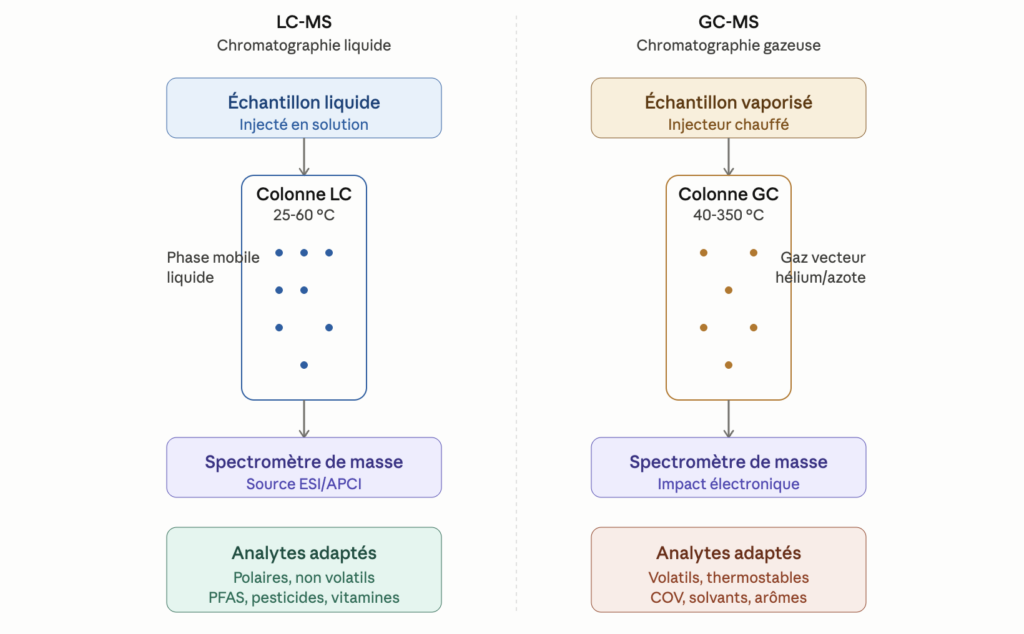
GC-MS relies on a series of perfectly orchestrated steps. The sample, previously prepared in liquid or gaseous form, is introduced into a high-temperature injector , where it is instantly vaporized . The vapors thus formed are carried by an inert carrier gas —usually helium or nitrogen, sometimes hydrogen—which circulates them through a heated capillary column . This column, which can be several tens of meters long, is coated with a stationary phase that retains the compounds to varying degrees depending on their affinity, volatility, and polarity.
Upon exiting the column, the separated compounds enter the mass spectrometer's ionization source , where they are fragmented into characteristic ions. These ions are then separated according to their mass-to-charge ratio (m/z) and detected, producing a mass spectrum specific to each molecule. This spectrum constitutes a true signature, comparable to a fingerprint, which allows the compound to be identified by comparison with international spectral libraries containing hundreds of thousands of reference molecules.
The operating conditions of GC-MS, including furnace temperature programming (from 40 °C to sometimes over 350 °C), the nature of the stationary phase, and the carrier gas flow rate, are key parameters that analysts fine-tune according to the analytes being sought and the matrix being studied. This flexibility contributes to the technique's great versatility.
Beyond simple quantification, purity control is an essential aspect of the analysis. It involves detecting any impurities or degraded forms of the vitamin that can form during manufacturing or storage. Cyanocobalamin's well-known photosensitivity makes it a particularly vulnerable molecule: exposure to light, heat, or certain humidity conditions can lead to its degradation into inactive compounds. The analysis thus verifies the integrity of the active molecule in the finished product.
For what types of analytes?
GC-MS is particularly well-suited to a well-defined family of chemical compounds. For a molecule to be analyzed using this technique, it must possess certain essential physicochemical characteristics:
- Being volatile or semi-volatile : the molecule must be able to transition to the gaseous phase at the injector temperature without degrading. This property is fundamental because the entire separation takes place in the gaseous phase.
- Being thermally stable : the high temperatures of the injector and column (often above 250 °C) require that the analyte not undergo thermal degradation during the analysis.
- Having a low to moderate molecular mass : in practice, compounds that can be analyzed by GC-MS generally have a molecular mass of less than 1,000 Da, or even 500 Da for standard conditions.
- Exhibiting non-polar to moderately polarity : highly polar molecules often interact too strongly with the column or struggle to be vaporized efficiently, which limits their compatibility with GC-MS.
- Ability to be vaporized without degradation : heat-sensitive molecules, such as proteins or thermolabile compounds, do not naturally lend themselves to this technique.
These criteria define the optimal application area of GC-MS. For analytes that do not spontaneously meet these conditions, chemical derivatization exist to adapt the molecule to the technique, as we will see later.
Typical industrial applications of GC-MS
The applications of GC-MS in industry are vast and affect numerous sectors. Here are the main families of analytes commonly quantified using this technique:
- Volatile organic compounds (VOCs) : GC-MS is the reference method for analyzing VOCs in indoor air, industrial emissions, building materials, packaging, and many manufactured products. It allows for the simultaneous quantification of hundreds of substances, making it an essential tool for air quality assessments and compliance with environmental regulations.
- Residual solvents in the pharmaceutical industry : controlling residual solvents in active pharmaceutical ingredients and medicines is a major requirement of international pharmacopoeias. GC-MS, often coupled with headspace sampling, allows the detection and quantification of these residues at extremely low levels, in compliance with the strict limits imposed by regulations.
- Aromas and perfume compounds : The food and fragrance industries make extensive use of GC-MS to characterize the volatile compounds responsible for aromatic and olfactory notes. This technique allows the identification of dozens, even hundreds, of different molecules in a single sample, contributing to the formulation and quality control of flavored and perfumed products.
- Hydrocarbons and fuels : In the oil and petrochemical industry, GC-MS is used to characterize the composition of fuels, oils, and derivative products. It is also used to identify hydrocarbon pollution in soils, water, and sediments, within the framework of environmental studies and remediation efforts.
- Some volatile pesticides and organochlorine residues : while the majority of pesticide residues are now analyzed by LC-MS/MS, some families of volatile pesticides remain particularly well analyzed by GC-MS, notably organochlorines, some organophosphates and pyrethroids.
- The compounds generated during thermal degradation : pyrolysis-GC/MS (Py-GC/MS), a variant of GC-MS, allows the analysis of solid materials such as polymers, microplastics or biomass, by thermally degrading the sample to produce analyzable characteristic fragments.
This diversity of applications demonstrates the central role of GC-MS in modern analytical laboratories, particularly for everything related to volatile and semi-volatile compounds.
Derivatization: extending the scope of GC-MS
One of the most powerful strategies for extending the scope of GC-MS is the use of chemical derivatization. This technique involves chemically modifying the target molecule before analysis to make it more volatile, more thermally stable, or easier to detect.
The principle is simple in its intent: the analyte is reacted with a derivatizing reagent that transforms certain polar or reactive chemical functions (hydroxyl groups -OH, amines -NH₂, carboxylic acids -COOH) into more volatile and stable functions. The most common derivatization reactions include silylation (introduction of trimethylsilyl groups), acylation( formation of esters or amides), andalkylation(particularly the methylation of acids to methyl esters).
This approach significantly expands the range of analytes accessible by GC-MS. For example, fatty acids are systematically converted to fatty acid methyl esters (FAMEs) before analysis, enabling detailed characterization of lipid profiles in food, cosmetics, or industrial oils. Similarly, certain steroids, amino acids, sugars, or drug residues can only be effectively analyzed by GC-MS after derivatization.
Derivatization, however, adds an extra step to sample preparation, with its own specific technical constraints: reproducibility of the reaction yield, compatibility with the matrix, and management of any potential by-products. It therefore requires specific expertise and proven know-how to guarantee the quality of the final result.
This flexibility perfectly illustrates the philosophy of modern chromatographic analysis: it's not just about having a high-performance instrument, but about knowing how to combine the right tools, the right preparations, and the right parameters to obtain reliable results. This same spirit of pragmatism and adaptability guides the choice between GC-MS and LC-MS, the specific characteristics of which we will now detail in the following section.
Are you looking for an analysis?
LC-MS (liquid chromatography coupled with mass spectrometry)
Liquid chromatography coupled with mass spectrometry (LC-MS) represents one of the major analytical advances of the last two decades. While GC-MS remains essential for volatile compounds, LC-MS has opened access to a whole world of molecules that were previously difficult to analyze: polar, heat-labile, high molecular weight compounds, or those present in trace amounts within complex biological matrices. Today, LC-MS and its tandem variant, LC-MS/MS, have become the standard for numerous regulatory analyses in the pharmaceutical, environmental, and food sectors.
Operating principle of LC-MS
LC-MS combines two complementary steps. First, the sample, in solution form, is injected into a high-performance liquid chromatography (HPLC) or, in its most modern version, an ultra-high-performance liquid chromatography (UHPLC) system. The mobile phase, consisting of one or more liquid solvents (water, methanol, acetonitrile, additives such as formic acid), is propelled at high pressure through a column containing the stationary phase. The compounds in the sample separate according to their affinity for these two phases, as in any chromatographic technique.
Upon exiting the column, the separated compounds enter the ionization source . Unlike GC-MS, where the molecules are already gaseous, LC-MS requires transferring the analytes from the liquid to the gas phase while simultaneously ionizing them. Several ionization source technologies are used, each suited to different molecule profiles:
- Electrospray ionization (ESI) is the most widespread method. It is particularly well-suited to polar, ionic compounds with high molecular weights. The principle involves spraying the liquid under a high electrical voltage, generating fine droplets that evaporate, releasing ions.
- Atmospheric pressure chemical ionization (APCI) is best suited for moderately polar to slightly polar molecules, and for compounds with lower molecular weights.
- Atmospheric pressure photoionization (APPI) is suitable for very weakly polar compounds, which do not ionize efficiently with ESI or APCI.
Once ionized, the analytes are separated according to their mass-to-charge ratio (m/z) in the mass analyzer, and then detected. As in GC-MS, the result is a mass spectrum that allows for the precise identification and quantification of each compound.
For what types of analytes?
LC-MS is the preferred method when analytes are unsuitable for GC-MS, whether due to their polarity, thermal instability, or molecular mass. Typical characteristics of compounds analyzed by LC-MS include:
- Non-volatile : the molecule does not need to pass into the gaseous phase during separation, which opens the way to the analysis of a whole universe of non-vaporizable compounds.
- Thermally labile : heat-sensitive analytes, which would degrade in GC, remain intact in LC because the separation takes place at a moderate temperature (generally between room temperature and 60 °C).
- Polar or very polar : molecules bearing hydroxyl, amine, acid functions or containing heteroatoms, which would interact poorly with GC columns, are perfectly suited to LC.
- High molecular mass : LC-MS allows the analysis of molecules of several hundred, or even several thousand Daltons, where GC-MS quickly reaches its limits.
- Present in ultra-trace state in complex matrices : combined with tandem mass spectrometry (MS/MS), LC makes it possible to reach extraordinarily low detection limits, essential for the most demanding regulatory analyses.
This analyte profile outlines a field of application that perfectly complements that of GC-MS, making the two techniques truly inseparable tools in a versatile analytical laboratory.
Typical industrial applications of LC-MS
The applications of LC-MS are as varied as they are strategic for industry. Here are the main families of analytes commonly quantified using this technique:
- PFAS (per- and polyfluoroalkyl substances) : also known as "everlasting pollutants," these compounds are receiving increasing regulatory attention due to their environmental persistence and potential health effects. LC-MS/MS is the reference method for their detection at ultra-trace levels in water, soil, food, and manufactured products. The European Drinking Water Directive, in force since 2023, imposes strict limits on the sum of PFAS, which can only be met by validated LC-MS/MS methods.
- Drugs and their metabolites : In the pharmaceutical industry, LC-MS is the essential tool for quantifying active ingredients, impurities, biotransformation metabolites, and for pharmacokinetic studies. It is also used to monitor drug residues in surface water and animal products.
- Pesticide residues in food and water : while some volatile pesticides are still analyzed by GC-MS, the vast majority of modern pesticide residues (neonicotinoids, glyphosate and its metabolites, systemic fungicides) fall within the domain of LC-MS/MS. European requirements for maximum residue limits (MRLs), often set at 0.01 mg/kg, can only be met with this level of sensitivity.
- Dyes, pigments, and additives : LC-MS enables quality control of synthetic dyes used in the food, cosmetics, and textile industries. It is also used to detect prohibited dyes, such as Sudanese or certain azo dyes, in imported foodstuffs.
- Biomolecules: vitamins, hormones, peptides, proteins : LC-MS has become the standard for quantifying complex biological molecules, such as vitamins (B12, D, K, folate), hormones, and certain marker proteins. Its ability to analyze heat-labile compounds and high molecular weights makes it the tool of choice in the nutraceutical, pharmaceutical, and clinical fields.
- Mycotoxins and natural toxins : produced by certain fungi or living organisms, these toxins present in cereals, dried fruits, or derived products represent a major health risk. LC-MS/MS allows for their simultaneous measurement at concentrations compliant with European regulatory requirements (Regulation (EC) No 1881/2006 and its amendments).
- Emerging contaminants : pharmaceuticals in wastewater, personal care products, endocrine disruptors, microplastics associated with additives… LC-MS is widely used to monitor these new contaminants in the environment.
This diversity of applications illustrates why LC-MS has established itself as the central analytical tool of modern laboratories, particularly in regulated sectors.
The LC-MS/MS variant: tandem mass spectrometry
While conventional LC-MS already offers remarkable performance, its most widely used variant today is undoubtedly LC-MS/MS, or liquid chromatography coupled with tandem mass spectrometry. This technique is now the absolute standard for the most demanding regulatory analyses.
The principle of MS/MS relies on the use of two successive mass spectrometry stages. In the first analyzer (MS1), a precursor ion characteristic of the analyte is selected. This ion is then sent to a collision cell where it is fragmented into smaller ions, called product ions. The second analyzer (MS2) selects and detects these specific product ions. This mode of operation, called MRM (Multiple Reaction Monitoring), offers several decisive advantages over simple MS:
- Significantly improved specificity : the combination of chromatographic retention time, precursor ion mass, and mass of produced ions provides triple confirmation of the analyte's identity. The risk of interference is virtually eliminated.
- A significantly higher signal-to-noise ratio : successive ion selection eliminates the majority of the "chemical noise" from the matrix, allowing for clear quantification of compounds present at extremely low concentrations.
- Ultra-low detection limits : LC-MS/MS commonly achieves sensitivities on the order of picograms per milliliter, or below parts per trillion (ppt). For comparison, this is equivalent to detecting a grain of sugar dissolved in an Olympic-sized swimming pool.
- Reliable quantification in complex matrices : LC-MS/MS remains robust even in the presence of high concentrations of other interfering compounds, making it the ideal tool for complex biological (blood, urine, serum), environmental (wastewater, sediments) or food matrices.
These characteristics explain why LC-MS/MS is now systematically required for the analysis of PFAS, multi-residue pesticide residues, pharmaceuticals in biological fluids, and emerging environmental contaminants. Without it, compliance with modern regulatory thresholds would simply be impossible.
LC-MS and LC-MS/MS thus represent the pinnacle of current analytical techniques, capable of meeting the most complex challenges posed by the diversity of industrial matrices and the increasing stringency of regulatory requirements. The next step is to compare these two families of techniques in practice to guide your choice according to your needs, which is the subject of the following section.
Comparative table: LC-MS vs GC-MS at a glance
After detailing the operation and applications of GC-MS and LC-MS separately, it is helpful to summarize their differences in a comparative overview. The table below outlines the main differentiating criteria between the two techniques, as well as their most common variations. This comparison allows you to quickly identify the technique best suited to your analytical needs, based on the nature of the analytes being sought, the type of matrix, the required sensitivity, and the industrial context.
Summary table of the main chromatographic techniques
| Technical | Scope | Sensitivity (resolution) | Typical matrices |
|---|---|---|---|
| LC-MS | Large (chemical screening, reaction products, dyes and pigments, vitamins) | ppt – ppm | Matrices ranging from clean to moderately complex (pure solvents, reaction mixtures, food extracts) |
| LC-MS/MS | Broad and ultra-trace (PFAS, pharmaceuticals, pesticides, mycotoxins) | < ppt – ppb | Complex matrices (blood, natural water, biofilms, soils, foodstuffs) |
| LC-UV/DAD | Compounds containing chromophores (additives, vitamins, preservatives, sweeteners) | ppb – ppm | Matrices specific to moderately complex (food, beverages, pharmaceuticals) |
| GC-MS | Large (VOCs, residual solvents, aromas, hydrocarbons) | ppb – ppm | Easier to moderately complex matrices |
| Py-GC/MS | Polymers (plastics, rubbers, microplastics) | ppm – % | Polymers, fibers, paints, soils contaminated by microplastics, consumer products |
| GC-FID | Organic compounds (hydrocarbons, solvents, fuels, simple VOCs) | ppb – ppm | Pure gases and liquids |
| GC-TCD | Permanent gases and simple volatile compounds (industrial gases, indoor air, biogas) | ppm – % | Pure gas mixtures |
How do we read this table?
This table summarizes several essential pieces of information to guide an analytical choice:
- The scope of application indicates the families of compounds that the technique is capable of effectively quantifying. The broader the scope, the more versatile the technique. The more targeted it is, the more specialized it is, but often more effective for its intended area.
- Sensitivity (resolution) expresses the concentration levels that the method can reliably detect and quantify. The units used are as follows:
- % (percent) : massive concentrations, on the order of the main constituents of a sample.
- ppm (parts per million) : equivalent to milligrams per kilogram (mg/kg), typical level of regulated contaminants or additives.
- ppb (parts per billion) : equivalent to micrograms per kilogram (µg/kg), typical level of pesticide residues in food.
- ppt (parts per trillion) : equivalent to nanograms per kilogram (ng/kg), a level reserved for ultra-trace analyses such as PFAS or dioxins.
- Typical matrices specify the complexity of the samples on which the technique is generally applicable. A "clean" matrix means few interfering substances (such as a pure solvent or filtered water), while a "complex" matrix contains many compounds that may interfere with the analysis (blood, soil, sediment, processed food).
The main lessons learned from this comparison
Several observations emerge from this table and deserve to be highlighted in order to best guide the analytical choice:
The first key finding is that LC-MS/MS is unbeatable for ultra-trace analyses in complex matrices. With detection limits below ppt and the ability to analyze highly complex matrices such as blood or natural waters, it is the absolute reference technique for the most demanding regulatory analyses. However, its implementation requires expensive equipment and high levels of technical expertise, making it less suitable for routine analyses of high concentrations.
Second lesson: GC-MS and conventional LC-MS offer comparable sensitivity (ppb to ppm) but for different families of compounds. The choice between the two is therefore not based on sensitivity, but on the physicochemical nature of the analytes: volatility, polarity, molecular weight, thermal stability.
Third lesson: techniques without mass spectrometry (LC-UV/DAD, GC-FID, GC-TCD) remain relevant for routine analyses of well-known compounds present at relatively high concentrations. They offer excellent cost-effectiveness when ultimate sensitivity is not required, and are often the optimal choice for regular industrial quality control.
Fourth lesson: some techniques are truly specialized. Py-GC/MS for polymers and microplastics, GC-TCD for industrial gases and biogas, and LC-UV/DAD for vitamins and additives are tools dedicated to very specific problems. Choosing the right specialized technique, rather than using an oversized LC-MS/MS, can significantly reduce analysis costs without compromising the quality of the result.
The major advantage of LC-MS/MS lies in its exceptional sensitivity and high specificity. It allows the quantification of cyanocobalamin at extremely low concentrations, as illustrated by a typical analysis performed on a capsule, with a limit of quantification of 0.2 µg/100 g. This performance makes it particularly well-suited to complex matrices and low-dose products. Furthermore, its high specificity allows cyanocobalamin to be distinguished from its degraded forms or analogs, making it a tool of choice for purity control and impurity detection. LC-MS/MS is thus increasingly becoming the reference method for demanding analyses, particularly in the pharmaceutical and nutraceutical sectors.
A decision that goes beyond a simple technical question
Beyond purely analytical characteristics, the choice between LC-MS, GC-MS, and their variants also involves economic and organizational considerations. A state-of-the-art LC-MS/MS represents a significant investment in equipment, in addition to maintenance costs, solvent and gas consumption, and the need for highly qualified personnel. Conversely, simpler techniques such as GC-FID or LC-UV/DAD require more modest resources but can be perfectly adequate for many industrial applications.
Therefore, choosing an analytical method is not simply a matter of selecting an instrument: it involves a comprehensive analytical strategy that considers quality control objectives, applicable regulatory constraints, the volume of samples to be processed, and the available budget. For manufacturers who do not have all of these technologies in-house, using a network of partner laboratories covering the entire analytical spectrum is a particularly relevant solution, providing access to the optimal technique for each type of analysis without requiring significant internal investment.
Before detailing how YesWeLab addresses these challenges in the last section of this article, let us examine in detail some complementary chromatographic techniques that further expand the range of analytical possibilities.
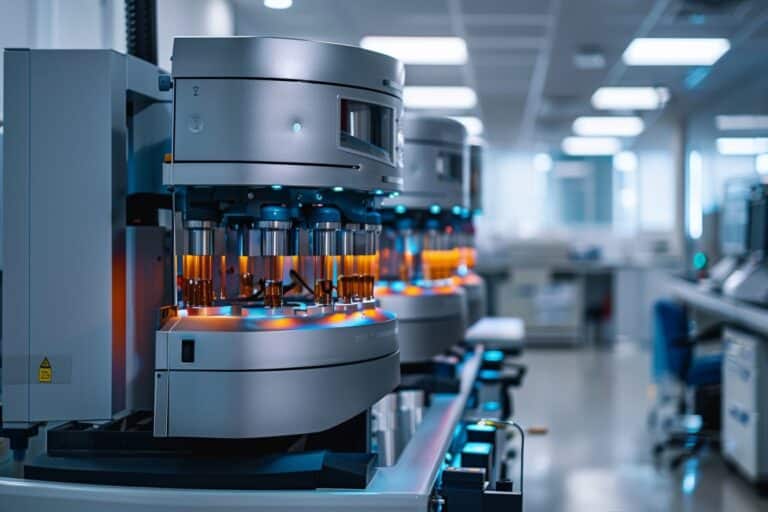
Other chromatography techniques to know
Beyond LC-MS and GC-MS, several other chromatographic techniques play a key role in the analytical arsenal of modern laboratories. These techniques, sometimes less publicized than mass spectrometry-coupled methods, nevertheless offer particularly relevant solutions for certain specific industrial needs. They often present the advantage of better cost-effectiveness for routine analyses, or of advanced specialization for well-defined matrices and analytes. Let's review the main complementary techniques to be aware of.
LC-UV/DAD: for compounds with chromophores
chromatography coupled with UV detection or with a diode array detector (LC-UV/DAD) is one of the most widely deployed techniques in routine industrial laboratories. Its principle is based on the separation of compounds by liquid chromatography, then on their detection by measuring their absorption of light in the ultraviolet and visible (UV-Vis) range.
This detection method is only effective for compounds possessing chromophores, that is, molecular structures that absorb light in the UV-Vis range. These structures typically include aromatic rings (benzene, naphthalene), conjugated systems (alternating double bonds), and certain functional groups such as ketones, nitros, or azo. The presence of these groups gives molecules a characteristic absorption "signature" that can be used for their identification.
The diode array detector (DAD) represents a major evolution of the simple UV detector: it simultaneously records absorption across a wide range of wavelengths, enabling the acquisition of a true UV-Vis absorption spectrum for each isolated compound. This spectral information facilitates identification and allows for verification of the purity of chromatographic peaks.
The main advantages of LC-UV/DAD lie in its proven reliability, ease of implementation , and moderate cost compared to mass spectrometry-coupled techniques. It is therefore a preferred choice for routine analyses of:
- Water-soluble and fat-soluble vitamins (B1, B2, B6, C, A, D, E, K) in food supplements and fortified foods,
- Food preservatives (benzoic acid, sorbates, parabens),
- Sweeteners (aspartame, acesulfame-K, saccharin),
- Food additives (synthetic colorings, antioxidants),
- Active pharmaceutical ingredients during routine quality controls.
LC-UV/DAD naturally finds its place in the food and beverage industry, where it supports the daily monitoring of product composition. Its main limitation lies in its lower sensitivity compared to LC-MS, which restricts it to concentrations in the ppb to ppm range, insufficient for the most demanding ultra-trace or regulatory analyses.
Py-GC/MS: for polymers and microplastics
Pyrolysis coupled with gas chromatography and mass spectrometry (Py-GC/MS) is a particularly innovative variant of GC-MS, dedicated to the analysis of solid materials that are difficult or impossible to dissolve and extract using conventional methods. Its principle is based on the controlled thermal decomposition (pyrolysis) of the sample in the absence of oxygen, at temperatures reaching 600 to 800 °C. This decomposition fragments the material into characteristic volatile compounds, which are then directly analyzed by GC-MS.
The fundamental advantage of this technique is that it completely bypasses the extraction or dissolution steps that often constitute the weak link in analyses of complex materials. Py-GC/MS thus makes it possible to directly analyze high molecular weight, insoluble, or heterogeneous materials, provided they are thermally decomposable.
The key application areas of Py-GC/MS are as follows:
- Microplastic and nanoplastic analysis : Py-GC/MS has become one of the reference methods for the detection and quantification of microplastics in water, sediments, soils, food, and living organisms. This emerging environmental issue, which is receiving increasing regulatory attention at the European level, is particularly well addressed by this technique, which is capable of quantifying very small quantities of polymers in complex matrices.
- Characterization of industrial polymers : identification of polymers and copolymers, study of blends and additives, quality control of composite materials. Py-GC/MS allows for the rapid differentiation of different types of plastics (PET, HDPE, LDPE, PP, PVC, PS) based on their degradation signatures.
- The recycling industry : characterization of recycled material flows, identification of cross-contamination between polymers, validation of the purity of recycled products.
- Textiles and fibers : analysis of synthetic and natural fibers, detection of textile blends, authentication of raw materials.
- Biomass and feedstocks : characterization of lignocellulosic materials, lignin, biofuels and biocomposites, an application particularly relevant for bio-based industries and sustainable development.
GC-FID: for hydrocarbons and solvents
chromatography coupled with flame ionization detection (GC-FID) is one of the oldest and most widely used chromatographic techniques in industry. Its principle is based on the combustion of separated compounds in a hydrogen flame, which generates ions detected by an electrode. The resulting signal is proportional to the amount of carbon present in the molecule, regardless of its exact structure.
This characteristic is both the strength and the limitation of GC-FID. On the one hand, it gives the technique an excellent response for almost all organic compounds, with good reproducibility and ease of calibration. On the other hand, it cannot differentiate between compounds with a similar number of carbon atoms, limiting its usefulness for identification in complex, unknown mixtures.
GC-FID has proven to be reliable, robust, economical , and easy to implement, making it a preferred method for quantifying known and well-identified. It is widely used in:
- The oil and petrochemical industry : hydrocarbon quantification, fuel control (gasoline, diesel, kerosene), crude oil analysis, aromatic compound (BTEX) determination.
- Solvent analysis : purity control of industrial solvents, determination of solvent residues in manufactured chemicals.
- The chemical industry : monitoring reactions, quality control of synthesis intermediates, analysis of raw materials.
- Quality control of biofuels : characterization of fatty acid methyl esters (FAMEs) in biodiesel, determination of oxygenated compounds in biogasolines.
For applications requiring more in-depth identification of unknown compounds, GC-FID is often coupled with complementary analysis by GC-MS, which provides the spectral identification dimension.
GC-TCD: for industrial gases and biogas
chromatography coupled with thermal conductivity detection (GC-TCD) is a long-established technique, particularly well-suited to the analysis of permanent gases and simple volatile compounds. Its principle is based on measuring the change in thermal conductivity of the carrier gas induced by the passage of analytes. When a compound is eluted from the column, its thermal conductivity, which differs from that of the carrier gas (usually helium), alters the heat dissipation of a heated filament, generating a signal proportional to the concentration.
GC-TCD is distinguished by its ability to detect all compounds, including those that do not ionize upon combustion, such as water, nitrogen, oxygen, carbon dioxide, and noble gases. It is therefore an indispensable tool for characterizing industrial gases and quantifying the major constituents of gas mixtures.
The main applications of GC-TCD cover:
- Biogas analysis : quantification of methane (CH₄), carbon dioxide (CO₂), hydrogen sulfide (H₂S), oxygen (O₂), and nitrogen (N₂) in the gases produced by methanization. This analysis is essential for optimizing biogas production processes, ensuring the quality of gas injected into networks, and complying with the regulatory requirements for methanization plants.
- Natural gas analysis : characterization of natural gas composition, measurement of calorific value, quality control before injection into distribution networks.
- Industrial gases : control of pure gases (hydrogen, nitrogen, argon, oxygen) used in industry, metallurgy, or laboratory, with purity requirements of up to 99.9999% (six nines).
- Analysis of indoor air and work atmospheres : quantification of major constituents (O₂, N₂, CO₂, water vapor) in the context of air quality monitoring or workplace safety.
- Analysis of green hydrogen : in the emerging context of the energy transition, GC-TCD is used to control the purity of hydrogen produced by electrolysis, in accordance with the requirements of ISO 14687.
This diversity of applications demonstrates the essential complementarity of these chromatographic techniques with LC-MS and GC-MS. Each provides a specific solution to well-defined industrial problems, and it is their intelligent combination that allows laboratories to cover all modern analytical needs. The next step is to understand how to choose the most appropriate technique in a given situation: this will be the subject of the following section.
How to choose the right technique for your analysis?
Now that the main chromatographic techniques have been presented, the practical question arises for any industrial user: how to choose, in concrete terms, the method best suited to a specific analytical need? This choice is never straightforward, as it depends simultaneously on several intersecting criteria: the nature of the analyte, the complexity of the matrix, the required level of sensitivity, applicable regulatory requirements, and the project's economic constraints. This section offers a structured framework to guide your decision, as well as concrete examples of analytical strategies adapted to the main industrial sectors.
The five essential selection criteria
To identify the most relevant chromatographic technique, five main criteria must be analyzed together.
The first criterion is the nature of the analyte. This is the starting point for all analysis. What are the physicochemical properties of the molecule of interest? Is it volatile or non-volatile? Polar or non-polar? Low or high molecular weight? Thermally stable or labile? The answers to these questions immediately point towards GC-MS (volatile, non-polar, thermostable compounds) or LC-MS (non-volatile, polar, thermolabile compounds). For analytes whose nature is poorly understood or very diverse (untargeted screening), a combined approach is often necessary.
The second criterion is the complexity of the matrix. Filtered water and a blood sample are not processed in the same way. The more complex the matrix, the higher the required analytical specificity, which argues in favor of tandem mass spectrometry (MS/MS). Clean matrices are suitable for simpler methods such as LC-UV/DAD or GC-FID, while biological, environmental, or processed food matrices generally require LC-MS/MS or GC-MS/MS to guarantee reliable results without interference.
Third criterion: the required sensitivity. The concentration level to be measured directly determines the choice of detector. For ultra-trace analyses (PFAS, mycotoxins, pesticide residues), only MS/MS methods reach the necessary detection limits. For higher concentrations (vitamins, food additives, active ingredients), simpler detectors such as UV/DAD or FID are perfectly suitable and more economical. The best practice is to always start with the maximum regulatory limits or the specifications in the technical requirements document to determine the minimum acceptable sensitivity.
Fourth criterion: selectivity and confidence in identification. For regulatory analyses or forensic examinations, where the slightest doubt about the identity of a compound can have significant consequences, tandem mass spectrometry (MS/MS) is the gold standard. It provides triple confirmation (retention time, precursor ion, product ions) which virtually eliminates the risk of false identification. Conversely, for routine quality control of well-known compounds, specific detectors such as FID, TCD, or UV are generally sufficient.
Fifth criterion: economic and operational constraints. LC-MS/MS analysis is significantly more expensive than LC-UV/DAD analysis, in terms of equipment, analysis time, consumables, and the expertise required. For manufacturers, it is essential to find the right balance between the required analytical performance and the acceptable cost. Oversizing the method (using LC-MS/MS when LC-UV/DAD is sufficient) leads to unnecessary expenses, while undersizing it exposes the manufacturer to incomplete or non-compliant results.
Which detector for which need?
Beyond the choice between LC and GC, detector is a major decision. Here are some practical guidelines to help you make this choice:
- Mass spectrometry (MS) or tandem spectrometry (MS/MS) is essential when analytes are unknown, present in ultra-trace amounts, or require unambiguous identification to meet strict regulatory requirements. It is the standard for environmental (PFAS, emerging contaminants), pharmaceutical (drugs in biological fluids), and food (multi-residue pesticide residues, mycotoxins) analyses.
- Specific detectors (FID, TCD, UV/DAD) are preferred for routine analyses of known compounds present at sufficient concentrations. They offer excellent value for money and remain widely used in daily industrial quality control.
- Specialized detectors (ECD for halogenated compounds, NPD for nitrogen and phosphorus compounds, FPD for sulfur compounds) are used for very specific problems, particularly in the petrochemical, agricultural and environmental industries.
The choice of detector is never fixed and can evolve with needs. Many modern laboratories have configurable instruments that allow for rapid switching from one detection mode to another, thus offering great analytical flexibility.
Examples of analytical strategies by sector
To give concrete examples to these principles, here are some examples of chromatographic strategies typically implemented in three major industrial sectors.
In the agri-food industry, analytical needs are particularly varied and often require a combination of techniques:
- The analysis of multi-residue pesticide residues is mainly based on LC-MS/MS for polar and thermolabile pesticides, supplemented by GC-MS/MS for volatile pesticides (organochlorines, pyrethroids).
- Vitamins are measured by LC-UV/DAD for routine analyses, or by LC-MS/MS when the matrix is complex or when very low concentrations need to be measured (vitamin B12 in fortified products for example) .
- Aromas and volatile compounds characteristic of processed foods are analyzed by GC-MS, often coupled with headspace sampling or solid phase microextraction (SPME).
- Mycotoxins aflatoxins , ochratoxins, deoxynivalenol) are almost exclusively detected by LC-MS/MS, which allows us to reach the very low European regulatory limits.
- Contaminants in packaging such as phthalates or bisphenols are analyzed by LC-MS/MS or GC-MS, depending on their volatility.
In the pharmaceutical industry, the regulatory requirements of pharmacopoeias (USP, Ph. Eur.) impose a precise analytical arsenal:
- The control of active ingredients and their impurities is generally carried out by LC-MS for complex molecules, or by LC-UV/DAD for routine controls of well-characterized active ingredients.
- Residual solvents ( methanol, dichloromethane, acetonitrile, hexane) are subject to dedicated analyses by GC-MS with headspace sampling, in accordance with ICH Q3C recommendations.
- Pharmacokinetic studies and drug dosage in biological fluids (blood, urine, plasma) utilize LC-MS/MS, which is capable of detecting active ingredients and their metabolites at extremely low levels in very complex matrices.
- The analysis of biomarkers and therapeutic proteins also relies on LC-MS, sometimes in high-resolution mode.
In the environmental sector, regulatory requirements are constantly evolving and necessitate cutting-edge techniques:
- The analysis of PFAS in water is primarily carried out using LC-MS/MS, supplemented by GC-MS/MS for certain volatile PFAS. The 2023 European Drinking Water Directive has strengthened the requirements for these compounds, mandating highly sensitive methods.
- The characterization of volatile organic compounds (VOCs) in air, soils or water uses GC-MS, often associated with pre-concentration techniques such as purge-and-trap.
- The analysis of microplastics in water, sediments or aquatic organisms uses Py-GC/MS, which allows reliable quantification of these emerging pollutants.
- residues in wastewater and endocrine disruptors are systematically analyzed by LC-MS/MS, the only tool capable of reaching the detection limits required for these emerging contaminants.
- The analysis of greenhouse gases and biogas uses GC-TCD or GC-MS depending on the accuracy requirements.
These examples illustrate a fundamental principle: there is no single technique suited to all needs. The optimal analytical strategy almost always relies on the combined use of several complementary techniques, chosen according to the specific objectives of the project. This complexity of the modern analytical landscape explains why using a specialized partner, capable of utilizing the full spectrum of chromatographic techniques, has become a decisive advantage for manufacturers concerned with the quality and conformity of their products. This is precisely the mission that YesWeLab has set for itself, and we present its services in the final section of this article.
YesWeLab, your partner for your chromatographic analyses
Given the diversity of chromatographic techniques and the complexity of choosing the most appropriate method, manufacturers have every reason to rely on an analytical partner capable of leveraging the full spectrum of available options. YesWeLab is precisely designed to meet this need: offering unified access to the entire range of chromatographic analyses via a user-friendly digital platform, supported by an extensive network of accredited partner laboratories. This approach allows companies in the food, pharmaceutical, and environmental sectors to benefit from the best technique for each analysis, without having to invest in expensive equipment or deal with multiple providers.
Multi-technical expertise accessible via a single platform
One of YesWeLab's major strengths lies in the diversity of chromatographic techniques available within a single network. Whether your needs involve LC-MS, LC-MS/MS, GC-MS, GC-MS/MS, LC-UV/DAD, Py-GC/MS, GC-FID, or GC-TCD analysis, you will find the appropriate expertise and equipment within the YesWeLab network. This versatility is made possible by our network of over 200 partner laboratories located throughout France and Europe, each specializing in specific sectors and techniques.
The majority of these partner laboratories are accredited according to ISO 17025 and COFRAC standards, guaranteeing the reliability, traceability, and international recognition of results. This accreditation is essential for regulatory analyses required for market authorization dossiers, official controls, or client audits. The YesWeLab network thus offers comprehensive analytical coverage, from routine LC-UV/DAD analyses to ultra-trace LC-MS/MS analyses, including specialized characterizations using Py-GC/MS or GC-TCD.
In total, the YesWeLab catalog includes over 10,000 available analyses, covering all industrial sectors: food and beverage, nutraceuticals, pharmaceuticals, cosmetics, environment, polymers and packaging, animal nutrition, and more. This diversity allows each client to centralize all their analytical needs with a single point of contact, significantly simplifying analysis management and record traceability.
Support in choosing the method
Beyond simply providing analyses, YesWeLab distinguishes itself through personalized scientific support. Each client benefits from the support of a team of experts capable of helping them identify the technique best suited to their needs, optimize the cost-performance ratio, and interpret the results obtained.
As we have seen throughout this article, the choice between LC-MS, GC-MS, LC-UV/DAD, or any other chromatographic technique is never straightforward. It depends on technical parameters (nature of the analyte, matrix, required sensitivity), regulatory parameters (standards applicable to the target market), and economic parameters (sample volume, available budget). Making the wrong choice can lead to unnecessarily expensive analyses, results that do not meet requirements, or production delays.
YesWeLab experts intervene upstream of the project to:
- Define the optimal analytical strategy based on the client's objectives and applicable regulatory constraints.
- Identify the most relevant technique from among all available chromatographic methods,
- Refer to the most expert partner laboratory for the matrix and analyte in question.
- Anticipate potential analytical difficulties related to matrix complexity or analyte stability,
- To support the interpretation of results and advise on possible corrective actions.
This expertise is particularly valuable in complex contexts: developing new products, complying with emerging regulations, managing a quality crisis, or expanding into new international markets requiring tailored analyses.
- The USP (United States Pharmacopeia) : the American pharmacopoeia, which defines the official methods for the control of pharmaceutical substances and food supplements intended in particular for the North American market.
- The AOAC (Association of Official Analytical Chemists) : an international reference organization that validates official analytical methods, widely recognized in the agri-food sector.
- EN/ISO standards : harmonized European and international standards, guaranteeing the consistency of analysis methods within the European Union and beyond.
- GB standards : Chinese national standards, important for manufacturers exporting to the Asian market.
The use of standardized methods based on these benchmarks is essential to ensure regulatory compliance of products in different markets. A single product intended for export may therefore require analyses performed according to several benchmarks, depending on the specific requirements of each destination country. This is why specialized laboratories have a comprehensive range of methods, enabling them to adapt to the regulatory needs of each client.
A solution for every industrial sector
YesWeLab's offering covers all industrial sectors involved in chromatographic analyses:
- Food and beverage industry : nutritional composition analysis, vitamin and additive dosage, pesticide residue and mycotoxin control, aroma and volatile compound characterization, compliance with European and international regulations.
- Nutraceuticals and food supplements : dosage of active ingredients and bioactive compounds, control of formulation stability, validation of nutritional and health claims.
- Pharmaceutical : quality control of active ingredients and excipients, determination of residual solvents, stability studies, analysis of impurities and degradation products, determination of drugs in biological fluids.
- Cosmetics : analysis of raw materials and finished formulations, detection of contaminants (phthalates, parabens, heavy metals), validation of conformity to EC regulation 1223/2009.
- Environment : analysis of PFAS in water, monitoring of VOCs in air, characterization of microplastics, measurement of drug residues in wastewater, analysis of emerging pollutants.
- Animal nutrition : control of nutritional components and contaminants in feed for livestock and companion animals.
- Polymers and packaging : material characterization, migration tests, detection of hazardous substances that can migrate into food.
The collaboration process with YesWeLab has been designed to offer clients the greatest possible simplicity, in three steps:
- Finding the right analysis : the client identifies the analysis that matches their needs in the online catalogue, or communicates directly with a YesWeLab expert to precisely define the analytical strategy.
- Shipping samples : thanks to a simplified and secure sending process, samples are sent to the most suitable partner laboratory, with transparent tracking at every stage.
- Receiving the results : certified results are made available directly via the digital platform, within controlled timeframes, with full traceability and the possibility of obtaining support for interpretation.
This structured approach allows manufacturers to gain in efficiency, responsiveness and peace of mind : they access the analytical expertise they need without having to invest internally in expensive equipment, without having to manage the complexity of relationships with several laboratories, and with the guarantee of analytical quality that meets the best international standards.
- Products intended for human consumption : dairy products, meat and fish, prepared meals, fortified foods, where the dosage of vitamin B12 allows verification of the natural or added content.
- Infant food (baby food) : a particularly sensitive matrix requiring rigorous control, given the vulnerability of the public concerned and the strengthened regulatory requirements.
- Raw materials for the food industry : control of ingredients and vitamin premixes before incorporation into finished products.
- Animal feed products : Vitamin B12 being a common nutritional additive in animal nutrition, its dosage guarantees the effectiveness of formulations intended for livestock and pets.
- Food supplements : a major segment where compliance with the declared content is crucial for the validation of nutritional and health claims.
- Vitamin preparations and tablets : pharmaceutical or parapharmaceutical products requiring particularly strict purity and stability control.
This diversity of matrices illustrates the need for a comprehensive range of analytical methods and expertise capable of guiding each client toward the most relevant strategy. The choice of method (microbiological, HPLC, LC-MS/MS, Biacore) depends directly on the nature of the matrix, the expected concentration, and the intended use of the results. Beyond routine analyses, some laboratories also offer customized analyses, such as stability testing, to support manufacturers in their product development and shelf-life challenges.