
Saponins, though largely unknown to the general public, play a crucial role in many fields. These natural chemical compounds, found primarily in plants, are distinguished by their unique properties and numerous applications. Whether in everyday consumer products, the medical industry, the cosmetics sector , or for their environmental impact, saponins are generating increasing interest. This first part explains their definition, their properties, and their importance in nature and for humankind.
1. Definition and properties of saponins
Definition of saponins
Saponins, also called saponosides, refer to a diverse group of natural molecules. They are glycosides composed of an aglycone, also called a genin, and one or more carbohydrate residues. The aglycone can be a steroid, a triterpene, or a steroid alkaloid. This composition gives saponins an amphiphilic structure, with a hydrophilic part (the sugar) and a lipophilic part (the aglycone), which allows them to behave as natural surfactants.
Their name comes from the Latin word sapo , meaning soap, because of their ability to form a soap-like lather when agitated in water. These detergent and emulsifying properties are central to many practical applications.
Physical and chemical properties of saponins
Saponins are distinguished by a unique combination of chemical and physical characteristics. Their amphiphilic structure allows them to interact with both water and fats, giving them surfactant properties. Here are some notable properties:
- Foam formation : In aqueous solution, saponins form abundant foam, a characteristic particularly used in the cosmetic and food industries.
- Emulsifying effect : They can stabilize mixtures of hydrophilic and lipophilic substances, allowing the creation of homogeneous emulsions.
- Detergent capacity : Thanks to their affinity for grease, saponins facilitate its removal on different surfaces.
These properties are exploited not only in the manufacture of household products, but also in medical formulations, where they sometimes play an adjuvant role.
Classification of saponins
Saponins are divided into several categories depending on the chemical nature of their aglycone:
- Steroidal saponins : These are derived from steroids and are primarily found in certain medicinal plants, such as fenugreek. They play a role in pharmaceutical applications, particularly for their hormonal action. Some, like steroidal saponins such as beta-ecdysone Dioscin , a steroidal saponin of interest in the nutraceutical field, is also found
- Triterpene saponins : Derived from triterpenes, they are found in many plants such as quinoa and soapwort. These saponins are often studied for their antioxidant and anti-inflammatory effects.
- Saponin steroidal alkaloids : These compounds combine the properties of alkaloids and steroids. Their toxicity makes them particularly effective against certain parasites and insects.
These classifications reflect the great chemical and functional diversity of saponins, allowing their adaptation to various uses.
Importance of saponins in nature
In their natural environment, saponins play a vital role in plant survival. They act as a defense mechanism against predators, particularly herbivores and insects. Their bitterness and toxicity at high doses reduce the plants' palatability to monogastric mammals, while their surfactant effect contributes to protection against fungi and bacteria.
Some plants produce saponins in large quantities to protect themselves from external aggressions:
- Soapwort , historically used as a natural soap .
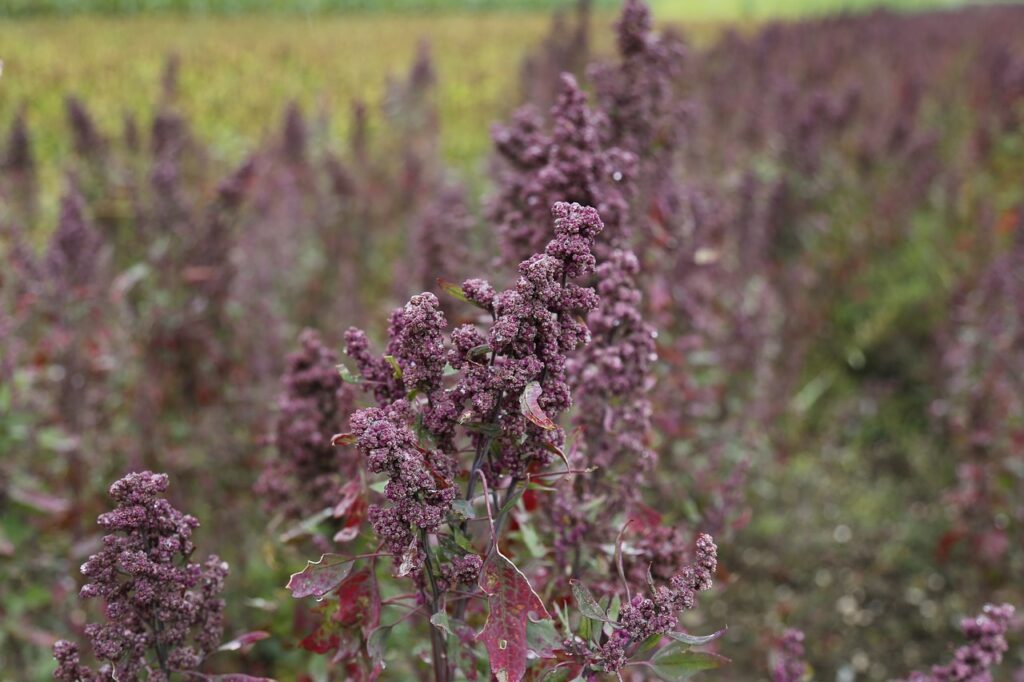
- Quinoa whose saponins limit consumption by wild animals.
- Climbing ivy , known for its household applications as a natural detergent.
Saponins demonstrate the ingenuity of plants in adapting to their environment, while also offering opportunities for exploitation by humans.
Are you looking for an analysis?

2. Natural sources of saponins
Plants rich in saponins
Saponins are present in many plant species, often in varying concentrations depending on the plant part. These molecules are found primarily in the roots, seeds, leaves, and stems. Some plants are particularly known for their high saponin content, giving them specific properties:
- Soapwort ( Saponaria officinalis ): This herbaceous plant of the Caryophyllaceae family is famous for its detergent properties. Its roots, rich in saponins, were historically used to make natural soap.
- Climbing ivy ( Hedera helix ): Containing saponins in its leaves, ivy is often used to create ecological laundry detergents.
- Quinoa ( Chenopodium quinoa ): Saponins, located in the outer layers of the seeds, are responsible for its bitter taste. They also serve as protection against natural predators.
Some food plants also contain saponins, but in smaller quantities. These include soybeans, tomatoes, potatoes, and peas. These saponins play a minor role, but they sometimes influence the flavor and texture of these foods.
Parts of the plant where saponins are concentrated
The distribution of saponins varies depending on the species and type of plant. The parts richest in saponins are often those that require increased defense against predators or pathogens:
- Roots and tubers : Examples: licorice ( Glycyrrhiza glabra ), beetroot ( Beta vulgaris ). These structures, buried in the soil, often concentrate saponins to deter burrowing herbivores.
- Seeds and sprouts : Soybeans ( Glycine max ), for example, contain specific saponins in their sprouts to limit predation by insects.
- Leaves and stems : In some plants such as ivy, the saponins present in the leaves also act as an antifungal barrier.
- Fruits and shells : Some fruits, such as those of the soapberry tree ( Sapindus mukorossi ), are naturally rich in saponins, making them interesting for the manufacture of detergents.
Animals producing saponins
Although saponins are mostly associated with plants, some marine animals also produce them. This discovery, made in the 1990s, broadened the scope of study of these molecules:
- Sea cucumbers ( Holothuroidea ): These animals produce saponins called holothurins, which serve to deter marine predators.
- Starfish : They synthesize saponins that have toxic effects on some fish and crustaceans.
- Marine sponges and zooplankton : These organisms use saponins to defend themselves against micro-predators and limit parasitic interactions.
These examples demonstrate that saponins are not only plant compounds, but defense tools present in different kingdoms of life.
Ecological role of saponins
In nature, saponins play a crucial role in protecting the organisms that produce them. These ecological functions include:
- Protection against predators : The bitter taste and irritating effects of saponins deter herbivores and insects from consuming plants that contain them.
- Antifungal and antibacterial action : Saponins prevent the development of fungi and pathogenic bacteria on plant surfaces, thus reducing the risk of disease.
- Chemical barrier against parasites : In marine animals, saponins protect against aquatic parasites.
- Reduced palatability : The bitterness of saponins limits the consumption of plants by monogastric mammals, enhancing their survival in environments where food competition is high.
For plant professionals, YesWeLab offers laboratory plant analyses to identify and quantify saponins in natural extracts.
3. Applications of saponins
Traditional applications of saponins
Saponins were used by humankind long before their chemical composition was understood. Their ability to produce foam and their detergent properties allowed for their integration into many traditional uses:
- Natural soap making : The roots of the soapwort plant and the fruits of the soapberry tree were commonly used for washing clothes and cleansing skin. These plants provided an ecological alternative to modern chemicals.
- Poison for fishing : In some cultures, plants rich in saponins, such as the roots of Chlorogalum pomeridianum , were crushed and scattered in rivers to kill or immobilize fish. Saponins, toxic to cold-blooded animals, made harvesting fish easier.
- Traditional medicine : Saponins have been used for their expectorant, diuretic, and tonic properties. For example, licorice ( Glycyrrhiza glabra ), rich in glycyrrhizin, was used to soothe respiratory ailments.
These practices show how the natural properties of saponins were exploited intuitively, long before their scientific understanding.
Modern applications in industry
With the advancement of scientific knowledge, saponins have found their place in various modern industries, where their properties are exploited in a targeted manner.
Food industry
In the food industry, saponins are used to improve the texture and stability of products. Here are some examples:
- Emulsifiers and foaming agents : Saponins are incorporated into carbonated beverages and food foams to stabilize bubbles.
- Reducing bitterness : In quinoa products, the rinsing and saponin removal process results in more palatable grains. Natural sweeteners such as mogroside V, a sweetening saponin , are also used as a sugar alternative.
- Natural crop protection : In agriculture, plant extracts rich in saponins are used as biopesticides to control insects and fungi.
Cosmetics industry
Saponins play a key role in the formulation of many skincare products:
- Detergents and cleansing agents : Thanks to their surfactant effect, they allow for gentle cleansing of the skin and hair.
- Stabilization of emulsions : In creams and lotions, saponins help to homogenize formulations.
- Active ingredients : Certain saponins, such as those from ginseng ( Panax ginseng ), are renowned for their anti-aging and regenerative properties.
Pharmaceutical industry
Saponins have attracted considerable interest in medical research due to their diverse biological properties:
- Adjuvants in vaccines : Saponins from Panama wood ( Quillaja saponaria ) are used to enhance the immune response in some modern vaccines.
- Therapeutic effects : Some saponins exhibit anticancer, antiviral, and anti-inflammatory properties. For example, ginsenosides from ginseng have been extensively studied for their health benefits.
- Hypocholesterolemic agents : Saponins can reduce cholesterol levels by increasing the excretion of bile acids.
Specific examples of applications
Saponins and quinoa
Quinoa is a prime example of the practical use of saponins. These compounds, concentrated in the outer layer of the seeds, serve as a natural barrier against predators. However, to make quinoa edible and reduce its bitterness, the seeds undergo specific processing: washing, soaking, or mechanical abrasion to remove the saponins.
Dietary supplements
In the nutraceutical industry , saponins are incorporated into dietary supplements for their beneficial health effects: cholesterol reduction, improved digestion, and antioxidant properties. For example, fenugreek ( Trigonella foenum-graecum ) is used for its steroidal saponins, which support metabolism. Other specific molecules, such as jujuboside A , are also used in formulations designed for well-being and sleep.
Eco-friendly cosmetics
Cosmetic products formulated with saponins, such as ivy laundry detergents or soapwort soaps, are gaining popularity for their reduced ecological impact and gentleness on the skin.
4. Toxicity and precautions related to saponins
Effects on human health
Saponins, while generally harmless when consumed in common foods, can pose health risks when ingested in high concentrations or in specific forms. Here is an overview of the potential effects of saponins on the human body:
- Direct injection toxicity : When introduced directly into the bloodstream, saponins can cause hemolysis of red blood cells. This phenomenon, due to their ability to interact with cholesterol-rich cell membranes, leads to the destruction of red blood cells and can result in serious complications.
- Mucosal irritation : Some saponins can cause irritation of the gastric mucosa, leading to nausea, vomiting or loss of appetite, especially when consumed in large quantities.
- Cholesterol-lowering and antioxidant : At moderate doses, saponins, particularly those from soy and oats, have shown beneficial effects, including a reduction in blood cholesterol and an improvement in cardiovascular health. These effects are linked to their ability to bind to bile acids, thus promoting their excretion.
These contrasting effects highlight the importance of consuming saponins in appropriate amounts, particularly in foods or dietary supplements.
Animal toxicity
Saponins are far more toxic to cold-blooded animals, such as fish and insects, than they are to mammals. This difference is explained by their mode of action:
- Natural fish killers : By altering the surface tension of the water, saponins disrupt the gas exchange of fish, depriving them of oxygen. This property has been exploited in traditional fishing practices.
- Biological insecticides : Saponins affect the digestive system and cuticle of insects, limiting their ability to digest and protect themselves against infections. They are therefore used as biological agents to control agricultural pests.
These characteristics make them valuable compounds for the development of environmentally friendly pest control solutions.
Methods to reduce the toxicity of saponins
Foods naturally containing saponins can undergo specific treatments to reduce their toxicity or bitter taste. These processes, widely used in the food industry, include:
- Soaking : Soaking seeds or vegetables rich in saponins, such as quinoa or chickpeas, helps dissolve some of the saponins in the water. This method is often followed by rinsing to maximize removal.
- Cooking : Heat can partially break down saponins, thus reducing their concentration in food. However, some saponins, particularly those in quinoa, are resistant to moderate temperatures and require prolonged cooking.
- Fermentation : This process, used in some traditional preparations such as lactic acid fermentation, breaks down saponins through the action of microorganisms. This improves not only the taste of food, but also its digestibility.
- Peeling and refining : In some cases, such as with legumes, peeling the outer shells can significantly reduce the saponin content, as these are often concentrated in the outer layers.
These processes make foods containing saponins more palatable while reducing potential health risks.
Regulations and exposure limits
To ensure consumer safety, strict regulations govern saponin levels in food and cosmetic products. These standards vary by country and sector:
- Food standards : The European Union and the United States impose specific limits on the concentration of saponins in food products, particularly those intended for children or sensitive individuals. For example, quinoa manufacturers must ensure that saponin levels are reduced after processing to avoid bitterness and potential adverse effects.
- Cosmetics : Saponins used as foaming or detergent agents in cosmetic products must meet rigorous safety criteria. This includes skin and eye tolerance tests.
- Nutraceutical products : Dietary supplements containing saponins are subject to health claims regulations, requiring robust scientific evidence to substantiate their benefits.
These standards ensure that products containing saponins are both safe for consumers and comply with international regulations.

5. Laboratory analyses of saponins
Laboratory techniques for saponin analysis
Saponins, due to their complex structure and chemical diversity, require specific analytical methods for their identification and quantification, such as laboratory saponin assays
High-performance liquid chromatography (HPLC) :
This method is widely used to separate and quantify saponins present in various plant extracts. HPLC offers high precision, allowing the identification of specific types of saponins, such as those found in soy or quinoa.
- Applications: Analysis of plant extracts for food supplements and cosmetics.
- Advantages: High sensitivity and ability to work on complex matrices.
Chromatography-coupled mass spectrometry (LC-MS) :
This advanced technique is used to determine the exact structure of saponins, including their aglycones and carbohydrate residues. It also allows the detection of saponins at very low concentrations.
- Applications: Identification of rare or new saponins in scientific research.
- Advantages: Very high sensitivity and ability to analyze complex mixtures.
Colorimetric titration :
Although less precise than chromatographic methods, colorimetric titration is a simple and rapid method for quantifying total saponins in crude samples. It is often used in preliminary analyses.
The importance of ISO standards and accredited laboratories
Laboratories that perform saponin analyses must comply with international standards, such as ISO 17025 , which guarantees the reliability and traceability of results. In France, COFRAC accreditation is essential to ensure compliance with regulatory requirements.
- Advantages of ISO 17025 standards :
- Ensuring the quality of analytical results.
- Industry confidence in the data provided by laboratories.
- Specific requirements for saponins :
- Validation of the analytical methods used.
- Rigorous documentation to guarantee the reproducibility of results.
These standards are crucial to ensuring the safety of food, cosmetic, and nutraceutical products containing saponins.
Specific applications of laboratory saponin analysis
Laboratory tests for saponins address a variety of needs across different industrial sectors. Here are a few examples:
- Food industry :
- Saponin dosage in quinoa : To ensure that the bitter taste is reduced to an acceptable level, HPLC analyses are carried out after the processing of the seeds.
- Quality control of pulses : Saponin levels in peas and beans are checked to meet flavour and food safety standards.
- Cosmetics :
- Validation of cleaning products : Saponins used as foaming agents in shampoos or shower gels must be analyzed to ensure their effectiveness and safety.
- Safety tests : Specific analyses are conducted to verify that saponins do not cause skin irritation.
- Nutraceuticals :
- Evaluation of cholesterol-lowering properties : Dietary supplements containing saponins are tested to verify their concentration and compliance with health claims.
- Pharmaceutical research :
- Study of anticancer properties : Saponins from plants such as ginseng are analyzed to evaluate their therapeutic potential.
- Study of anticancer properties : Saponins from plants such as ginseng are analyzed to evaluate their therapeutic potential.
Perspectives for saponin analysis
The evolution of analytical technologies is opening new perspectives for the study of saponins. Advances in spectroscopy, chromatography, and artificial intelligence are enabling:
- Improved characterization of saponins : Identifying complex structures with increased accuracy.
- Automation of analyses : Reduction of delays and increased capacity of laboratories to process a large number of samples.
- Trace detection : Analyzing minute concentrations in complex matrices, particularly for biological or pharmaceutical products.
These advances ensure that saponins will continue to be studied and exploited in various fields, contributing to major innovations in the food, cosmetics and pharmaceutical industries.
6. Frequently Asked Questions about Saponins
What is the role of saponin?
Saponins play an essential biological role, both for the plants that produce them and for their applications in various industrial sectors.
- Protective role in plants :
- Saponins act as a chemical barrier against herbivores, insects, fungi, and bacteria. Their bitter taste and toxicity deter predators from consuming the parts of plants where they are concentrated.
- They also strengthen the plants' natural defenses against external aggressions, contributing to their survival in hostile environments.
- Functional role in human applications :
- In food products, they act as natural emulsifiers, stabilizing water-oil mixtures.
- In cosmetics, they serve as cleansing and foaming agents.
- In medicine, they have recognized effects as hypocholesterolemic agents and adjuvants in vaccines.
The multifunctional role of saponins explains their growing interest in various fields, from agriculture to pharmaceuticals.
Why remove saponin from quinoa?
Quinoa seeds are coated with a layer of saponins, which give them a characteristic bitterness. While this bitterness is a natural defense mechanism against predators, it can be unpleasant for human consumption. Here are the main reasons why the saponins are often removed:
Improved taste :
Saponins give quinoa a bitter taste that can be off-putting. Rinsing or removing them makes the product more palatable for consumers.
Food safety :
Although non-toxic in small quantities, saponins can cause digestive discomfort in some sensitive individuals. Eliminating them reduces this risk.
Industrial process :
During the industrial processing of quinoa, the seeds are generally rinsed and polished to remove a large portion of the saponins. This improves the taste of the finished product and makes it more competitive in the market.
Are saponins toxic to humans?
The toxicity of saponins to humans depends largely on their concentration and how they are consumed:
Ingestion via food :
At normal doses, the saponins found in foods like soy or legumes pose no danger. On the contrary, they can have beneficial effects, such as reducing cholesterol levels and improving digestion.
Side effects at high doses :
In cases of excessive consumption, certain saponins can cause gastric irritation, nausea, or vomiting. However, these cases are rare and generally involve doses far exceeding those found in a balanced diet.
Injection toxicity :
If saponins enter the bloodstream directly (via injection), they can destroy red blood cells, causing hemolysis. This uncommon occurrence highlights the need to handle saponins with care in medical settings.
In conclusion, saponins are generally safe when consumed in natural foods or used in well-formulated products, but their toxicity must be considered in medical or experimental applications.
Which plant contains saponin?
Saponins are found in a wide variety of plants, often in varying amounts depending on the species and the part of the plant. Here are some notable examples:
- Plants very rich in saponins :
- Soapwort (Saponaria officinalis ): Traditionally used to make soap.
- Quillaja saponaria : The soap tree, whose bark is an important source of saponins used in the cosmetics industry.
- Climbing ivy : Its leaves contain saponins used for their detergent properties.
- Food plants containing saponins :
- Quinoa : The outer layers of the seeds are rich in bitter saponins.
- Soy : Contains saponins beneficial for cardiovascular health, including sojasaponin I.
- Tomatoes and potatoes : These vegetables contain saponin alkaloids like solanine, which are more toxic.
- Medicinal plants :
- Ginseng (Panax ginseng) : Rich in ginsenosides, a specific type of saponin with adaptogenic properties.
- Licorice (Glycyrrhiza glabra) : The roots contain glycyrrhizin , a saponin with anti-inflammatory properties.
These examples demonstrate the importance of saponins in many contexts, whether it be their role in nature or their applications in everyday consumer products.