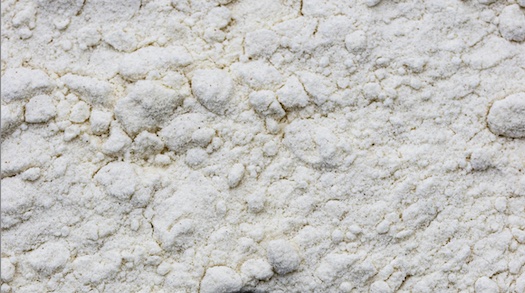
Calcium hydroxide, also known as slaked lime or portlandite, is a versatile chemical compound used for centuries in fields as diverse as cosmetics , food , construction, and the environment. Behind its apparent simplicity lie unique chemical properties and a wide range of applications. In this first part, we will explore in detail the fundamental characteristics of this compound, its chemical structure, its trade names, and the physical and chemical properties that make it so valuable.
1. What is calcium hydroxide?
A scientific definition
Calcium hydroxide is an inorganic chemical compound with the molecular formula Ca(OH)₂ . It belongs to the alkaline earth hydroxide family, characterized by the presence of a metallic cation associated with hydroxyl anions. Its trigonal-hexagonal crystal structure gives this solid a density of approximately 2.24 g·cm⁻³ , and it generally occurs as a white powder or colorless crystals. This compound is obtained by an exothermic reaction between quicklime (calcium oxide, CaO) and water, a reaction chemically described as follows:
CaO (s) + H₂O (l) → Ca(OH)₂ (s) + energyCaO (s) + H₂O (l) → Ca(OH)₂ (s) + energy
This transformation produces a solid that is slightly soluble in water, forming a suspension called milk of lime or, after filtration, a clear solution known as limewater.
Trade names and synonyms
Calcium hydroxide is sold under different names depending on the sector of use. Common names include:
- Slaked lime: used in construction and in industrial processes.
- Hydrated lime: highlighted in the agricultural and food sectors.
- Portlandite: its mineralogical name.
These designations testify to the varied use of this compound throughout the ages.
Physical and chemical properties
Calcium hydroxide is distinguished by its specific physicochemical properties:
- Molar mass : 74.093 g·mol⁻¹.
- Decomposition temperature : 580 °C , where it releases water to become quicklime (CaO).
- Water solubility : low, varying from 1.85 g·L⁻¹ at 0 °C to only 0.77 g·L⁻¹ at 100 °C . This low solubility decreases slightly with increasing temperature, an atypical behavior for many compounds.
Calcium hydroxide is also a basic compound, capable of neutralizing strong acids and maintaining a high pH in aqueous solutions. Its solubility product constant (Kps) is approximately 5.02 × 10⁻⁶ at 25 °C , making it an effective regulator in many industrial applications.
Comparison with other hydroxides
In the field of chemical bases, calcium hydroxide stands out from its counterparts, such as sodium hydroxide (NaOH) and potassium hydroxide (KOH), due to its low solubility and lower cost. Unlike these strong bases, it is often preferred in applications where a weakly alkaline solution is sufficient, thus limiting the risks associated with aggressive handling. Furthermore, its controlled reactivity makes it ideal for uses requiring gradual pH regulation.
With these solid foundations, calcium hydroxide positions itself as an essential player in chemistry, combining simple but effective properties with increased safety for the user and the environment.
2. How is calcium hydroxide produced?
Industrial production of calcium hydroxide
Calcium hydroxide is primarily produced on a large scale by a process called quicklime slaking . This method relies on the reaction between calcium oxide (CaO) and water, generating a significant amount of heat in a highly exothermic reaction:
CaO (s) + H₂O (l) → Ca(OH)₂ (s) + energyCaO (s) + H₂O (l) → Ca(OH)₂ (s) + energy
This process is often carried out in specialized industrial facilities equipped with temperature and pressure control devices. Here are the key steps:
- Extraction of raw material : Calcium oxide is obtained by calcining limestone (CaCO₃) in industrial furnaces at temperatures of around 900 to 1000 °C .
- Extinction : Calcium oxide is added to water in precise proportions, forming a paste or suspension called milk of lime.
- Separation and drying : Lime milk is filtered to obtain a pure solution (lime water) or dried to recover a fine powder of calcium hydroxide.
Laboratory manufacturing
On a smaller scale, calcium hydroxide can be prepared in the laboratory using methods similar to those employed in industry. The slaking of quicklime is carried out under controlled conditions to avoid significant temperature variations, which can affect the quality of the final product. This process is often used to obtain samples for chemical analyses or scientific experiments.
An alternative method involves reacting metallic calcium with water. Although less common and more dangerous, it also produces calcium hydroxide, accompanied by the release of hydrogen gas.
Ca (s) + 2H₂O (l) → Ca(OH)₂ (s) + H₂ (g)Ca (s) + 2H₂O (l) → Ca(OH)₂ (s) + H₂ (g)
Environmental impact of production
The production of calcium hydroxide has environmental implications, particularly due to carbon dioxide (CO₂) emissions during limestone calcination. However, some initiatives aim to reduce this impact:
- Emissions recycling : Modern technologies capture the CO₂ released during calcination for reuse in industrial processes.
- Use of renewable energy sources : Some producers are replacing fossil fuels with greener alternatives, thereby reducing the carbon footprint of production.
Optimizing industrial processes also contributes to better energy efficiency, minimizing waste and maximizing the use of raw materials.
Innovations in production methods
With growing concerns about sustainable development, research is underway to explore alternative production methods. These include:
- Synthesis from secondary sources : Extraction of calcium hydroxide from calcium-rich industrial by-products, such as combustion ash.
- Controlled hydration : Techniques that allow the reactivity of the final product to be modulated, thus adjusting its properties for specific applications.
These innovations pave the way for more environmentally friendly production while meeting the growing needs of industries.
3. Uses of calcium hydroxide
Food applications
Calcium hydroxide is widely used in the food industry due to its alkaline properties and low toxicity. This food additive, identified by the code E526, plays several crucial roles in food preparations:
- pH regulator : It adjusts and maintains the acidity in products such as jams, ice cream, and fruit juices. This property ensures the chemical stability and preservation of food.
- Firming agent : By strengthening the structure of plant tissues, it helps to preserve the firmness of canned fruits and vegetables.
- Technological aid : It is often used in association with other additives to improve textures or stabilize formulations, without always appearing on the label of finished products.
Industrial applications
In the industrial sector, calcium hydroxide is a versatile material used in various applications:
- Construction and civil engineering :
- Soil stabilization : It improves the load-bearing capacity of clay soils, thus facilitating the construction of roads and infrastructure.
- Manufacturing of building materials : As a component of cement and plaster, it contributes to the strength of structures.
- Wastewater treatment :
- It acts as a neutralizing agent, precipitating heavy metals and clarifying polluted waters.
- Its use also helps to reduce the proliferation of microorganisms in treatment basins.
- Gas treatment :
- Calcium hydroxide captures acidic pollutants, such as sulfur dioxide (SO₂), in industrial fumes, thus reducing environmental impact.
Applications in animal health
In the field of livestock farming, calcium hydroxide plays a key role in animal hygiene and health:
- Pathogen reduction : Sprinkled in stables, it limits the spread of bacteria and viruses.
- Improving the quality of animal feed : When incorporated into feed, it helps regulate pH and improves preservation, while promoting better digestion in animals.
Applications in cosmetics and pharmaceuticals
The alkaline and purifying properties of calcium hydroxide make it a sought-after ingredient in cosmetic and pharmaceutical formulations:
- Cosmetics :
- It is used to stabilize emulsions and adjust the pH of creams and lotions.
- Its presence in certain masks or exfoliating products helps to eliminate impurities from the skin.
- Dental products :
- In dental filling materials, it promotes the remineralization of damaged bone tissue.
- It is also used in root canal treatments for its antibacterial properties.
- Pharmaceutical products :
- Calcium hydroxide is a key ingredient in some dermatological formulations to soothe irritations and balance skin pH.
Environmental applications
Environmental protection greatly benefits from the versatile properties of calcium hydroxide:
- Sludge treatment :
- It neutralizes bad odors while destroying microorganisms present in industrial waste.
- It also facilitates the recycling of sludge for agricultural uses.
- Agricultural soil management :
- Used as a lime amendment, it increases the pH of acidic soils, thus improving nutrient availability for crops.
- Air purification :
- Calcium hydroxide is used in incinerator filters to reduce harmful emissions, such as dioxins and sulfur oxides.
Calcium hydroxide has established itself as a multifunctional product, indispensable in a variety of sectors, thanks to its ability to regulate pH, stabilize materials, and neutralize pollutants. These multiple uses demonstrate its strategic importance in modern industries.

4. The advantages of calcium hydroxide compared to other compounds
An economical and versatile pH regulator
Calcium hydroxide is distinguished by its ability to maintain a stable pH while remaining more economical than other similar compounds. For example:
- Faced with sodium hydroxide (NaOH) :
- Reduced cost : Calcium hydroxide is significantly cheaper to produce and use in industrial applications.
- Safer handling : Unlike caustic soda, it is less aggressive to skin and materials, which limits the risks when using it.
- Compared to potassium hydroxide (KOH) :
- It offers similar performance in pH regulation, but at a much lower cost, making it ideal for large-scale applications.
An effective alternative in water and gas treatment
In the field of environmental treatment, calcium hydroxide outperforms some competing compounds due to its specific properties:
- Water treatment :
- Compared to sodium hydroxide (NaOH), it is capable of neutralizing acids with similar efficiency, while offering a better heavy metal precipitation capacity.
- Its lower cost and price stability make it a preferred solution for wastewater treatment plants.
- Gas treatment :
- When used to capture acidic pollutants (such as sulfur dioxide, SO₂), calcium hydroxide is often preferred to sodium bicarbonate. Unlike sodium bicarbonate, it does not require pre-treatment by micronization and is ready to use in its highly reactive, fine powder form.
A responsiveness adapted to a variety of applications
Calcium hydroxide exhibits a chemical reactivity that can be perfectly modulated according to needs, which distinguishes it from more aggressive or less flexible compounds:
- Gradual neutralization : Its moderate solubility in water allows for a gradual adjustment of pH, avoiding sudden variations in industrial or agricultural systems.
- Chemical stability : Unlike some more unstable products, calcium hydroxide retains its properties even when stored for long periods, reducing losses for users.
A controlled environmental impact
As a natural alkaline material, calcium hydroxide offers significant environmental advantages compared to other chemical compounds:
- Biodegradability : It breaks down easily into calcium and hydroxyls, elements that are not toxic to the environment.
- Waste reduction : Its versatile properties allow it to replace several chemicals in the same process, thus reducing waste and the complexity of supply chains.
- Compatibility with sustainable approaches : Calcium hydroxide can be used in processes aimed at recycling or recovering value from industrial waste, such as metal recovery or sludge stabilization.
Superior performance in specific applications
Some applications require precise performance levels that calcium hydroxide provides optimally:
- Sludge treatment : Its ability to neutralize odors while destroying microorganisms makes it indispensable in the management of industrial and municipal waste.
- Construction : In civil engineering, its combination with silica produces pozzolanic structures that increase the mechanical resistance of structures.
Thanks to its unique combination of chemical properties, competitive costs and limited environmental impact, calcium hydroxide is emerging as a strategic choice for a wide variety of sectors.
Are you looking for an analysis?
5. Toxicity and precautions for use
Effects on human health
Calcium hydroxide, although widely used for its many applications, presents certain health risks when handled or used without precautions:
- Skin and eye irritations :
- Due to its alkaline nature, direct contact with the skin can cause irritation, redness, or chemical burns.
- Splashing the product into the eyes can cause serious injury, or even temporary or permanent loss of vision, if it is not quickly rinsed off with plenty of water.
- Effects on the respiratory system :
- Inhaling fine calcium hydroxide dust can irritate the nasal mucous membranes and throat, causing coughing fits or breathing difficulties.
- Prolonged exposure to high concentrations can worsen existing respiratory problems, particularly in people with asthma.
- Accidental ingestion :
- If ingested, the compound can cause burns to the esophagus and stomach, as well as severe digestive problems such as abdominal pain or vomiting.
Environmental impacts
Excessive use or uncontrolled discharge of calcium hydroxide can have significant environmental impacts:
- Watercourses and aquatic ecosystems :
- Its high alkalinity can disrupt the natural balance of waterways, making the environment inhospitable to many aquatic species.
- Prolonged exposure can lead to mineral precipitation, altering the chemical composition of the water.
- Ground :
- Although calcium hydroxide can be beneficial in correcting soil acidity, excessive application can render soils unsuitable for cultivation, damaging beneficial microorganisms necessary for their fertility.
- Air :
- Handling large quantities in the form of fine powder can lead to local air pollution if containment measures are not put in place.
Safety standards and regulations
To minimize the risks associated with the use of calcium hydroxide, several standards and regulations have been established:
- Personal Protective Equipment (PPE) :
- Wearing sturdy gloves, protective eyewear and a dust mask is recommended when handling.
- In industrial environments, the use of full-body suits and appropriate ventilation systems is often mandatory.
- European directives :
- Calcium hydroxide is classified as a hazardous substance under the REACH , requiring a risk assessment before use.
- Companies handling this substance must comply with safety data sheets (SDS) to inform workers of the precautions to be taken.
- Exposure limits :
- Maximum permissible concentrations in the air (VLEP) are defined by health organizations to avoid risks associated with prolonged inhalation.
Recommendations for safe use
- Storage :
- Calcium hydroxide must be stored in airtight containers and protected from moisture to prevent degradation and the formation of unwanted lime slurry.
- Storage areas must be well ventilated to limit the accumulation of dust.
- Spill management :
- In case of accidental spillage, it is recommended to neutralize the substance with a weak acid, such as vinegar or citric acid, before proceeding with cleaning.
- The residues must be disposed of in accordance with local hazardous waste regulations.
- User training :
- Operators must be trained to handle calcium hydroxide correctly and react quickly in case of accidental exposure.
Although calcium hydroxide is a very useful chemical compound, its corrosive properties and alkalinity require rigorous precautions to ensure user safety and environmental preservation.

6. How to test for calcium hydroxide?
Analytical techniques for measuring purity and concentration
1. Acid-base titration :
- Acid-base titration is a classic method used to determine the concentration of calcium hydroxide in a solution. This technique relies on the neutralization of a strong base by a standardized acid.
- Process :
- A calcium hydroxide solution is prepared and titrated with a strong acid (e.g., HCl).
- The use of a color indicator or a pH meter allows the equivalence point to be detected.
- Application :
- Verification of the purity of lime milk solutions in industrial or laboratory environments.
2. Infrared (IR) Spectroscopy :
- Infrared spectroscopy is used to analyze the molecular structure of calcium hydroxide.
- Methodology:
- The sample is subjected to an infrared beam to detect the characteristic vibrations of chemical bonds (OH and Ca-O).
- Benefits :
- A rapid and non-destructive method for confirming the chemical identity of a sample.
3. High-performance liquid chromatography (HPLC) :
- Although primarily used to analyze organic compounds, HPLC can also be adapted to detect traces of impurities in calcium hydroxide, especially when used in complex formulations.
- Specific applications:
- Quality control in the cosmetics or pharmaceutical industries.
4. X-ray diffraction (XRD) analysis :
- This method allows the crystalline structure of calcium hydroxide to be characterized.
- Use :
- Identify and quantify the phases present in a sample, in particular to verify the absence of residual calcium oxide.
Quality standards and certifications
ISO 17025 standards and COFRAC accreditation :
-
- Laboratories performing analyses on calcium hydroxide must comply with strict standards to ensure the reliability of the results.
- Requirements:
- Precise calibration of analytical equipment.
- Rigorous documentation of processes and results.
Compliance with European and international regulations :
-
- Analyses must comply with guidelines such as EC Regulation No. 1935/2004 for materials in contact with food or FDA standards for products intended for North American markets.
Applications of analytical tests
Food industry :
- Control the calcium hydroxide content in food formulations to ensure compliance with additive specifications (E526).
- Check that pH levels are adequate to preserve product quality.
Construction industry :
- Ensure that mixtures containing calcium hydroxide meet the required mechanical properties, particularly for soil stabilization or cement production.
- Identify any impurities that could impair the performance of the materials.
Environmental sector :
- Analyze the effectiveness of calcium hydroxide in wastewater treatment or the capture of gaseous pollutants.
- Measuring its reactivity in neutralization processes.
Innovations in testing techniques
With technological advances, new, more precise and faster analytical methods are emerging:
- Raman Spectroscopy :
- Allows for detailed analysis of calcium hydroxide without complex sample preparation.
- Used for solid samples or suspensions.
- Automated techniques :
- The integration of robots into modern laboratories improves the accuracy of analyses, reduces turnaround times and limits human error.
Analytical testing of calcium hydroxide plays a vital role in ensuring the quality and safety of its applications across various sectors. These processes, supported by rigorous international standards, guarantee optimal compliance while meeting industrial needs.
7. Practical questions about calcium hydroxide
How to obtain calcium hydroxide?
Industrial methods :
- Calcium hydroxide is obtained by reacting quicklime (CaO) with water in a process called slaking. This reaction releases heat, producing either a fine powder or an aqueous suspension, depending on the manufacturing conditions.
- The raw material, limestone, is first calcined at high temperature to obtain quicklime before being hydrated.
Laboratory manufacturing :
- In an experimental setting, small quantities can be produced by carefully hydrating quicklime with distilled water. This method is used for specific tests or analyses.
When to use calcium hydroxide?
Industrial applications :
- In construction, it is used to stabilize soils or as a component of hydraulic binders in cement.
- In water treatment, it is used to neutralize acidic effluents or precipitate heavy metals.
Food uses :
- pH regulator and firming agent in food products such as canned vegetables, jams or fruit juices.
- An auxiliary additive in more complex formulations, often in combination with other substances.
Hygiene and health :
- Disinfectant in stables to limit bacterial and viral infections.
- Active ingredient in dental materials or certain dermatological products.
How do I remove calcium hydroxide?
Chemical neutralization :
- To remove deposits or residues, calcium hydroxide can be neutralized with weak acids such as vinegar (acetic acid) or lemon juice (citric acid). These acids react with the compound to form water-soluble salts.
Mechanical methods :
- In industrial settings, equipment in contact with calcium hydroxide can be cleaned using brushes or pressurized water jets to remove solid deposits before any chemical neutralization.
What is the trade name for calcium hydroxide?
Designations according to sectors :
- Slaked lime : Commonly used in the fields of construction and the environment.
- Hydrated lime : Used in agriculture for soil amendment and in food as an additive.
- Portlandite : Name given to calcium hydroxide in its natural mineralogical form.
Commercial variants :
- Trade names sometimes include additional specifications to indicate particle size , purity, or specific applications (e.g., "slaked lime for clay soils").