The NF EN 14476 standard is a crucial reference for disinfectant and antiseptic products, particularly in the fight against viruses. It is used to certify that these products are capable of effectively destroying pathogens, thus guaranteeing maximum safety in critical environments such as hospitals, laboratories, and the food and cosmetics .
This article explores in detail the key aspects of this standard, its applications, and the laboratory methods used to test the virucidal efficacy of products.
What is the NF EN 14476 standard?
The NF EN 14476 standard is a European standard that assesses the virucidal efficacy of disinfectants and antiseptics. It specifies laboratory testing methods, including quantitative suspension tests, to determine whether a product is capable of inactivating or destroying a virus. This standard applies primarily to hydroalcoholic solutions, disinfectant gels, and other products used in environments requiring strict hygiene.
The importance of standards in critical contexts
Disinfecting surfaces and hands has become a priority, particularly in hospitals, medical laboratories, and the food industry. The NF EN 14476 standard is especially important because it guarantees the effectiveness of disinfectant products against viral threats such as influenza, COVID-19, and other enveloped and non-enveloped viruses.
Laboratory testing method
The tests performed for this standard consist of quantitative laboratory suspension tests, which assess the product's ability to inactivate a virus within a given timeframe. These tests are conducted under strict conditions, using specific product concentrations to determine if they achieve the required efficacy for the type of virus being tested. These tests are crucial for ensuring user safety in contexts where virucidal decontamination is essential.
What is a yeasticide?
A yeasticide is a chemical agent capable of destroying or inhibiting the growth of yeasts, a specific type of microscopic fungus. These organisms, although often harmless, can pose a problem in environments requiring rigorous disinfection, such as hospitals, food laboratories, or industrial facilities.
Difference between yeasticide, bactericide and virucide
It is important to distinguish between a yeasticide, a bactericide, and a virucide. A bactericide destroys bacteria, while a virucide is designed to inactivate viruses. A yeasticide, on the other hand, specifically targets yeasts and other fungi. Each type of disinfectant has its own spectrum of activity and is used depending on the pathogens to be eliminated.
The importance of yeasticides in disinfection
Yeasts can thrive on damp surfaces, in industrial environments, and in water treatment systems. These organisms can contaminate food and beverages, causing significant degradation in product quality and safety. In the food industry, the use of yeasticides is crucial to prevent fungal contamination and ensure product safety. These disinfectants are also used in the medical field to prevent nosocomial infections caused by opportunistic yeasts such as Candida .
Efficacy criteria for yeasticides
Yeast killers must meet certain criteria to be considered effective. In addition to being certified as compliant with standards such as NF EN 14476, they must:
- To have a rapid effect, generally within the first few minutes of application.
- To be compatible with the surfaces to be disinfected without damaging them.
- To be non-toxic to the user under the recommended conditions of use.
Yeast-killing products certified by the NF EN 14476 standard have proven their effectiveness in laboratory tests, guaranteeing their use in sectors where fungal decontamination is essential.
What is the minimum application time for a bactericidal disinfection operation?
Application time is a critical factor in the effectiveness of disinfectants. For a product to be considered bactericidal, it must inactivate or destroy bacteria within a specific timeframe, under precise conditions. This application time is generally specified by the NF EN 14476 standard, which also includes specific recommendations for the correct use of disinfectants.
Recommended application time
For effective bactericidal disinfection, the NF EN 14476 standard recommends a minimum application time of 30 seconds to 5 minutes, depending on the product concentration and the type of surface being treated. This timeframe allows the active ingredients to reach their full effectiveness in inactivating or killing the bacteria present. Failure to comply with the contact time may result in incomplete disinfection, leaving live and active bacteria.
Variability depending on the products and conditions
Application time may vary depending on several factors:
- Product concentration : A higher concentration may reduce the time required, but must be used with caution to avoid damaging surfaces or posing a health risk.
- Temperature and humidity : Some disinfectants are more effective at specific temperatures or with a certain level of humidity. For example, a bactericidal product may act more quickly in a high-temperature environment.
Importance of respecting the application time
It is crucial to adhere to the recommended application time to ensure complete disinfection. If the disinfectant is not left to act long enough, some bacteria may survive, leading to a risk of contamination. Furthermore, partial disinfection can promote the development of bacterial resistance, making future treatments less effective.
By following the guidelines of the NF EN 14476 standard, users can ensure that the disinfectants they use provide adequate protection against bacteria.
What are the characteristics of a good disinfectant?
To guarantee effective disinfection, disinfectants must meet several criteria. Whether for eliminating viruses, bacteria, or fungi, these products must combine effectiveness, safety, and compliance with current standards, particularly the NF EN 14476 standard.
Broad spectrum of action
A good disinfectant must be able to target a wide range of microorganisms, including viruses, bacteria, and yeasts. Products conforming to the NF EN 14476 standard are particularly effective against enveloped viruses, but some may also be active against non-enveloped viruses, which are more difficult to eliminate. A broad spectrum of action ensures complete disinfection in high-risk environments, such as hospitals or food processing plants.
Speed of action
Speed of action is a key criterion for judging the effectiveness of a disinfectant. A good disinfectant must act quickly to inactivate or destroy microorganisms present on surfaces or skin. Generally, a contact time of a few minutes (often between 30 seconds and 5 minutes) is recommended, although this depends on the type of product and the targeted microorganism. The NF EN 14476 standard sets strict requirements for contact time to guarantee complete disinfection.
Safety for the user and surfaces
A good disinfectant must be both effective against microorganisms and safe for the user. Disinfectants used in medical or industrial environments must not be corrosive or toxic when applied under normal conditions. Furthermore, they must not damage the surfaces to which they are applied, whether metal, plastic, or textiles.
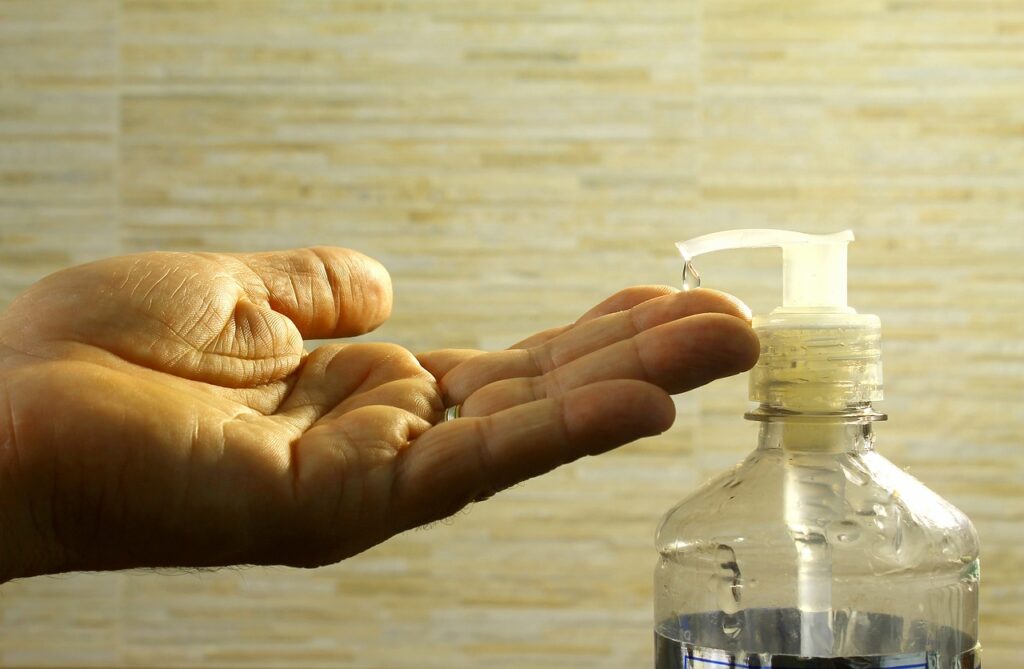
Hand sanitizers, such as alcohol-based gels, must be formulated to avoid skin irritation, even with frequent use. These products must also meet environmental and safety standards, particularly in settings where prolonged exposure may occur.
Ease of use
A disinfectant must be easy to use, whether in a professional or home setting. This includes clear application instructions, compatibility with dispensing devices (such as sprays or wipes), and secure packaging. The goal is to enable users to apply the product correctly and effectively, even in situations where rapid action is required, such as in hospitals.
Stability and shelf life
Disinfectants must also be stable over time to guarantee their long-term effectiveness. Chemicals used for disinfection can lose their activity if they are stored improperly or if they are sensitive to light or heat. Therefore, a good disinfectant must have a sufficiently long shelf life and clear storage conditions to prevent premature degradation.
Compliance with standards
Finally, to be considered a good disinfectant, a product must meet strict regulatory standards, such as the NF EN 14476 standard for virucides. Disinfectants conforming to this standard have been laboratory tested to guarantee their ability to inactivate viruses. Other certifications, such as ISO 17025 or COFRAC accreditation, may also be relevant for assessing a product's quality in specific contexts (medical, industrial, or environmental).
A good disinfectant is therefore a product that combines effectiveness, safety, and regulatory compliance. It must be usable in various environments while ensuring optimal protection against pathogens.
Virucidal disinfection according to standard NF EN 14476
The NF EN 14476 standard specifically assesses the virucidal efficacy of disinfectants. For a product to comply with this standard, it must demonstrate its effectiveness against target viruses in laboratory tests. This section focuses on the testing methods used to ensure that disinfectant products meet the virucidal criteria established by the standard.
Definition and role of virucidal disinfection
Virucidal disinfection involves destroying or inactivating viruses present on surfaces or in specific environments. Unlike bacteria, viruses are much smaller particles, and their resistance to disinfectants can vary depending on their viral envelope or structure. The NF EN 14476 standard ensures that disinfectants are effective against various types of viruses, including enveloped viruses (such as COVID-19) and non-enveloped viruses (such as adenoviruses).
Laboratory testing process
To certify a disinfectant as virucidal, laboratories perform quantitative suspension tests following the procedures described in the standard. These tests expose virus samples to different concentrations of disinfectant under controlled conditions. The laboratories then measure the reduction in the number of infectious viruses after a specified contact time. To be considered effective, a disinfectant must be able to reduce the number of viruses by 99.99% (i.e., a logarithmic reduction of 4 log).
The results of these tests guarantee that the products comply with the strict standards of the NF EN 14476 standard and that they are suitable for use in sensitive environments such as hospitals, medical laboratories, or food industries.
Types of viruses tested
Disinfectants conforming to the NF EN 14476 standard are tested against several types of viruses to guarantee their effectiveness in different contexts. Target viruses are selected based on their structure and resistance to disinfectants. Among the viruses tested are:
- Enveloped viruses : such as the influenza virus (flu) or the coronavirus (COVID-19). These viruses are easier to destroy because their lipid envelope is susceptible to chemical agents such as alcohols or quaternary ammonium compounds.
- Non-enveloped viruses : such as noroviruses or enteroviruses, which are more resistant and require specific products to be effectively inactivated.
Disinfectants capable of acting on these different categories of viruses are essential in situations of high risk of contamination, particularly in hospital settings or during viral pandemics.
Are you looking for an analysis?
Practical applications in different sectors
- Medical sector : Hospitals and clinics use virucidal disinfectants to sterilize instruments and disinfect surfaces that come into contact with patients. The NF EN 14476 standard is often a key criterion for ensuring the protection of healthcare workers and patients against nosocomial viral infections.
- Food processing sector : Disinfecting surfaces in food handling environments is crucial to prevent cross-contamination by pathogenic viruses. EN 14476 certified virucidal disinfectants guarantee strict hygiene while complying with food safety regulations.
- Public environments and offices : During periods of epidemic or pandemic, the use of virucidal disinfectants in offices, public transport, schools and other places frequented by the public helps to limit the spread of viruses.
In summary, the NF EN 14476 standard is an essential reference for guaranteeing the virucidal efficacy of disinfectants. Rigorous laboratory tests ensure that these products can be used in critical environments while offering maximum protection against viruses.
Scientific studies and laboratory analysis methods
The effectiveness of disinfectants, particularly their compliance with the NF EN 14476 standard, relies on rigorous scientific laboratory methods. Analytical tests are essential to ensure that disinfectant products are capable of inactivating the targeted microorganisms.
Laboratory analysis techniques
Laboratories use several analytical techniques to evaluate the effectiveness of disinfectants. Among these, gas chromatography coupled with mass spectrometry ( HS-GC-MS ) is widely used to identify and quantify volatile compounds present in disinfectants.
HS-GC-MS (Headspace Gas Chromatography-Mass Spectrometry) is a powerful method for analyzing gas samples by detecting volatile organic compounds released by disinfectants. This method provides a precise analysis of the components present in a product, ensuring that the chemical mixture meets standards and is effective against viruses.
Sample collection
To perform tests, samples must be collected under specific conditions to ensure reliable results. For example, sampling must be carried out on inert and hermetically sealed supports to prevent external contamination. Laboratories use appropriate vials for collecting these samples, and the limits of quantification (LOQ) can vary between 0.1 mg/L and 10 mg/L, depending on the compounds being analyzed.
Limits of quantification and results
Limits of quantification define the lowest concentration of a compound that a laboratory can accurately detect. For disinfectant analysis, these thresholds are essential because they allow for measuring a product's effectiveness even at very low concentrations. This ensures that disinfectants conforming to EN 14476 not only contain effective active components, but that these components are present in sufficient quantities to guarantee their virucidal action.
The importance of scientific rigor
The use of analytical techniques such as HS-GC-MS and other validated in-house methods ensures that the tested disinfectants are safe, effective and comply with the strictest standards, such as NF EN 14476. These scientific studies also allow for the adjustment of disinfectant formulations to adapt to new viruses or specific requirements of different industrial sectors, thus guaranteeing continuous and reliable protection.
In summary, rigorous laboratory analysis forms the basis for disinfectant validation. Using methods such as HS-GC-MS, researchers can ensure that each product meets safety and efficacy standards, thus protecting users in critical situations.
Requirements and applications in different industrial sectors
The NF EN 14476 standard applies to various industrial sectors, each with specific disinfection and compliance requirements. These sectors must adhere to strict safety and regulatory protocols to guarantee human health and product quality.
Health sector
In the medical field, disinfectants are essential for preventing hospital-acquired infections. Hospitals and clinics use virucidal products that comply with the NF EN 14476 standard to disinfect medical instruments, equipment, and surfaces. Viruses can spread easily in hospital environments, and effective disinfection is crucial to protect patients and healthcare staff. Products that comply with the NF EN 14476 standard offer guaranteed effectiveness, particularly against enveloped viruses such as influenza and coronaviruses.
Agri-food sector
In the food industry, disinfection is crucial for preventing cross-contamination and ensuring food safety. Surfaces that come into contact with food must be thoroughly disinfected to prevent the spread of viruses and other microorganisms. Disinfectants used in this sector must not only comply with the NF EN 14476 standard but also adhere to strict food safety regulations, such as the INCO (Food Product Information) Regulation and EC Regulation No. 1935/2004 concerning materials in contact with food. Inappropriate disinfection can lead to serious consequences, including product recalls and risks to consumer health.
Cosmetics sector
Cosmetic laboratories, such as those used by companies like YesWeLab , regularly conduct analyses to verify the safety of cosmetic products. Virucidal disinfectants play a crucial role in disinfecting production tools and surfaces. Migration tests, which measure the potential contamination of cosmetics by components in their packaging, are essential to ensure these products are free of hazardous substances. Disinfectants compliant with the NF EN 14476 standard help prevent viral contamination during the production process.
Environmental sector
In the field of environmental management, virucidal disinfectants are used for water treatment, waste management, and surface disinfection in industrial facilities. Legionella, for example, poses a risk in water distribution systems and requires effective virucidal disinfection to prevent its spread. Companies specializing in the treatment of industrial effluents and sludge regularly use products certified to meet disinfection standards to comply with current regulations and minimize their environmental impact.
Food packaging and materials sector
Disinfecting materials intended to come into contact with food is another area where the NF EN 14476 standard plays a crucial role. Materials such as plastics, metals, and paper must be free from contamination to guarantee food safety. Migration tests, performed to verify that disinfectants used on these materials do not transfer hazardous substances into food, are essential to comply with European and international standards, such as EC Regulation No. 1935/2004 and FDA standards in the United States.
In summary, the NF EN 14476 standard is applicable in a multitude of industrial sectors where disinfection is essential. Each sector must adapt its disinfection practices according to its regulatory requirements and the nature of the microbiological risks to which it is exposed.
What certifications and regulations must be respected?
Virucidal disinfectants, to be used safely in various sectors, must not only comply with the NF EN 14476 standard, but also meet other international certifications and regulations. These certifications guarantee that the products are tested in accredited laboratories and that they meet quality and safety standards.
ISO 17025 Certification
ISO 17025 certification is an international standard for testing and calibration laboratories. This standard ensures that laboratories performing disinfectant tests possess the necessary expertise to produce reliable results. It assesses several criteria, including the technical competence of staff, the validity of test methods, and equipment management. ISO 17025 certified laboratories are therefore able to guarantee the accuracy and reliability of the results obtained, which is crucial for evaluating the effectiveness of disinfectants in accordance with the NF EN 14476 standard.
COFRAC Certification
In France, COFRAC (French Accreditation Committee) is the national body that accredits laboratories and guarantees their compliance with international quality standards, notably ISO 17025. COFRAC-accredited laboratories are authorized to issue results that are recognized nationally and internationally. In the field of disinfection, COFRAC laboratories test the effectiveness of disinfectant products according to standardized procedures, ensuring that the results meet regulatory requirements and are suitable for use in industrial or medical settings.
Compliance with European regulations
Disinfectants used in the European Union must comply with several regulations, depending on their area of application. Key regulations include:
- Regulation (EU) No 528/2012 on biocidal products governs the placing of biocidal products on the market in the European Union. This regulation ensures that disinfectants do not pose a risk to human or animal health or to the environment.
- Regulation (EC) No 1935/2004 on materials in contact with food imposes strict requirements for disinfectants used in the food industry. These products must be formulated in such a way as not to contaminate food.
Compliance with US regulations (FDA)
Companies exporting disinfectants to the United States must also comply with Food and Drug Administration (FDA) . The FDA sets stringent standards for products used for disinfection in the medical, laboratory, and food industries. Disinfectants used in these environments must meet safety and efficacy requirements to be authorized for sale in the U.S. market.
In conclusion, disinfectant certification is not limited to compliance with the NF EN 14476 standard. Products must also meet international quality and safety standards for use in various industrial and medical sectors. ISO 17025 and COFRAC-certified laboratories, as well as European and American regulations, play a key role in this rigorous evaluation.