1. Origin and chemical characteristics of sorbitol
This first part explores the natural origins of sorbitol, its distinctive chemical properties, and its physical characteristics that make it valuable in various industrial sectors.
Definition and chemical structure
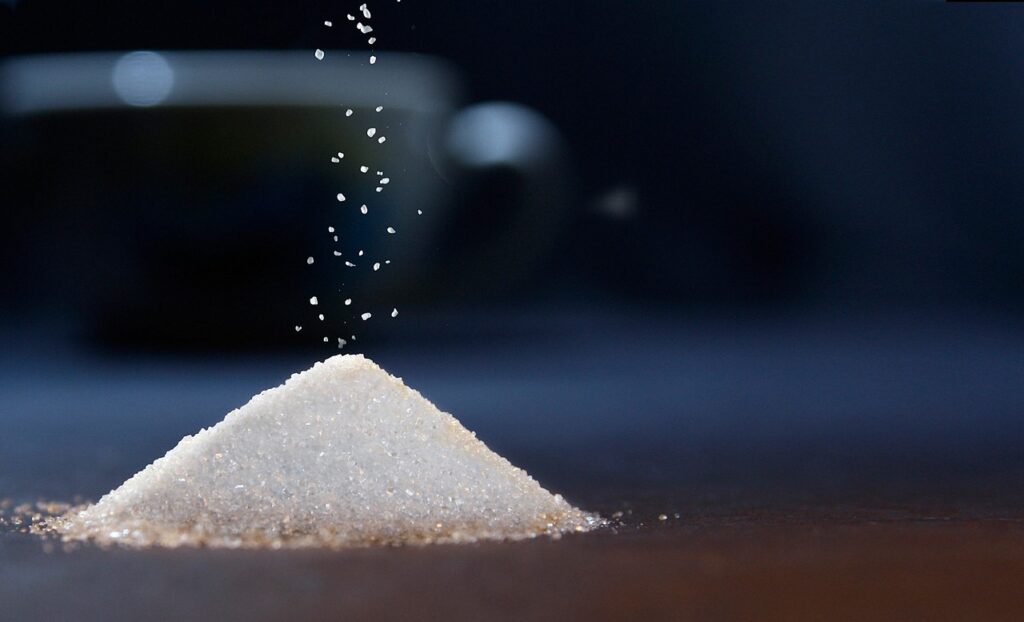
Sorbitol, also known as glucitol, is a natural polyol classified as a sugar alcohol. Its chemical formula is C6H14O6 , and it consists of a carbon chain of six carbon atoms bonded to six hydroxyl groups. Unlike common sugars such as glucose, sorbitol contains neither ketone nor aldehyde functional groups. These properties make it an alternative sweetener with a sweetening power approximately half that of sucrose.
Natural origin and industrial synthesis
The name "sorbitol" comes from the rowan tree, whose berries are rich in this molecule. However, prunes remain the most concentrated natural source of sorbitol. In plants, sorbitol is a key product of photosynthesis, particularly in Rosaceae, where it serves as a temporary carbon reserve and the main carbohydrate transported in the phloem.
Industrially, sorbitol is produced by catalytic hydrogenation of glucose. This process involves reducing glucose to sorbitol under high hydrogen pressure and in the presence of a catalyst such as nickel.
Physical and chemical properties
Sorbitol is a white, odorless crystal that is highly soluble in water, with a solubility of 2,750 g/L at 30 °C. It has a pKa of 13.572, indicating its low acidity. Its melting point ranges from 88 to 102 °C, and it is only slightly soluble in ethanol, which limits some of its industrial applications.
Its sweetening power is estimated at 0.5-0.6 times that of sucrose, but it is distinguished by its ability to retain moisture, an essential property in food and cosmetic formulations. As a polyol, it is stable under moderate temperature and pH conditions, although high temperatures can lead to its degradation.
2. Industrial applications and uses of sorbitol
This second part highlights the various industrial uses of sorbitol, emphasizing its key role in the food, pharmaceutical, cosmetic, and chemical sectors.
Use in the food industry
Sorbitol is widely used in the food industry for its unique properties as a sweetener, humectant, and stabilizer. As a sweetener, it is often incorporated into low-fat or diabetic-friendly products because it has a very low blood sugar spike. Furthermore, its low fermentability by yeast makes it suitable for baked goods.
Thanks to its ability to retain moisture, sorbitol also plays a crucial role in maintaining the freshness of food products, such as cakes and energy bars. This property improves texture and extends shelf life. It is also used as a crystallization retardant in chocolates and confectionery.
Pharmaceutical applications
In the pharmaceutical industry, sorbitol is commonly used as an excipient in syrups and tablets. Its sweet taste effectively masks the bitterness of active ingredients, while its chemical stability and low reactivity make it an excellent carrier for drug formulations.
Sorbitol is also used as an osmotic laxative in oral solutions. By drawing water into the colon, it helps relieve occasional constipation. Its effectiveness as a laxative is based on its ability to be only partially absorbed by the intestine.
Role in cosmetics
In cosmetics, sorbitol is valued for its humectant and thickening properties. It is frequently found in toothpastes, where it prevents the product from drying out while providing a feeling of freshness. It is also included in lotions, creams, and bath products, where it improves skin texture and hydration.
Use in chemistry and the materials industry
Sorbitol is a precursor for the manufacture of biodegradable plastics such as polyether-sorbitol. As a chemical stabilizer, it is used in the formulation of resins and printing inks. Its thermal stability and low toxicity further expand its range of applications.
Are you looking for an analysis?
3. Manufacture and production of sorbitol
This third part explores the production methods of sorbitol, highlighting the chemical and biotechnological processes used on an industrial scale, as well as their environmental impact.
Chemical production process
The most common industrial method for producing sorbitol involves the catalytic hydrogenation of glucose or corn syrup. This process uses a nickel-based catalyst under high pressure and temperature to convert the aldehyde groups of glucose into alcohol groups, thus forming sorbitol.
The choice of reaction conditions (temperature, pressure, pH) directly influences the purity and quality of the sorbitol obtained. This method is widely adopted due to its efficiency and high yield.
Production via biotechnological pathways
Advances in biotechnology have enabled the development of alternative methods for sorbitol production. These processes involve the use of microorganisms, such as yeasts or bacteria, capable of converting substrates like glucose into sorbitol via specific enzymes.
This approach offers several advantages, including reduced energy costs and a smaller environmental impact. However, it remains less common due to the complexity of controlling biological parameters on a large scale.
Sustainable approach and environmental impact
Manufacturers are seeking to minimize the environmental impact of sorbitol production. Optimizing chemical processes to reduce energy consumption and implementing catalyst recycling systems are among the most common strategies.
Furthermore, the use of renewable raw materials, such as agricultural by-products, is booming. These initiatives not only reduce waste but also meet the growing demand for environmentally friendly solutions.

4. Industrial uses and applications of sorbitol
This fourth part explores the many uses of sorbitol in different industrial sectors, highlighting its versatile properties and specific advantages.
Use in the food industry
Sorbitol is widely used as a sweetener in products aimed at consumers looking to reduce their sugar intake. Thanks to its low glycemic index, it is ideal for people with diabetes. It is also used as a humectant and stabilizer in a variety of products such as confectionery, chewing gum, and frozen desserts, contributing to their soft texture and extended shelf life.
In chocolate products, sorbitol acts as a crystallization inhibitor, ensuring a smooth and uniform texture. Its moderate sweetening power and ability to retain moisture make it a valuable ingredient for maintaining food freshness.
Application in cosmetic and hygiene products
Sorbitol is a key ingredient in many cosmetic products due to its moisturizing properties. It is used as a humectant in moisturizers, lotions, and gels to maintain skin hydration. In toothpastes and mouthwashes, it provides a cooling sensation while also acting as a thickening agent.
Its non-irritating nature and slightly sweet taste make it ideal for oral care products, ensuring a pleasant experience for users.
Role in medicines and health
In the pharmaceutical industry, sorbitol is used as an excipient in many drug formulations. It serves as a carrier for tablets and syrups, improving their taste and texture. As a mild laxative, it is also present in medications intended to treat constipation.
Other industrial applications
Sorbitol is used in the manufacture of chemicals such as resins and plasticizers. It is also used as a component in solid fuel formulations due to its stability and low melting point. Furthermore, its moisturizing and stabilizing properties make it a useful ingredient in industrial inks, paints, and coatings.
5. Laboratory analysis of sorbitol: methods and techniques
This fifth part details the analytical techniques used for the quantification and characterization of sorbitol, highlighting the modern approaches used in specialized laboratories.
Common analytical techniques
Sorbitol is often analyzed using advanced chromatographic methods to ensure maximum accuracy and reliability in various samples. The following techniques are the most commonly used:
- HPLC (High-Performance Liquid Chromatography) : This method is widely used for the quantification of sorbitol, particularly in food and pharmaceutical matrices. It allows for the precise separation of compounds present, even at very low concentrations.
- GC-MS (Gas Chromatography coupled with mass spectrometry) : Primarily used to identify and quantify sorbitol in complex matrices, this technique offers increased sensitivity and trace detection capability.
- HPAE-PAD (High-performance ion chromatography with pulsed amperometric detection) : Particularly suitable for matrices containing sugars and polyols, this method guarantees specific detection with a very low limit of quantification (down to 0.01 g/100 g).
Importance of sample preparation
The quality of analytical results depends heavily on proper sample preparation. For sorbitol analysis:
- Samples must be collected in a sealed and inert container to avoid any contamination.
- A suitable extraction is performed to isolate the sorbitol from the other components of the matrix.
- Internal standards are often used to calibrate instruments and ensure optimal accuracy.
Limits of quantification and precision
Depending on the method used, the limits of quantification vary from 0.01 g/100 g to 0.1 g/100 g. These thresholds guarantee the ability to detect sorbitol even in very small quantities, which is essential for applications such as food product evaluation or pharmaceutical research.
Application of analytical results
The data obtained from these analyses are used for several purposes:
- Verification of the conformity of food and pharmaceutical products to regulatory standards.
- Development of new formulations in the cosmetics and food industries.
- Identification of sorbitol levels in metabolic or nutritional studies.

6. Applications of sorbitol: multiple and innovative uses
This sixth part explores the various applications of sorbitol in diverse sectors, highlighting its importance as a versatile additive and key ingredient in many industries.
Uses in the food industry
Sorbitol is widely used in the food industry due to its sweetening and functional properties.
- Sugar substitute : With a sweetening power half that of sucrose, sorbitol is used as a sweetener in low-sugar foods, chewing gum, candy, and sugar-free desserts.
- Texturizing and stabilizing agent : It improves texture and extends the shelf life of food products by preventing sugar crystallization and acting as a humectant to retain moisture.
- Use for people with diabetes : Sorbitol, not being insulin-dependent, is an ideal choice for products intended for people with diabetes, as it does not significantly increase blood glucose levels.
Role in pharmaceutical products
Sorbitol plays a key role in the formulation of many pharmaceutical products due to its physical and chemical properties.
- Excipient and sweetener : It is commonly used in syrups, chewable tablets and lozenges to improve taste.
- Laxative agent : At high doses, sorbitol acts as a mild osmotic laxative, often used in oral solutions to relieve constipation.
Importance in the cosmetics industry
In the field of cosmetics, sorbitol is prized for its moisturizing and thickening properties.
- Humectant : Present in moisturizing creams, lotions and shower gels, sorbitol helps to maintain skin hydration.
- Use in dental products : Its fresh taste and mildness make it a key ingredient in toothpastes and mouthwashes.
Technical and industrial applications
Sorbitol also finds applications in non-food sectors.
- Solid fuel : In combination with potassium nitrate, it is used as a solid propellant for homemade rockets.
- Additive in textiles and polymers : It is sometimes used as a plasticizer or stabilizer in the manufacture of textiles or polymer materials.
Challenges and innovations
The use of sorbitol continues to evolve thanks to research and innovation.
- Sustainable development : Researchers are exploring ways to produce sorbitol from renewable sources to reduce the carbon footprint of industrial processes.
- New formulations : Ongoing studies aim to improve the functional properties of sorbitol for more specific applications, particularly in biomaterials and medicine.
This section highlights the diverse uses of sorbitol, demonstrating its crucial role in industries ranging from food to cosmetics and chemicals, while also underscoring future opportunities for this versatile ingredient.