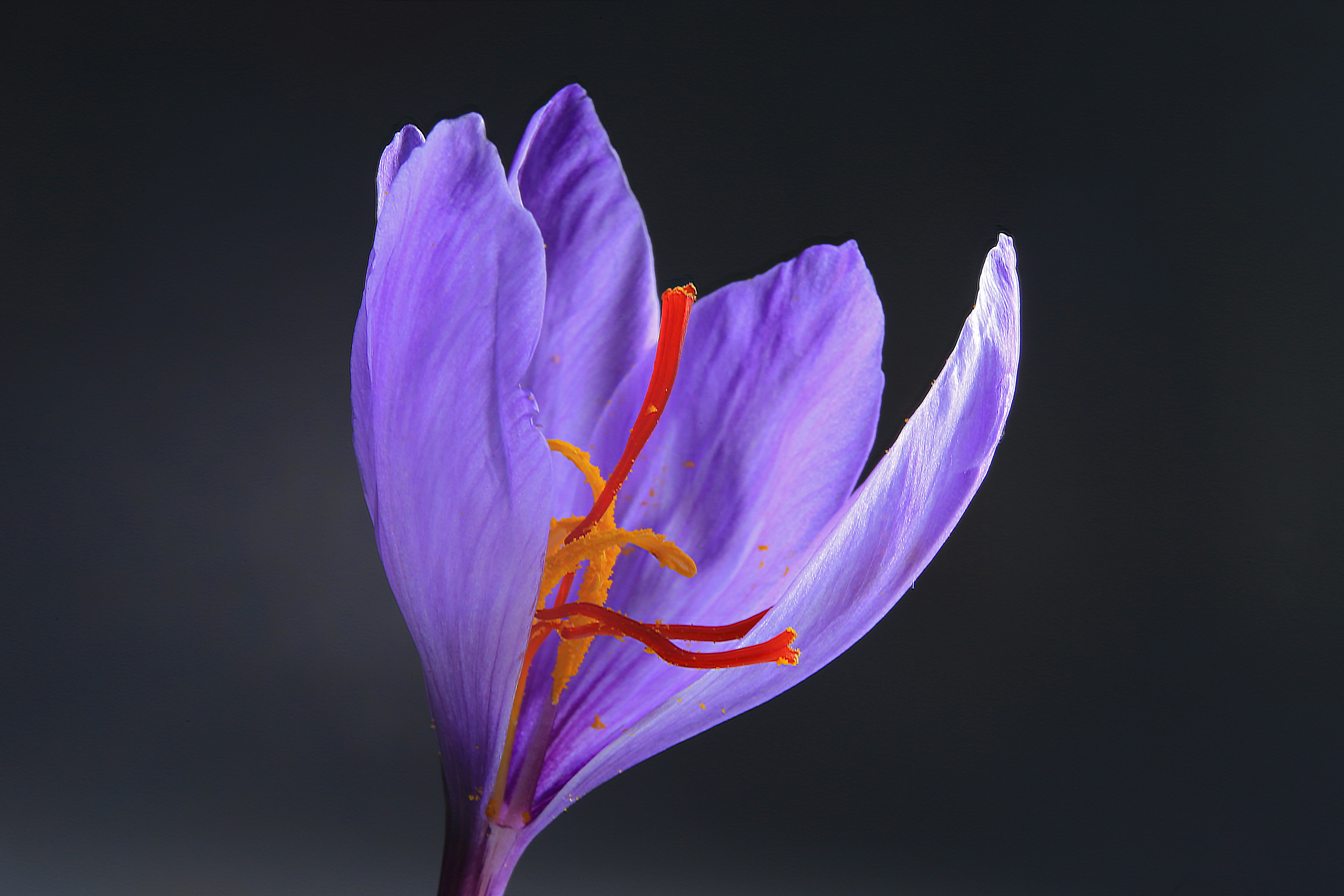
Crocin, a natural pigment extracted from saffron, is attracting increasing interest in various fields due to its antioxidant and anticancer properties, as well as its multiple applications in cosmetics, pharmaceuticals, and food . Composed of powerful carotenoids, crocin is distinguished by its characteristic red color and its crucial role in the quality of saffron. This article offers an in-depth exploration of crocin, detailing its origin, structure, properties, and importance in modern industry.
1. What is crocin?
Definition and origin
Crocin is a carotenoid, a natural pigment found primarily in the flowers of Crocus sativus, more commonly known as saffron. It is responsible for the yellow-orange color of saffron stigmas, thus coloring the dishes to which it is added. This compound is also found in gardenias, but saffron remains the most prized source due to the high concentration of crocin in its flowers.
Molecular structure
Crocin is characterized by a complex chemical structure. It is composed of a diester derived from a dicarboxylic acid, crocetin, to which two gentiobiose units, a disaccharide, are bonded. This structure gives crocin its particular stability and solubility in water. The molecular formula of crocin is C₄₄H₆₄O₂₄, and it has a molar mass of 976.96 g/mol, classifying it as a heavy carotenoid. The presence of double bonds in the crocetin molecule also gives it a high capacity to absorb light, explaining its intense red color.
Physical and chemical properties
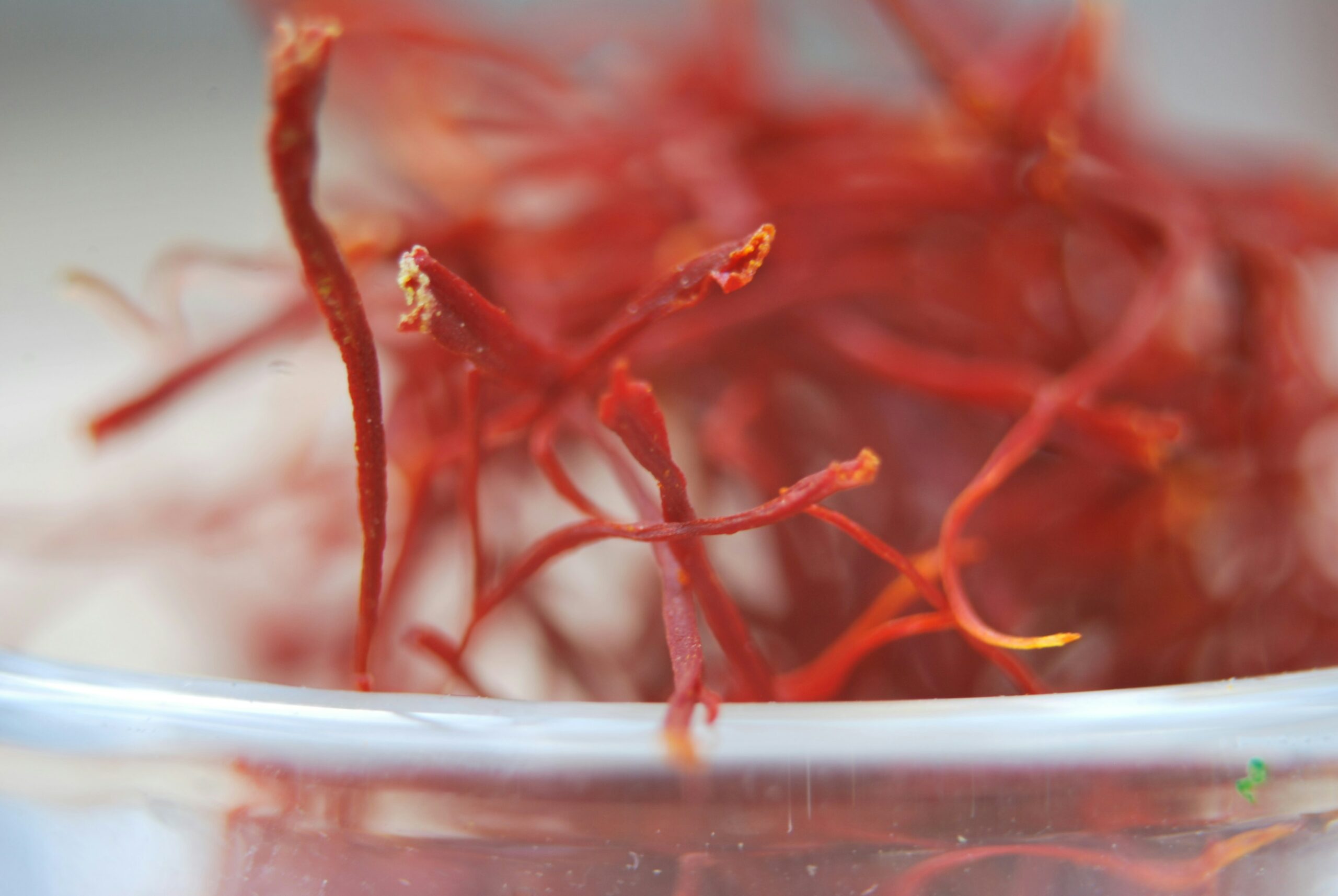
Crocin occurs as intensely red crystals that melt at a temperature of 186°C. This high melting point demonstrates the thermal stability of this compound. When dissolved in water, crocin produces an orange solution, making it suitable for use as a natural food coloring.
This water solubility is due to the presence of polar groups, such as disaccharides, which facilitate its dissolution in aqueous environments. Crocin is also known for its chemical stability under neutral pH conditions, although it can be degraded by light and oxygen, requiring proper storage to preserve its qualities.
2. Natural sources of crocin
The crocus (Crocus sativus): the main source
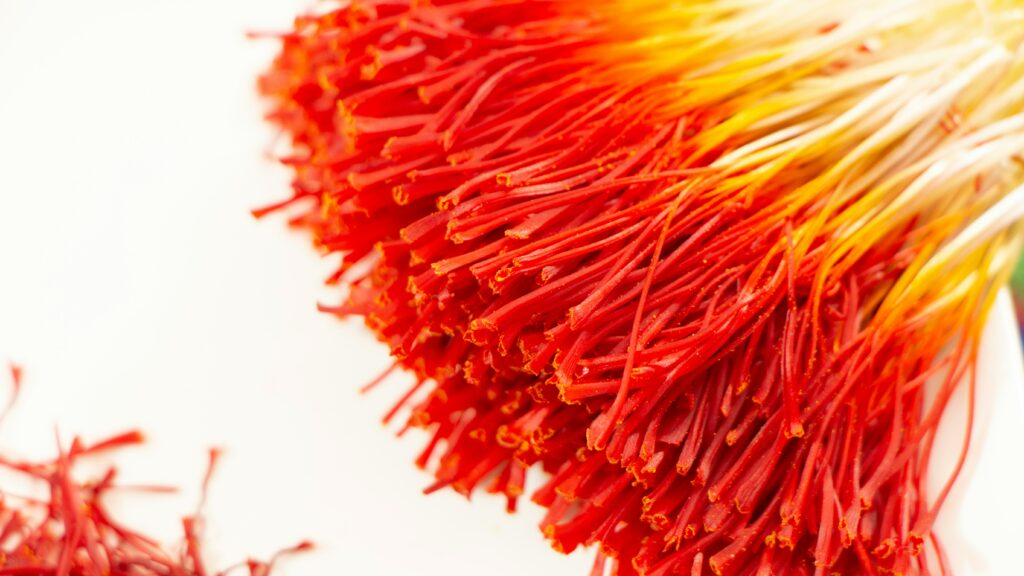
The main source of crocin is Crocus sativus, or saffron, a plant native to the Middle East, now cultivated in several regions of the world, including Iran, Spain, and India. The stigmas of this flower contain a high concentration of crocin, responsible for saffron's characteristic orange hue. It takes approximately 150,000 flowers to produce one kilogram of saffron, making this spice extremely valuable. Crocin is one of the most sought-after components of this plant, both for its coloring properties and its therapeutic benefits.
Cultivating Crocus sativus requires specific conditions: well-drained soil, a temperate climate, and constant care to guarantee the quality of the stigmas. These growing conditions, along with harvesting and drying methods, directly influence the crocin content of the stigmas and, consequently, the quality of the saffron. Therefore, producers adhere to rigorous standards to ensure that the saffron retains a high crocin content, a hallmark of quality in the spice market.
Other plant sources: gardenia
Besides saffron, crocin is also found in gardenia (Gardenia jasminoides), a plant used in traditional Chinese medicine and cultivated for its fragrant white flowers. Although the concentration of crocin in gardenia is lower than in saffron, it is still sufficient to obtain a pigmented extract used as a natural food coloring, especially in Asia. Gardenia is often used for its medicinal properties due to the presence of other bioactive compounds that enhance the beneficial effects of crocin.
The use of gardenia as an alternative source of crocin is encouraged by sustainability and cost considerations. Indeed, gardenia extracts are more readily available than saffron extracts, and their cultivation requires fewer resources. However, due to the difference in crocin concentration, the industrial applications of gardenia extract remain limited compared to saffron.
3. The properties and benefits of crocin
Antioxidant properties: a defense against oxidative stress
Crocin is known for its powerful antioxidant properties, meaning it helps neutralize free radicals, unstable molecules that can damage cells and contribute to premature aging and the development of chronic diseases. This ability to inhibit free radicals is due to crocin's chemical structure, which stabilizes these harmful molecules.
Several studies have shown that crocin can reduce oxidative stress levels in the body. It thus protects cells from damage and supports overall health, particularly in the fields of cardiology and neurology, where oxidative stress plays a key role in the development of disease. These properties make crocin an interesting ingredient in dietary supplements and antioxidant products.
Anticancer effects: a lead for cancer research
Crocin has also shown promising effects in fighting certain cancer cells. In vitro (laboratory) research has revealed that crocin can inhibit the proliferation of cancer cells, particularly in some breast, prostate, and lung cancers. These effects are thought to be due to crocin's ability to induce apoptosis, a process of programmed cell death that helps limit tumor growth.
Preclinical studies have suggested that crocin may reduce tumor size and slow their progression, making it an important avenue of research in oncology. Although clinical trials are still needed to confirm its effectiveness in humans, these preliminary results indicate that crocin could be a potential adjunct in the treatment of certain cancers.
Antidepressant properties: a natural support for mental health
Crocin also has recognized antidepressant effects. Studies have shown that this compound can improve the symptoms of mild to moderate depression, and it is compared to some conventional antidepressants in this respect. The mechanisms of this antidepressant effect may be related to increased levels of serotonin and dopamine in the brain, two neurotransmitters essential for mood regulation.
Research has compared the effectiveness of crocin to that of antidepressants such as imipramine, and the results are encouraging, with similar effects in improving patients' mood. These properties make it a potential candidate for natural therapies in the field of mental health, particularly for people seeking alternatives to traditional treatments.
Other beneficial effects: neuroprotection and cardiovascular support
Crocin also exhibits neuroprotective benefits, meaning it can help protect neurons against stressors such as oxidative stress and inflammation. These neuroprotective effects are particularly promising in the prevention of neurodegenerative diseases, such as Alzheimer's and Parkinson's.
Finally, preliminary studies have suggested that crocin may have a beneficial effect on cardiovascular health, helping to regulate blood pressure and improve blood circulation. These properties make crocin a potential ally for heart health, although more research is needed to confirm these effects in humans.
Are you looking for an analysis?
4. Use of crocin in industry
Food industry: a prized natural coloring agent
food industry , crocin is primarily valued for its ability to naturally color food products. Due to its intense red color, which produces orange hues in solution, it is used to add a vibrant color to dishes, while remaining stable and safe for human consumption. Crocin is thus added to products such as confectionery, desserts, and beverages.
With consumers paying increasingly close attention to the ingredients in the products they consume, the demand for natural colorings is on the rise. Crocin perfectly meets this demand for naturalness, being a plant-based pigment extracted from saffron. Furthermore, it offers the advantage of being water-soluble, which facilitates its incorporation into a wide variety of food formulations without the need for chemical additives to stabilize the color.
Cosmetics industry: formulations enriched with antioxidants
cosmetics industry , crocin is valued for its antioxidant and skin-protective properties. It is incorporated into formulations designed to prevent skin aging by neutralizing free radicals responsible for oxidative stress. Creams, serums, and lotions containing crocin thus help protect the skin against environmental aggressors and maintain a youthful and healthy appearance.
Crocin is particularly prized in natural cosmetics, where consumers seek alternatives to synthetic ingredients. In addition to its skin benefits, crocin imparts a natural color to products, giving them a golden or orange hue that is visually appealing and suggests purity and efficacy.
Pharmaceutical industry: an increasingly sought-after asset
The pharmaceutical industry is also taking a keen interest in crocin, primarily due to its antioxidant, neuroprotective, and anticancer properties. It is used in the formulation of dietary supplements and products designed to support mental health, cognitive function, and the prevention of chronic diseases. These supplements highlight the beneficial effects of crocin for naturally improving health, based on research demonstrating its positive impact on various bodily systems.
Crocin is also being studied for its potential as an adjuvant in treatments for certain cancers, where it could help enhance the effectiveness of conventional treatments while limiting side effects. Although more research is needed to confirm these uses, crocin's unique properties make it a promising ingredient in the development of innovative pharmaceutical products.
4. ISO standard and saffron quality: the role of crocin
ISO 3632-1:2010 standard: Saffron quality classification
The international standard ISO 3632-1:2010 was developed to establish quality criteria for saffron, a precious spice derived from the stigmas of Crocus sativus. This standard classifies saffron into three categories based on the concentrations of crocin, picrocrocin, and safranal. Crocin, responsible for the coloring power, is one of the essential parameters of this classification. High-quality saffron must have a high concentration of crocin, as it is this compound that ensures the vibrant and distinctive color of this spice.
The standard sets minimum thresholds for each compound: the higher the crocin level, the higher the quality of the saffron is considered. For example, for Category I saffron, the crocin concentration must be at least 200. This standard thus allows producers and distributors to guarantee consistent saffron quality, based on measurable and standardized criteria.
Categorization of saffron quality based on crocin, picrocrocin and safranal
The three main compounds considered in the ISO standard are crocin, picrocrocin, and safranal. Each of these components contributes unique properties to saffron:
- Crocin : The main coloring component, responsible for the yellow-orange hue of saffron. A high crocin level indicates superior coloring power and, therefore, high quality.
- Picrocrocin : This compound is responsible for the bitter taste of saffron and defines the intensity of its flavor.
- Safranal : This is the main aromatic compound in saffron, giving it its unique fragrance. A higher safranal content means a more intense aroma.
Based on these concentrations, saffron is classified into three categories, with category I being the highest quality. This classification helps consumers and manufacturers choose a product that meets their requirements in terms of color, taste, and aroma.
Storage and quality: preserving the crocin content
To guarantee the quality of saffron, it is crucial to preserve the crocin content, as well as that of other active compounds. Crocin is particularly sensitive to light and oxygen, two factors that can cause its degradation over time. Producers and consumers are therefore encouraged to store saffron in airtight containers, away from light and in a cool place.
Improper storage leads to a decrease in the concentration of crocin and picrocrocin, which affects the color, taste, and aroma of saffron. Studies show that prolonged exposure to air and light significantly reduces the quality of saffron, making these storage precautions essential to maintain its value and effectiveness in culinary, medicinal, and industrial applications.
5. Laboratory methods for analyzing crocin
Common techniques for crocin analysis
Crocin analysis is primarily performed using high-performance liquid chromatography (HPLC) coupled with a UV detector. HPLC-UV is a reference technique for crocin quantification because it allows for the precise separation and detection of this compound within a complex mixture. Thanks to its high sensitivity, this method can measure low concentrations of crocin while ensuring excellent reproducibility of results.
UV spectrometry is also used to verify crocin content, especially for routine analyses and quality control. This method relies on the absorption of light by crocin at a specific wavelength, thus allowing the concentration of the pigment to be quantified. Less expensive than HPLC, UV spectrometry is often used as a first-line testing method for batches of saffron and other products containing crocin.
Sample collection and preservation for optimal results
To obtain accurate analytical results, sample collection and storage are crucial steps. Since crocin is sensitive to light and oxygen, it is important to store samples in airtight, opaque containers to prevent degradation. Laboratories often recommend collecting samples under controlled conditions and storing them at low temperatures to preserve the compound's stability.
Improper storage can lead to a loss of crocin concentration, thus skewing analytical results. Laboratories therefore adopt strict protocols for handling crocin, ensuring accurate measurements and compliance with international quality standards, such as those defined by ISO.
Internal methods and precautions in laboratories
Some laboratories develop specific in-house methods for crocin analysis, tailored to their clients' needs and the types of matrices analyzed (saffron, food supplements, cosmetics, etc.). These in-house methods are often validated according to rigorous performance criteria, such as the limit of detection, the limit of quantification, and the method's precision.
These methods allow laboratories to ensure reliable and comparable results, which is crucial for quality certification and ensuring the compliance of crocin-containing products. The laboratories also take precautions to minimize the risk of contamination and sample loss, in order to provide high-quality analytical data to their clients.
6. YesWeLab and crocin analysis: expertise and support
Introducing YesWeLab: a network of laboratory analysis experts
Founded in 2020, YesWeLab specializes in analytical services for a variety of sectors, including food and beverage, animal health, cosmetics, and nutraceuticals. Through a network of over 200 partner laboratories across Europe, YesWeLab offers a comprehensive range of services, guaranteeing analyses that comply with the strictest standards, such as ISO 17025 and COFRAC. This compliance ensures companies have traceability and reliable results, meeting the market's quality and safety requirements.
YesWeLab's digital platform allows clients to centralize their analytical needs, simplifying ordering, sample tracking, and results receipt. This system ensures optimized analysis management, reducing turnaround times and facilitating traceability.
YesWeLab services for the saffron and crocin-based products industry
YesWeLab offers specialized analytical solutions for companies working with crocin, particularly in the saffron industry. Services include:
- Saffron quality control : Analyses of the concentration of crocin, picrocrocin and safranal to guarantee compliance with ISO standards, in particular ISO/3632-1:2010.
- Certification and traceability : Production of detailed reports on crocin levels and other active components to help producers certify the quality of their saffron on the market.
- Regulatory advice : Support in compliance procedures to ensure that products meet national and international standards.
These services allow saffron producers to guarantee the quality of their products and to meet consumer expectations in terms of safety and effectiveness.
Steps in crocin analysis at YesWeLab
The collaboration process with YesWeLab for crocin analysis takes place in three main stages:
- Analysis search and selection : Customers can consult YesWeLab's online catalog, which includes more than 10,000 analyses, to find the crocin analysis method that best suits their needs.
- Sample shipping : After selecting the desired analysis, clients can send their samples via a secure and simplified shipping process. YesWeLab ensures that precise instructions on sample collection and storage are provided to guarantee optimal results.
- Receiving results : Results are accessible directly on the YesWeLab digital platform, allowing for transparent monitoring and complete traceability. Reports are detailed and tailored to the specific needs of each client.
Through these steps, YesWeLab facilitates access to high-quality analyses for manufacturers, while guaranteeing maximum transparency and efficiency.