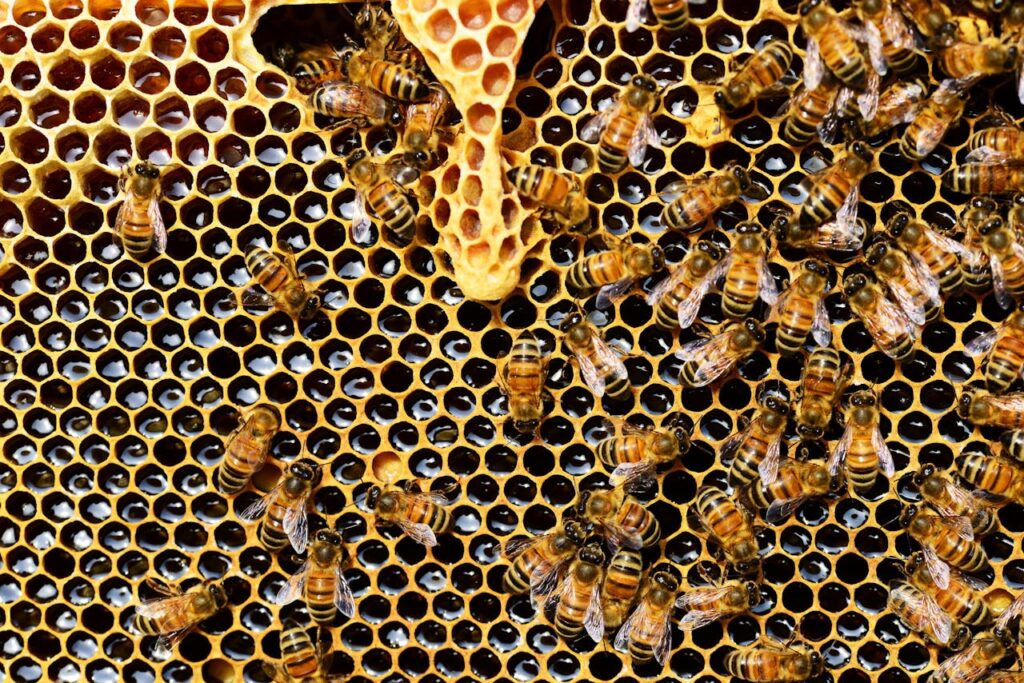
Amitraz is a pesticide widely used for its antiparasitic properties, particularly in animal health, agriculture, and beekeeping. Belonging to the formamidine family, this chemical plays a crucial role in controlling various parasites, but it also raises important questions regarding safety and environmental impact. This first part explores its chemical and physicochemical characteristics in detail, as well as the basics of how it works. Discover our laboratory pesticide analyses for amitraz residue control.
1. Definition and chemical structure
Amitraz, whose chemical name is N'-(2,4-dimethylphenyl)-N-[(2,4-dimethylphenyl)iminomethyl]-N-methylmethanimidamide, is an active substance used as an insecticide and acaricide. Its molecular formula is C₁₉H₂₃N₃, and its molar mass is 293.4 g/mol. It occurs as colorless crystals, insoluble in water, but soluble in organic solvents such as methanol or acetonitrile.
Physicochemical properties
Amitraz possesses specific physicochemical characteristics that influence its behavior in biological and natural environments. Its melting point is approximately 86 °C, and its saturated vapor pressure at 20 °C is extremely low, which limits its evaporation into ambient air. Furthermore, its octanol-water partition coefficient (log Kow) is 6.49, indicating strong lipophilicity. This explains its ability to accumulate in the lipid tissues of living organisms.
In terms of stability, amitraz is susceptible to hydrolysis, particularly at neutral pH, where it degrades rapidly. Its half-life in soil is relatively short, around two days, which limits its environmental persistence but necessitates frequent applications in certain contexts.
Chemical family and mode of action
Amitraz belongs to the formamidine family, organic compounds known for their effectiveness against external parasites. Its mode of action relies on interaction with octopamine receptors, a neurotransmitter specific to arthropods. This interaction disrupts the parasites' nervous system, leading to paralysis and then death. This specificity makes it an effective tool for targeting mites and certain insects without directly affecting mammals.
Scientific importance and use
Amitraz is widely used in commercial formulations tailored to various needs, ranging from flea and tick collars for pets to products applied to agricultural crops. Its ability to act quickly against tenacious parasites such as ticks and varroa mites makes it a preferred solution in many contexts.
2. Applications in animal health
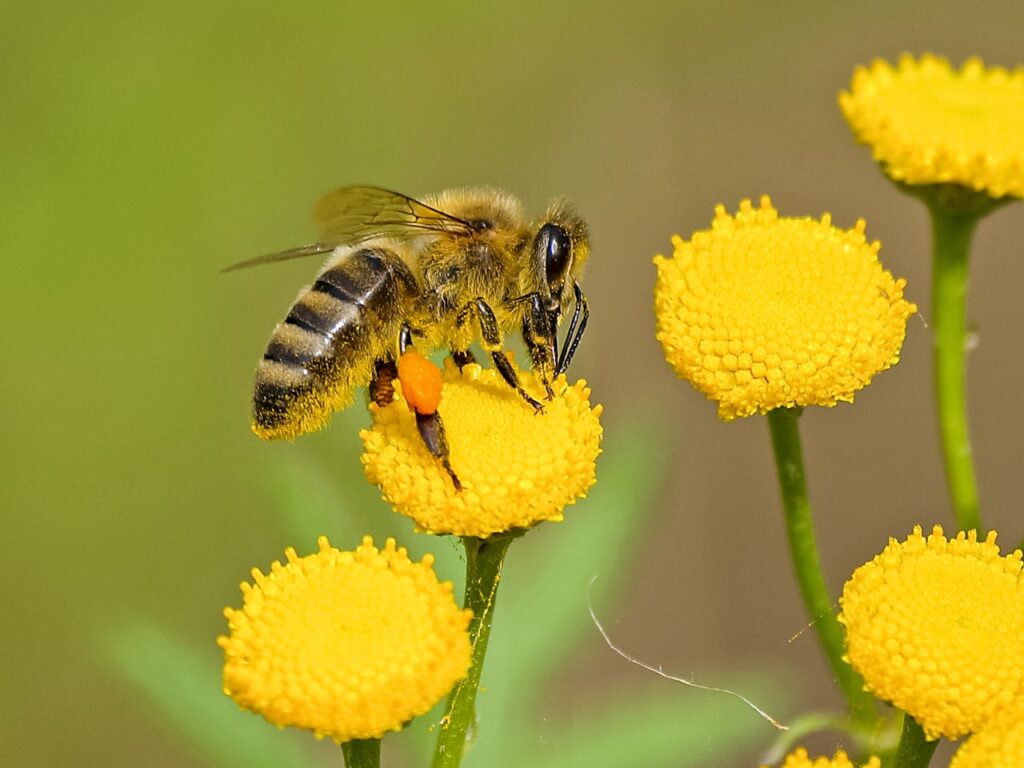
Amitraz is particularly valued in veterinary medicine for its ability to effectively eliminate external parasites. It is commonly used to treat infestations of ticks, mites, and other parasites in warm-blooded animals such as dogs, horses, and sometimes cattle. Veterinary products containing amitraz are often marketed as flea and tick collars, shampoos, or topical solutions.
For example, dog collars impregnated with amitraz offer long-lasting protection against ticks and mites, thus reducing the risk of transmission of diseases such as babesiosis or Lyme disease. However, correct use is essential to avoid overdoses, which can lead to side effects such as drowsiness or bradycardia.
Use in beekeeping
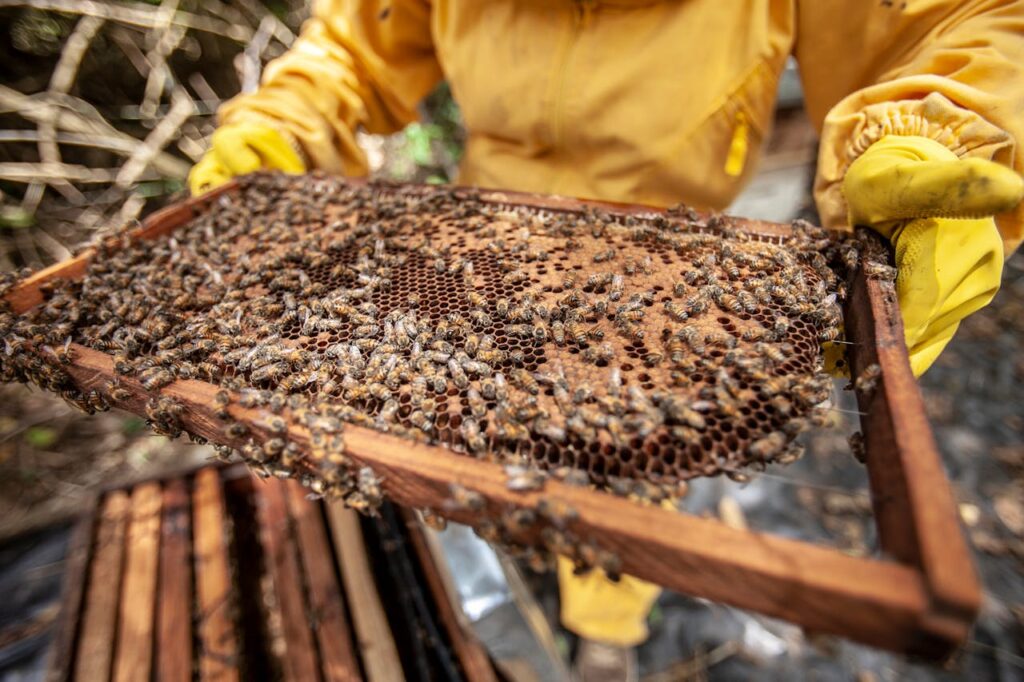
One of the best-known applications of amitraz is in the fight against Varroa destructor, a mite that seriously threatens bee colonies. Amitraz is used in hives in the form of impregnated strips (Apivar® or Apitraz®), which gradually release the active substance to eliminate the varroa mites.
However, this use raises concerns, as amitraz residues can be found in honey, beeswax, and other hive products. Although these levels are generally low and comply with regulations, it is crucial to adhere to pre-harvest intervals to minimize the risk of contamination.
Agricultural use
In agriculture, amitraz is used to control various insect pests on specific crops. Although its use is less common due to regulatory restrictions in some countries, it remains authorized in others for targeted applications. For example, it can be used on fruit trees to control mites or on ornamental plants against sap-sucking insects as part of regulated food testing .
The management of amitraz in agriculture requires special attention, as its effect on surrounding ecosystems, particularly waterways and soils, can be significant if misused. Our environmental analyses of soils and water allow us to monitor these impacts.
Associated risks and precautions
Although amitraz is effective in many applications, its use must be strictly controlled. In animals, incorrect dosage can lead to toxic effects, while in beekeeping, excessive application can compromise the quality of hive products. In agriculture, improper use can cause environmental pollution and affect non-target organisms.
3. Regulations in Europe and worldwide
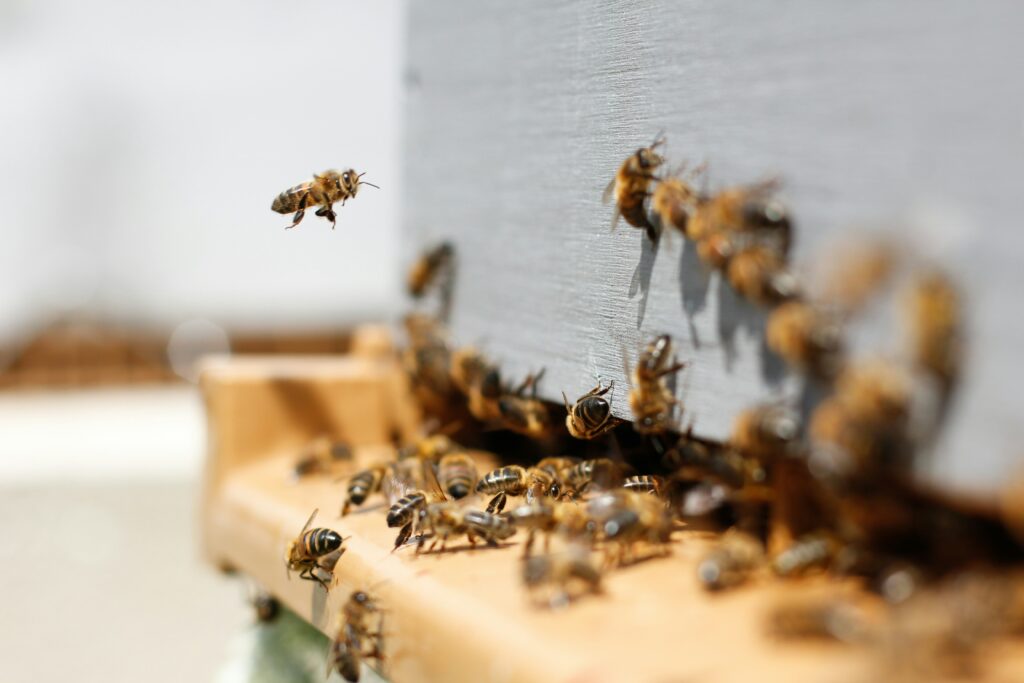
In Europe, amitraz was removed from Annex I of Directive 91/414/EEC due to environmental safety concerns. However, it remains authorized in certain veterinary formulations, particularly for dogs and bees. Products such as Apivar® and Apitraz® are examples of applications still approved for parasite control in beekeeping. Conversely, its agricultural use is prohibited in many European countries to avoid the risks of environmental and food contamination.
In other parts of the world, such as North America and Asia, amitraz is still widely used, although its application is subject to specific regulations. For example, in the United States, it is permitted under certain conditions, but its use is closely monitored by the Environmental Protection Agency (EPA).
Permitted products and restrictions
In France, eight veterinary products containing amitraz have been granted marketing authorization. These products are primarily intended for antiparasitic treatments in pets and bees. However, no authorization has been granted for its use in biocidal preparations or in the poultry and swine industries, where the risk of food contamination is considered too high.
In beekeeping, amitraz-impregnated strips are permitted provided that pre-harvest intervals are strictly observed. These intervals ensure that residues in honey and wax remain below the maximum residue limits (MRLs) set by health authorities.
Toxicity and acceptable daily intake
Amitraz is classified as a neurotoxic agent that acts by binding to α2-adrenergic receptors. This can lead to adverse effects in humans, such as respiratory depression, hypotension, bradycardia, and hypothermia. The acceptable daily intake (ADI) is set at 0.003 mg per kilogram of body weight, emphasizing the need for cautious use and adherence to prescribed doses.
For animals, therapeutic doses must be strictly adhered to in order to avoid acute poisoning, which can manifest as vomiting, lethargy, or neurological disorders. Cases of accidental human poisoning, particularly through ingestion or skin contact, have also been documented, especially in developing countries where awareness of precautions is sometimes insufficient.
Precautions to take when using
To minimize risks, users must wear personal protective equipment (PPE), such as gloves and safety glasses, when handling products containing amitraz. Application areas must be well ventilated, and excess product must be disposed of in accordance with local hazardous waste regulations.
In beekeeping, it is recommended to regularly monitor colonies to assess treatment effectiveness and avoid overuse, which could lead to the development of resistance in varroa mites. In agriculture, alternative methods and integrated pest management strategies should be favored to reduce reliance on this product.
Are you looking for an analysis?
4. Biological mechanisms of resistance
Resistance to amitraz in parasites is primarily due to genetic mutations and enzymatic adaptations. The mutations affect octopamine receptors, reducing their sensitivity to the active molecule. In varroa mites, for example, these mutations alter the sites of action targeted by amitraz, making treatment less effective.
Recent studies on resistance
Several studies conducted in recent years have documented the increase in cases of amitraz resistance. In beekeeping, monitoring the efficacy of treatments such as Apivar® has revealed that in some regions, treated colonies exhibited insufficient varroa mite mortality. A study carried out in France in 2018 showed that nearly 70% of varroa mite populations tested in certain regions were moderately to highly resistant to amitraz.
In the veterinary field, cases of resistance have also been observed in ticks. These parasites, exposed to repeated doses of amitraz, survive longer, thus compromising the effectiveness of treatments in domestic animals.
Consequences of resistance
Resistance to amitraz has important implications for pest management. In beekeeping, increased resistance can lead to higher varroa mite infestations, jeopardizing colony health and reducing honey yields. In the veterinary sector, resistance can complicate pest control, thereby increasing the risk of disease transmission.
Furthermore, the emergence of resistance often leads to increased pesticide use, which further exacerbates environmental problems and residues in food products.
Integrated pest management solutions and strategies
To counter the development of resistance, several solutions can be implemented. Alternating active molecules is one of the most effective strategies. In beekeeping, for example, using other acaricides or biological treatments in rotation with amitraz can reduce selection pressure.
Implementing Integrated Pest Management (IPM) strategies is also essential. These strategies combine biological, chemical, and mechanical practices to control pest populations while minimizing pesticide use. For example, in beekeeping, trapping varroa mites using brood frames can be used in conjunction with chemical treatments.
5. Common analytical techniques
Methods for analyzing amitraz focus on detecting it and its metabolites in complex matrices. Two major techniques are commonly used:
- LC-MS/MS (liquid chromatography coupled with tandem mass spectrometry) : This method is particularly effective for detecting minute concentrations of amitraz in complex matrices such as honey, fruits, and vegetables. It relies on chromatographic separation followed by precise identification using mass spectrometry.
- GC-MS (gas chromatography coupled with mass spectrometry) : Suitable for volatile and semi-volatile compounds, this technique is used to analyze amitraz in samples where it can degrade into volatile compounds.
These techniques allow for very low detection limits, often below 0.1 mg/L, which is essential to meet strict regulatory requirements.
Sample preparation process
Sample preparation is a crucial step to ensure the reliability of analyses. Here are the main steps followed in the laboratory:
- Extraction : Amitraz and its metabolites are extracted from solid or liquid matrices using organic solvents such as acetonitrile or methanol.
- Cleaning : A purification step is carried out to eliminate interferences, notably by solid-phase extraction (SPE) techniques.
- Concentration : The extracts are concentrated to allow for better detection of analytes.
- Injection : The purified samples are injected into the chromatographic system for analysis.
These steps ensure optimal accuracy in the detection of amitraz residues.
Concrete examples of use
- Honey analysis : Amitraz is often tested for in honey to ensure that residue levels comply with maximum permitted limits. These analyses guarantee consumer safety and allow for the detection of inappropriate processing or persistent residues.
- Quantification in fruits and vegetables : In agricultural products, amitraz analysis is essential to verify compliance with pesticide residue standards. It falls under our services for analyzing chemical contaminants in agricultural, beekeeping, and veterinary products . For example, our laboratories regularly test citrus fruits and vegetables for traces of this molecule as part of our pesticide residue analyses on plants .
- Beeswax monitoring : Beeswax can accumulate amitraz residues following treatments in the hives. These analyses are crucial to prevent cross-contamination during the production of new bee products.
Importance of method validation
Analytical methods used for amitraz must be validated according to international standards, such as those defined by ISO 17025. This includes evaluating the limit of detection (LOD), the limit of quantification (LOQ), precision, and accuracy. Validation ensures that results are reliable and reproducible, even for complex matrices.
To learn more, discover our other pesticide analysis services covering a wide range of active substances.