
MALDI -TOF (Matrix-Assisted Laser Desorption/Ionization – Time of Flight) is a mass spectrometry increasingly used in laboratories for the rapid and accurate identification of microorganisms. Thanks to its ability to provide reliable results in minutes, MALDI-TOF MALDI-TOF works , its advantages for microorganism identification, and its applications in various industrial sectors.
YesWeLab offers MALDI-TOF analysis through its network of partner laboratories, enabling manufacturers to access fast and reliable identification solutions tailored to their specific needs.
This technology is notably used in the environmental and safety to detect and characterize potentially pathogenic microorganisms or contaminants
Table of Contents
What is MALDI-TOF?
Definition and principle of the technology
MALDI -TOF is a mass spectrometry analytical technique that allows for the rapid and accurate identification of microorganisms. This technology relies on two key elements:
- MALDI (Matrix-Assisted Laser Desorption/Ionization): This method uses a laser to ionize complex molecules (proteins, peptides, nucleic acids, etc.), which are then sent into a vacuum tube. The laser ionizes the molecules with the help of an organic matrix, allowing them to be vaporized without degradation.
- TOF ): After ionization, the ions are accelerated in a vacuum tube, and their time of flight is measured. The time it takes each ion to reach the detector depends on its mass and charge , allowing for precise identification.
This process generates a unique mass spectrum for each microorganism, acting as a molecular "barcode". This spectrum is then compared to a database of reference spectra to identify the bacteria or other microorganisms present in the sample.
Key steps in MALDI-TOF analysis
MALDI-TOF analysis follows a simple and quick multi-step process:
- Sample preparation : The sample (e.g., a bacterial culture) is deposited onto a target plate coated with an organic matrix.
- Laser ionization : A laser is used to ionize the molecules of the sample, which are transformed into ions.
- Ion acceleration : The ions are then accelerated in a time-of-flight tube . Their travel time is directly related to their mass and charge .
- Time-of-flight measurement : The time it takes for each ion to reach the detector allows us to determine its mass , and therefore to identify the molecules present in the sample.
- Comparison with the database : The spectrum obtained is compared to a reference database to identify the species of the microorganism.
Applications of MALDI-TOF technology
MALDI -TOF is used in many fields, particularly for the identification of microorganisms in clinical, industrial, and environmental settings. Key applications include:
- Clinical microbiology : Rapid identification of pathogens responsible for infections, such as bacteria and fungi.
- Food processing industry : Monitoring of microbiological contamination in food products and production environments.
- Pharmaceuticals and animal health : Identification of microorganisms in pharmaceutical products and animal feed, in order to guarantee their safety and quality.
- Environment : Monitoring the microbiological quality of soil, water, and air, particularly to detect potentially dangerous bacteria and molds.
MALDI -TOF is particularly appreciated for its speed and accuracy in identifying microorganisms, making it possible to considerably reduce the time required to obtain results, while offering high precision.
Comparison with traditional methods
Traditional methods for identifying microorganisms, such as phenotypic , often take several days and rely on culturing and observing microorganisms on specific media. These methods can be slow and less precise, with results sometimes difficult to interpret, especially when dealing with rare or novel strains.
In contrast, MALDI-TOF offers a fast, reliable, and more economical solution, enabling the identification of microorganisms in minutes, with an accuracy of over 92% in most cases. This makes MALDI-TOF a tool of choice in modern laboratories.
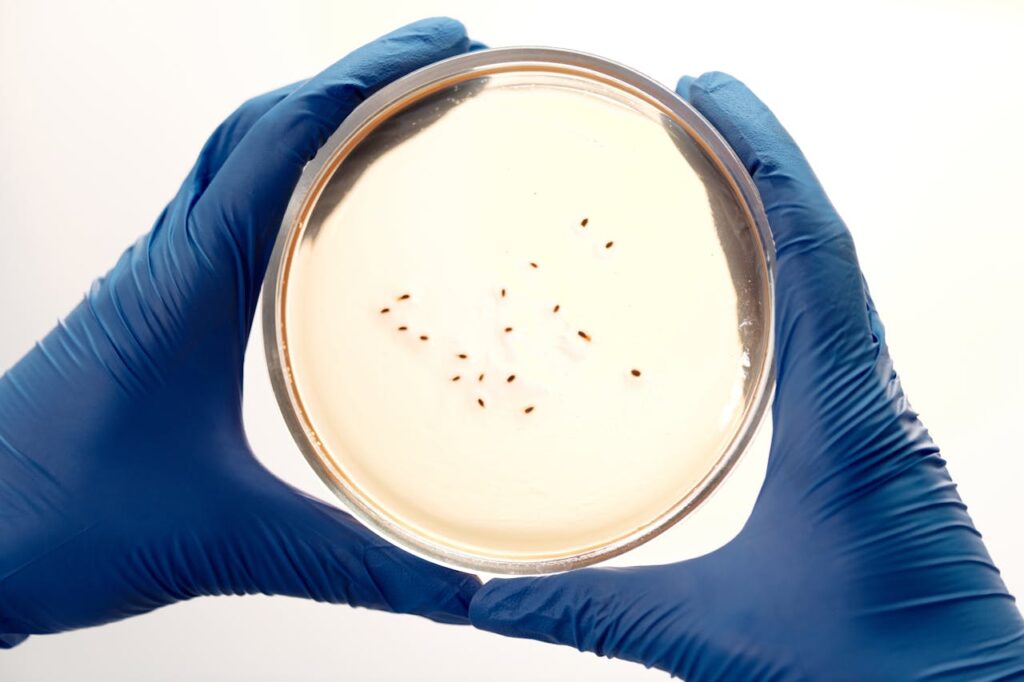
How does MALDI-TOF work?
MALDI -TOF (Matrix-Assisted Laser Desorption/Ionization – Time of Flight) is an advanced analytical technique that relies on a series of specific steps to analyze and identify microorganisms. Understanding how this technology works allows us to appreciate its advantages, including its speed, accuracy, and efficiency in identifying microorganisms.
The mass spectrometry process
Mass spectrometry is the basis of MALDI-TOF , and it allows us to measure the mass of molecules present in a sample. The process begins with the ionization of the molecules, which is essential for their analysis. Here are the key steps in this process:
- Sample preparation : A microbiological sample is deposited onto a special target plate coated with an organic matrix . This matrix is crucial because it absorbs the laser energy and helps to ionize the sample molecules without destroying them.
- Laser ionization : When the laser strikes the sample, it ionizes the molecules present. This energy breaks down macromolecules such as proteins and peptides, which are then transformed into positively charged ions.
- Ion acceleration : Once ionized, molecules are accelerated in a vacuum tube by an electric field. The speed at which these ions move depends on their mass and charge . The heavier a molecule is, the longer it will take to reach the detector.
- Time-of-flight (TOF) measurement : Charged ions travel through a vacuum tube and arrive at a detector. The time it takes each ion to reach the detector is measured, allowing its mass/charge (m/z) to be determined. This information is used to generate a mass spectrum , which represents a molecular "barcode" for each microorganism analyzed.
- Analysis and comparison : The obtained spectrum is then compared to a database of reference spectra to identify the microorganism. The more complete and up-to-date the database, the faster and more accurate the identification will be.
Reference databases
MALDI -TOF relies on a database of reference spectra, which contains molecular profiles for a wide range of microorganisms. These databases are essential for the correct identification of samples, as they allow the spectrum generated from a sample to be compared with previously identified and classified spectra.
- Public and private databases : Several databases exist, some public and others private, which are regularly updated based on new strains identified in laboratories. For example, databases such as Bruker Biotyper or VITEK MS are widely used for the rapid identification of microorganisms.
- Continuous updates : The databases are regularly enriched with new profiles of bacterial species, molds, yeasts, and other pathogens. This constant updating ensures that we remain at the forefront of microorganism identification, including new pathogenic strains emerging in clinical and industrial settings.
- Accuracy of identification : More than 92% of bacteria can be accurately identified using these databases, an accuracy far superior to that of traditional microbiological identification methods.
Applications of MALDI-TOF analysis
MALDI -TOF is used in many fields to identify microorganisms quickly and reliably. Here are some of its main applications:
- Clinical Microbiology : MALDI-TOF is primarily used in hospitals and clinical laboratories for the rapid identification of pathogens responsible for infections. Within minutes, it can identify bacteria , yeasts, and molds , enabling faster patient treatment.
- Food industry and environment : In the food industry, this technology is used to monitor the microbiological quality of products, detect contamination, and ensure food safety. Quality control laboratories in food production environments use this technology to verify levels of microbiological contamination.
- Pharmaceuticals and animal health : MALDI-TOF is also used in the pharmaceutical industry to verify product purity microbial contamination in medicines or cosmetics. In animal health, it is used to rapidly identify pathogens in livestock or pets.
Advantages of MALDI-TOF mass spectrometry
MALDI -TOF offers several advantages over traditional methods of microorganism identification:
- Speed : Response time is significantly reduced. Unlike traditional methods that can take several days, MALDI-TOF provides results in less than 30 minutes , which is particularly crucial in clinical settings where a rapid diagnosis can be vital.
- Accuracy and reliability : The accuracy rate in identifying microorganisms is greater than 92% in most cases, making it a reference tool for microbiology laboratories.
- Economy : MALDI-TOF reduces long-term operating costs because it does not require expensive reagents and tests can be performed quickly, thus enabling greater productivity.
- Ease of use : The system is automated and easy to use, thus reducing human error and increasing the efficiency of microbiological laboratories.
- Versatility : The MALDI-TOF is capable of identifying a wide range of microorganisms, including gram-positive and gram-negative bacteria, molds, yeasts, and even viruses and parasites in some cases.
Are you looking for an analysis?
The importance of MALDI-TOF in microbiological identification
MALDI -TOF is revolutionizing microorganism identification thanks to its speed, accuracy, and efficiency. This technology not only saves time but also improves the quality of results, which is essential in sensitive fields such as clinical microbiology and the food industry . In this section, we will explore the importance of MALDI-TOF in these different areas, its economic advantages , and its impact on improving diagnostic and control processes.
Reduction in identification times
One of the main advantages of MALDI-TOF lies in its ability to significantly reduce the time required to identify microorganisms. Traditionally, conventional identification methods, such as phenotypic tests or bacterial culture, can take between 24 and 48 hours , or even longer, to provide reliable results.
- With MALDI-TOF , this turnaround time can be reduced to less than 30 minutes in many cases. This represents a crucial time for laboratories, particularly in clinical settings where rapid diagnoses are needed for prompt patient treatment.
- Example in a clinical environment : In hospital laboratories , where bacterial infections can have serious consequences, the ability to identify a pathogenic microorganism in minutes allows for the immediate initiation of appropriate treatment.
This has direct implications for the management of medical emergencies , the reduction of hospital costs and the reduction of the risks of disease transmission in healthcare facilities.
Increased accuracy and reliability
MALDI -TOF provides results with accuracy than traditional methods. In conventional tests, identification often relies on phenotypic or cultural criteria, which can be subject to variability depending on growing conditions, equipment, and methods used.
- Accuracy of over 92% : MALDI-TOF has proven its ability to identify over 92% of microorganisms with near-perfect accuracy. This is made possible by the use of mass spectra for each microorganism, thus enabling unambiguous identification.
- Example of clinical validation : Studies have shown that MALDI-TOF mass spectrometry identifies bacterial strains more quickly and with less risk of error than methods based on biochemical tests genetic tests phenotypic analysis .
As a result, MALDI-TOF reduces the likelihood of false positives or negatives and ensures reliable results, which is essential in microbiological diagnostics.
Economic advantages
MALDI -TOF can be an expensive technology to purchase, but it offers significant long-term economic advantages, especially compared to traditional methods of microorganism identification. Here are the main economic aspects of this technology:
- Reduced operating costs : Unlike traditional methods that require expensive reagents and more labor , MALDI-TOF is primarily based on an automated platform with very low recurring costs. Once the instrument is purchased, there are virtually no additional expenses for reagents or consumables.
- Long-term savings : A study has shown that identification costs with MALDI-TOF are reduced by 70 to 80% compared to conventional methods such as PCR, enzyme tests, or culture on specific media. This cost reduction is particularly significant in high-throughput laboratories .
- Productivity gains : The ability to analyze multiple samples in parallel and obtain rapid results allows laboratories to increase their productivity while reducing waiting times for results , which also improves their overall efficiency.
Impact on diagnostic and control processes
MALDI -TOF plays a key role in improving diagnostic processes , particularly in clinical and industrial fields:
- Improving quality control in the food industry : MALDI-TOF enables the rapid identification of contamination in food products, thus ensuring better food safety . This is essential for product traceability and helps avoid costly recalls or factory closures due to contamination risks.
- Identification of resistant pathogens : Thanks to the ability of MALDI-TOF antibiotic-resistant strains , this technology allows clinicians to quickly adapt antibiotic treatment, thus reducing the risk of resistance and optimizing treatment monitoring in hospital environments.
Applications in the identification of new pathogenic strains
MALDI -TOF also enables the discovery of new pathogenic strains thanks to its unique ability to identify unknown microorganisms from mass spectrum . This capability is particularly useful for:
- New epidemics : When a new pathogen emerges, MALDI-TOF can help identify it quickly, allowing for an immediate response and appropriate control of outbreaks.
- Identification of rare microorganisms : MALDI-TOF allows comparison of the spectra of microorganisms to an extensive and updated database, including uncommon or recently discovered species.
This makes this technology particularly important for research laboratories , hospitals , as well as for pharmaceutical and agri-food companies that monitor the risks of new infections and contaminations.
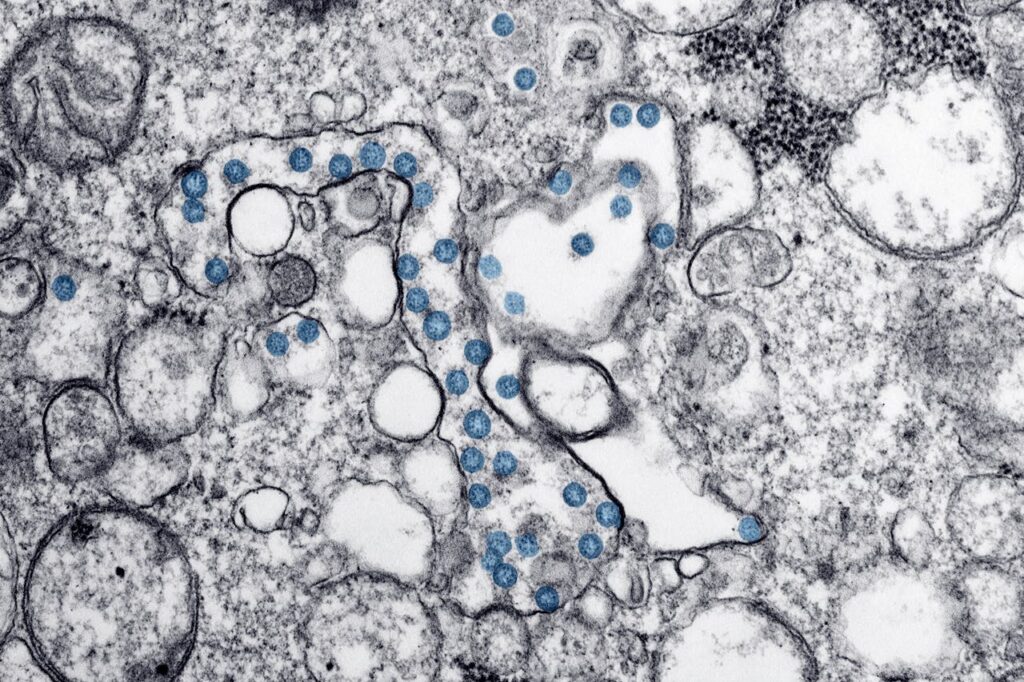
Sectoral applications of MALDI-TOF
MALDI -TOF is a versatile technology used in a wide variety of industrial and scientific sectors. Its effectiveness in rapidly identifying microorganisms and providing accurate results makes it an indispensable tool for microbiology laboratories in fields as diverse as healthcare , food and beverage , pharmaceuticals , and the environment . This section explores the most significant applications of MALDI-TOF in these sectors.
Food industry
One of the main applications of MALDI-TOF lies in food safety and the microbiological control of products. Agri-food laboratories use this technology to identify microorganisms present in food products, as well as to monitor production environments .
Microbiological quality control
MALDI -TOF allows for the rapid analysis of pathogenic bacteria or molds in food, contaminants that can have a major impact on public health. It can detect strains such as Salmonella , Escherichia coli , Listeria , Clostridium botulinum , and other foodborne pathogens. By detecting these contaminants in less than 30 minutes , laboratories can react quickly to avoid product recalls, thus reducing risks to consumer health.
Monitoring of production environments
Identifying microorganisms in production environments (e.g., production lines, processing plants) is essential to ensuring a contamination-free final product. MALDI -TOF enables the rapid detection of microbial contaminants in these sensitive areas, allowing for immediate corrective action and maintaining a safe production environment that meets food safety standards.
Cost and response time reduction
Unlike traditional methods, MALDI-TOF not only reduces the time required to identify microorganisms but also lowers operational costs . For example, it has been estimated that the use of MALDI-TOF in the food industry reduces quality control costs by 70 to 80% compared to other techniques such as PCR or enzyme tests.
Pharmaceutical industry
In the pharmaceutical , MALDI-TOF plays a key role in controlling the microbiological quality of finished products, raw materials, and production environments. The technology is used for:
Identification of microbial contaminants
During drug production, it is essential to identify contaminating microorganisms in raw materials, finished products, and production environments. MALDI-TOF allows for the rapid detection of pathogenic bacteria and other microorganisms, thus minimizing the risk of cross-contamination and ensuring product safety. This speed is crucial because it reduces the time to market for pharmaceutical products while adhering to Good Manufacturing Practices (GMP) .
Antibiotic resistance tests
MALDI -TOF also allows for the detection of antibiotic-resistant strains , a major public health problem. Mass spectrometry- enable the rapid detection of resistance markers , thus allowing for better treatment management and a reduction in the overuse of antibiotics .
Monitoring of biological products
In the case of biological products such as vaccines, biotherapies , and other live-cell-based drugs, MALDI-TOF is used to verify product purity and safety by analyzing for the presence of microbial contaminants. This capability is particularly useful in biopharmaceuticals , where the purity of the final product is crucial.
Animal health
animal health sector also benefits from MALDI-TOF , particularly for identifying pathogens responsible for animal infections and monitoring health risks in livestock farms. Here are two main applications:
- Identification of pathogens in livestock:
MALDI -TOF allows for the rapid identification of pathogens responsible for infectious diseases in livestock . For example, it can be used to identify bacteria such as Escherichia coli , Salmonella , or Mycobacterium that can affect animal health and compromise the safety of animal products. - Monitoring epidemic risks:
In livestock farming, MALDI-TOF enables proactive monitoring of health risks by rapidly identifying emerging microorganisms. This helps prevent the spread of infectious diseases and better manage epidemics in animal populations.
Environment and safety
MALDI -TOF is also used in environmental monitoring to identify microorganisms present in water, air, and soil. Here are two main applications in this field:
- Water and Air Quality Analysis:
Laboratories specializing in water quality use MALDI-TOF to rapidly identify pathogenic bacteria and contaminants in wastewater or drinking water. This helps prevent health risks related to waterborne infections and ensures compliance with environmental standards . - Soil and waste monitoring
MALDI -TOF is also used to analyze microorganisms present in soils and industrial waste, which makes it possible to monitor the risks associated with the degradation of materials or the contamination of soils by hazardous substances.

Understanding laboratory analyses in the context of MALDI-TOF
MALDI -TOF is based on fundamental principles of mass spectrometry , but it also integrates into a wide range of laboratory analyses used to identify, quantify, and analyze microorganisms in diverse samples. This section explores complementary analytical methods that can be used in conjunction with MALDI-TOF , as well as regulatory compliance tests that ensure the validity of results obtained in accredited laboratories.
Microorganism analysis procedures
Methods for analyzing microorganisms are essential to complement and validate the results obtained with MALDI-TOF . While MALDI-TOF is extremely effective for rapid identification, several other techniques are used to quantify or characterize microorganisms. Here are three common techniques:
High-performance liquid chromatography (HPLC)
HPLC is an extremely precise method used to analyze chemical compounds in complex samples. In laboratories, it is commonly used to quantify the presence of microbial compounds in food, pharmaceutical, or cosmetic products .
- Within the framework of MALDI-TOF , HPLC can be used to determine the concentration of certain proteins mass spectrometry analysis.
- This combination allows verification of the concentration of pathogens and other microorganisms in products or environments, thus contributing to a comprehensive analysis.
Spectrophotometry
Spectrophotometry is used to measure the absorption of light by samples, a simple yet effective method for assessing the concentration of certain biological substances. In microbiological laboratories, it can be used to measure compounds such as proteins or saccharides in samples following - TOF .
- This technique is complementary to MALDI-TOF for identifying microorganisms by analyzing the mass generated and concentrating them in a quantitative framework.
- Spectrophotometry also allows the purity MALDI-TOF analysis , thus ensuring more reliable results.
Acid-base titration
Although more traditional, the acid-base titration is still used for certain applications in the food and pharmaceutical sectors. It allows the quantity of acid in food or pharmaceutical solutions to be determined based on their pH.
- Titration can be used after the identification of bacteria or molds by MALDI-TOF to assess the impact of these microorganisms on the physico-chemical characteristics of the products .
- For example, in the production of fermented beverages or dairy products , where fermentation by yeasts or acetic bacteria directly influences pH, these analyses are crucial for quality control.
Importance of regulatory compliance testing
The results obtained with MALDI-TOF must be validated according to standards and certifications . This ensures that the analyses performed are reliable and comply with the standards established in each industry sector. Here are some of the main certifications and standards that govern microbiological analysis in laboratories:
ISO 17025 Standards
: ISO 17025 defines the general requirements for the competence of calibration and testing laboratories MALDI-TOF analyses meet strict criteria regarding the quality and reliability of results.
- For a laboratory to be ISO 17025 , it must prove that it is capable of performing accurate and reproducible tests, which is essential in clinical and industrial environments where crucial decisions depend on microbiological results.
COFRAC Accreditation
In France, COFRAC (French Accreditation Committee) accredited laboratories are certified for their ability to perform analyses in accordance with ISO standards and specific legal requirements, including those related to food safety and pharmaceutical products .
- COFRAC laboratories MALDI-TOF analyses while respecting rigorous performance criteria, guaranteeing that the results provided are valid and usable within a legal framework.
- For example, in the food industry, compliance with COFRAC standards makes it possible to certify the sanitary safety of products by confirming the absence of pathogens in finished products or during the manufacturing process.
Rheological tests to optimize the texture of food products
Rheological tests are used to measure the physical properties of products, such as their fluidity , viscosity , or elasticity . These tests are particularly important in the food , where product texture can influence consumer acceptance.
- Texture analysis : For example, the dairy products such as yogurt or cream can be altered by microorganisms like lactic acid bacteria . The use of MALDI-TOF allows for the precise identification of the bacterial strains responsible for these changes.
- Formulation stability control : In products such as sauces , juices , or food powders , rheological tests measure product stability and flowability MALDI-TOF allows for the identification of microorganisms that affect texture and enables the optimization of formulations.

Frequently Asked Questions about MALDI-TOF
MALDI -TOF is a powerful technology, but it also raises many questions about its operation and applications. In this section, we will answer some of the most common questions regarding this mass spectrometry technology. We will cover technical aspects, its practical use, and its advantages over other microbiological identification methods.
How to read the MALDI-TOF spectrum?
Reading the spectrum generated by the MALDI-TOF is essential for understanding and interpreting the results obtained during the analysis. A MALDI-TOF is a graph that shows the intensity of the detected ions as a function of their mass-to-charge ratio (m/z) .
- Interpretation of the spectrum:
Each peak in the spectrum represents a specific ion generated from the molecules in the sample. The intensity of each peak is proportional to the relative quantity of the ion in the sample. The horizontal axis (x) represents the mass-to-charge ratio (m/z) of the ions, while the vertical axis (y) indicates the intensity of the signals.- For example, a high peak at a certain m/z indicates a high concentration of that molecule or protein . Each microorganism has a peak profile molecular "fingerprint" .
- For example, a high peak at a certain m/z indicates a high concentration of that molecule or protein . Each microorganism has a peak profile molecular "fingerprint" .
- Identification via the database
: After spectrum generation, the MALDI-TOF compares the obtained profiles with databases of reference spectra . These databases contain the mass spectra of thousands of known microbial species. MALDI-TOF identifies the sample by matching the peaks of the sample's spectrum to those of the closest reference spectra.
What is the principle of MALDI-TOF mass spectrometry?
The fundamental principle of MALDI-TOF mass spectrometry relies on two complementary techniques: matrix-assisted laser ionization (MALDI) time-of-flight (TOF) analysis of ions. Here are the main steps of this principle:
- Ionization of molecules:
MALDI process , the sample is first mixed with an organic matrix that helps absorb the laser energy. When a laser strikes the sample, the matrix vaporizes the molecules, transforming them into ions . These ions are then sent to a vacuum tube for analysis. - Time-of-flight (TOF) analysis:
Once the ions are generated, they are accelerated in a vacuum tube by an electric field. The speed at which the ions move depends on their mass and charge . Lighter ions travel faster than heavier ions. The time-of-flight of each ion is measured, and this data is used to calculate the mass-to-charge ratio (m/z) of the molecules. - Mass Spectrum Generation:
The resulting spectrum is a graphical representation of ions as a function of their mass and charge. This spectrum is unique to each type of molecule and can be used to identify the species by comparison with reference spectra .
What is the purpose of MALDI-TOF mass spectrometry?
MALDI -TOF is primarily used for the rapid and accurate identification of microorganisms , but its applications extend far beyond that. Here are some of the main uses of this technology:
- Identification of Pathogenic Microorganisms
: MALDI -TOF is widely used in clinical laboratories to identify pathogens responsible for infections. This method is particularly useful for the rapid detection of bacteria, yeasts, and molds in blood, urine, or bacterial culture samples. This allows physicians to make a faster diagnosis and begin treatment sooner, which can save lives. - Quality Control in the Food Industry
: In the food industry, MALDI-TOF is used to test the microbiological quality of products and monitor production environments. This analysis detects pathogenic contaminants (such as Salmonella or Listeria) in food before it reaches consumers. The speed and accuracy of MALDI-TOF make it an ideal solution for maintaining strict food safety standards. - Environmental Analysis:
MALDI-TOF is also used to analyze air, water, and soil quality. In this context, it serves to detect microorganisms present in these environments, which can have an impact on public health or industrial contamination. For example, in wastewater treatment plants, MALDI-TOF allows for the rapid identification of bacteria potentially harmful to human and animal health. - Identification of New Pathogenic Strains
Another key application of MALDI-TOF is the discovery of new pathogenic strains. By generating unique spectra, MALDI-TOF enables the rapid identification of new infectious agents, even those not previously encountered. These new profiles are then recorded in reference databases, allowing other laboratories to identify them as well. - Monitoring antibiotic resistance:
MALDI-TOF can be combined with tests to detect antibiotic resistance. This ability to rapidly identify resistant strains allows for better management of medical treatments, thus contributing to the fight against antibiotic resistance, a growing problem worldwide.