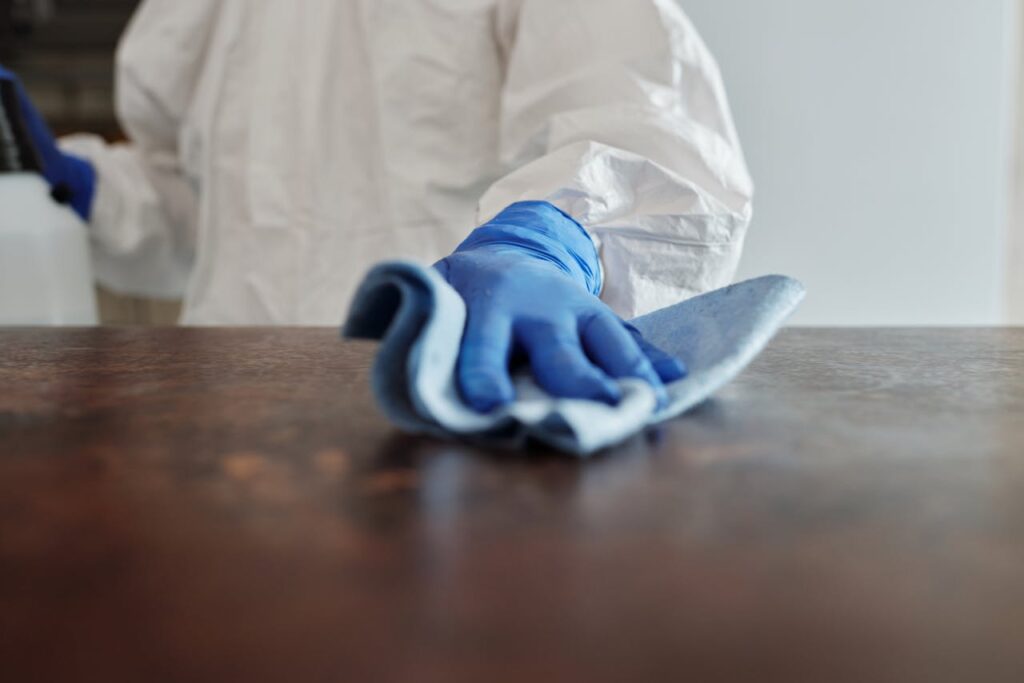
Quaternary ammonium compounds , or "quats," are chemical compounds widely used for their antimicrobial and surfactant properties. Their effectiveness as disinfectants has made them essential components in many industrial sectors: food processing , cosmetics , animal health , hospital hygiene, and even household cleaning. However, their widespread use also raises health, ecotoxicological, and regulatory concerns.
In a context where product safety and regulatory compliance are strategic priorities, it is essential for manufacturers to understand the nature of quaternary ammonium compounds, identify associated risks, and implement quaternary ammonium to monitor their presence in products or the environment. YesWeLab supports industry professionals in this endeavor by centralizing their analytical needs through a digital platform connected to a network of over 200 accredited laboratories.
In this article, we will answer the following questions:
- What are the potential dangers associated with quaternary ammonium compounds?
- In which products are these substances present?
- What are the main quaternary ammonium-based disinfectants?
- And most importantly, how can a reliable and compliant analysis be carried out in the laboratory?
Table of Contents
What is a quaternary ammonium compound? Definition and chemical properties
Quaternary ammonium compounds form a large family of organic compounds characterized by the presence of a central nitrogen atom bearing four alkyl or aryl substituents and a permanent positive charge. This structure gives them particular chemical and biological properties, which explain their use in disinfectant, detergent, and cosmetic formulations.
Chemical structure and mode of action
The general scheme of a quaternary ammonium compound is as follows:
R₁–N⁺(R₂)(R₃)(R₄)
- R₁ to R₄ : alkyl or aryl chains (more or less long depending on the compound).
- X⁻ : counter-ion, usually a halide (Cl⁻, Br⁻) or another anion.
This chemical configuration makes these molecules hydrophilic on one side (cationic part) and lipophilic on the other (alkyl chains), giving them an amphiphilic , similar to that of surfactants.
When applied to a surface or cell membrane, quaternary ammonium compounds insert themselves into phospholipid membranes, disrupt their organization, cause intracellular leaks, and lead to the lysis of microbial cells.
It is this bactericidal, fungicidal and virucidal action that makes them agents of choice for disinfection in many industrial sectors.
Main types of quaternary ammonium compounds
Among the best-known compounds in this family are:
- Benzalkonium chloride (BAC) : widely used in hospital disinfection and in cosmetics.
- Didecyldimethylammonium chloride (DDAC) : present in veterinary products and industrial disinfectants.
- ADBAC (alkyldimethylbenzylammonium chloride) : variant of BAC, broad spectrum.
- Cetrimonium chloride : used in hair care as an antistatic agent.
These substances are effective at low concentrations , often active from 0.1% in formulation, but their use is strictly regulated by specific regulations, including REACH , the biocidal products regulation (EU) , or the cosmetics regulation (EC No. 1223/2009) .
Essential physicochemical properties
- Water solubility : Most quaternary ammonium compounds are soluble, which facilitates their formulation in disinfectant solutions.
- Permanent cationic charge : they interact strongly with negative cell membranes.
- Stability : They are generally stable at room temperature, but may be sensitive to light or certain extreme pH levels.
What are the dangers of quaternary ammonium compounds?
Although widely used for their antimicrobial properties, quaternary ammonium compounds are not without risks. Their effects on human health, the environment, and even microbiology are raising increasing concerns in industrial, scientific, and regulatory circles . It is therefore essential for manufacturers and users of products containing these substances to understand their potential hazards, both for consumer safety and environmental protection.
Human toxicity: irritation, allergy and chronic exposure
Quaternary ammonium compounds can cause several types of adverse reactions, especially with repeated or prolonged exposure:
- Skin irritation : Products containing quaternary ammonium compounds, including disinfectants and cosmetics, can cause redness, itching, or contact dermatitis.
- Respiratory effects : Inhalation of vapors or aerosols containing quats (especially in occupational or hospital settings) has been associated with respiratory tract irritation, and even asthmatic effects in sensitive individuals.
- Contact allergies : some compounds such as benzalkonium chloride can cause allergic sensitization, particularly in frequent users (healthcare workers, maintenance workers).
- Disruption of the skin's bacterial flora : by eliminating beneficial bacteria, these substances can unbalance the skin's microbiome.
Toxicological studies have also highlighted a genotoxic and reprotoxic potential of certain quaternary ammonium compounds at high doses, although the data are still limited and under investigation.
Risks to children and animals
- Young children are more sensitive to the effects of disinfectants containing quaternary ammonium compounds, particularly through accidental ingestion, prolonged skin contact, or inhalation.
- Veterinary disinfectant products that are not rinsed off properly can irritate the pads or skin of animals.
Environmental toxicity: a significant impact
Quaternary ammonium compounds are highly persistent in aquatic environments and poorly biodegradable. They can:
- They accumulate in wastewater , sewage treatment plants , and sediments , where they exert a toxic effect on aquatic fauna.
- To affect the beneficial microorganisms necessary for biological degradation processes.
- It exhibits acute toxicity to fish, algae and aquatic invertebrates .
According to the ECHA (European Chemicals Agency), several quaternary ammonium compounds are included in the lists of substances subject to evaluation due to their PBT (Persistent, Bioaccumulative, Toxic) nature .
Overuse and the emergence of resistance
The intensive use of quaternary ammonium compounds, particularly in hospital settings or in the food industry, raises a growing concern: the selection of resistant microbial strains .
Identified resistance mechanisms:
- Formation of biofilms protecting bacteria from disinfectant agents.
- Membrane modifications reducing the penetration of quats.
- efflux pump systems that actively expel the toxic molecule.
These phenomena call into question their long-term effectiveness and justify the implementation of regular analyses and protocols for alternating or rotating biocides in sensitive environments.
Regulations and precautions for use
Quaternary ammonium compounds are subject to several strict regulations in Europe and internationally:
- Regulation (EU) No 528/2012 (Biocides) : governs the placing on the market of active substances used as disinfectants.
- REACH : requires the assessment of chemical risks and the declaration of industrial use.
- CLP (Classification, Labelling and Packaging) : specifies the mandatory hazard statements for products containing these substances.
- Cosmetics Regulation (EC No. 1223/2009) : certain quats are permitted but with maximum concentrations and mandatory labelling requirements.
For manufacturers, it is therefore essential to assess the toxicological risks of their formulations, to control the residual concentration of these substances in finished products, and to ensure regulatory compliance through rigorous laboratory analyses.
Are you looking for an analysis?
Which products contain quaternary ammonium compounds?
Quaternary ammonium compounds are present in a wide range of industrial and commercial products , often for disinfection, preservation, or formulation . Their use is widespread in the fields of hygiene, cosmetics, animal health, food processing, and water treatment. For manufacturers, it is crucial to know which products may contain these substances, whether for reasons of safety, regulatory compliance, or quality control .
Hygiene products and disinfectants
Quaternary ammonium compounds are primarily powerful biocides used in many cleaning and disinfection products:
- Disinfectant wipes (household, hospital, veterinary)
- Multi-surface cleaning sprays
- Detergent-disinfectants for floors, kitchens, and industrial equipment
- Disinfection products for the food industry (CIP, disinfection of production lines, instruments)
- Air treatment products or HVAC systems
In these formulations, quaternary ammonium compounds play a dual role:
- Antimicrobial : they eliminate bacteria, yeasts and enveloped viruses.
- Surfactants : they improve the wettability and cleaning power of products.
The most frequently used compounds in this context are benzalkonium chloride (BAC), DDAC, and their mixed derivatives (ADBAC, etc.).
Cosmetics and personal care products
Some quaternary ammonium compounds are also used in cosmetics, not for their biocidal role, but for their antistatic, conditioning or thickening properties .
They can be found in:
- Shampoos and conditioners
- Detangling creams
- Styling products
- Skin lotions
- Body deodorants and refreshing wipes
Examples of compounds used:
- Cetrimonium chloride : an antistatic agent, frequently used in conditioners.
- Stearalkonium chloride : softening and film-forming agent.
- Behentrimonium chloride : hair conditioner.
These substances are listed in Regulation (EC) No 1223/2009 on cosmetic products, with concentration restrictions and labelling requirements according to their toxicological profile.
Veterinary and animal health products
In the veterinary field, quaternary ammonium compounds are present in:
- Disinfectants for livestock (surfaces, equipment, footbaths)
- Wound treatment or topical care products
- Cleaning solutions for veterinary medical equipment
DDAC ( didecyldimethylammonium chloride) is commonly used in these applications for its broad antimicrobial efficacy , including in the presence of organic matter.
Industrial and specialized applications
Quaternary ammonium compounds are also used in lesser-known but equally critical applications:
- Industrial water treatment : prevention of biofilm formation in closed circuits.
- Textile industry : antistatic agents, softeners.
- Products for swimming pools : quaternary ammonium compound-based disinfectants.
- Inks, paints and glues : preservatives against mold.
Why does this diversity of use pose a problem?
The use of quaternary ammonium compounds in a wide variety of products makes assessing cumulative exposure , both for consumers and for professionals who regularly handle these substances. This multiplicity of applications also implies a regulatory declaration : the same compound may be subject to different regulations depending on whether it is used as a biocide, a cosmetic ingredient, or an additive in a detergent.
Furthermore, the presence of quaternary ammonium compounds raises concerns about potential residues in finished products or on surfaces in contact with food, particularly in the food and cosmetics industries. To ensure regulatory compliance and user safety, it is essential to perform precise analyses tailored to each matrix (water, surface, cosmetic, food, etc.).
This is why manufacturers are increasingly turning to specialized laboratories capable of performing reliable analyses on quaternary ammonium compounds, regardless of the type of product or environment to be monitored. These analyses not only detect the presence of quats, but also assess their concentration, in accordance with current standards and regulatory thresholds specific to each sector.
What are the quaternary ammonium-based disinfectants?
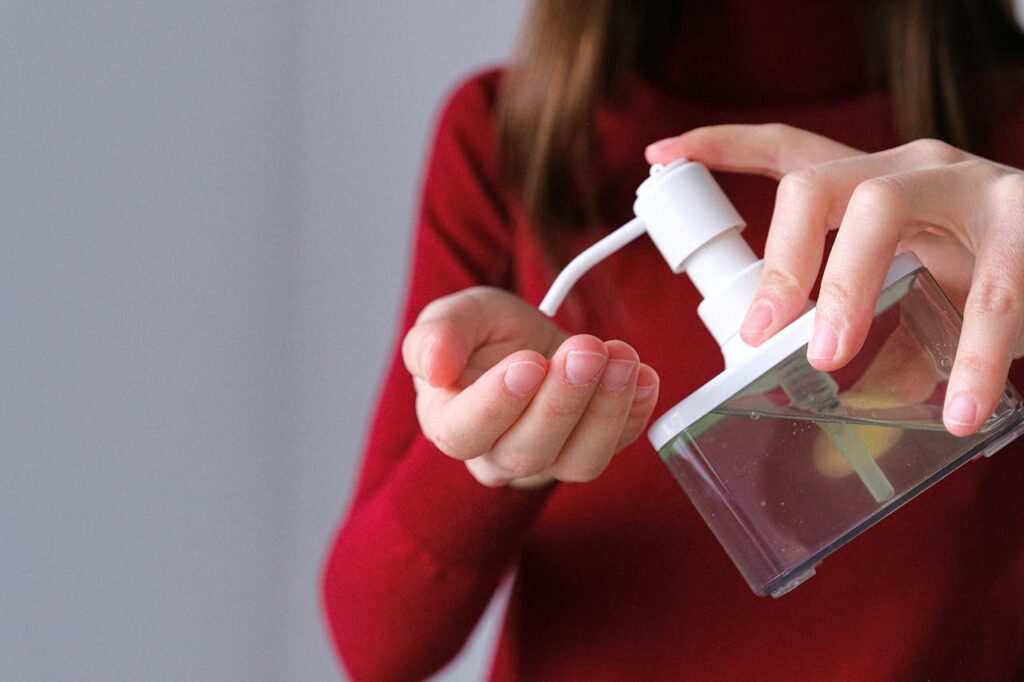
Quaternary ammonium compounds are key active ingredients in the formulation of many industrial, medical, and household disinfectants. Their antimicrobial efficacy, low cost, and compatibility with a wide range of surfaces make them particularly popular biocidal agents in preventive and curative disinfection strategies.
Main quaternary ammonium-based disinfectants
Disinfectants containing quats are designed to destroy or inhibit microorganisms on surfaces, equipment, hands, or in liquids. Some of the most commonly used compounds include:
- Benzalkonium chloride (BAC) : often found in antiseptic solutions, disinfectant sprays or wipes, both in hospital settings and in domestic or industrial environments.
- Didecyldimethylammonium chloride (DDAC) : used in the disinfection of livestock premises, surfaces in the agri-food industry, or in water treatment systems.
- ADBAC alkyldimethylbenzylammonium chloride): an optimized version of BAC, often combined with other quats to extend the antimicrobial spectrum.
These substances are generally formulated as concentrated or ready-to-use solutions , sometimes combined with other active ingredients such as ethanol, hydrogen peroxide or fatty alcohols.
Spectrum of activity and efficiency standards
Quaternary ammonium-based disinfectants are particularly effective against Gram-positive bacteria , yeasts , and many enveloped viruses (including coronaviruses). However, their effectiveness depends on several factors, such as:
- The concentration of the active substance
- Contact time
- The pH and temperature of the solution
- The presence of organic matter
As part of regulatory validation, disinfectant products must meet European standards such as:
- EN 1276 : Bactericidal efficacy in a clean environment
- EN 13697 : Bactericidal and fungicidal activity on surfaces
- EN 14476 : Virucidal efficacy, including against enveloped viruses
These standards are particularly critical in high-risk health environments, such as hospitals, laboratories, the pharmaceutical or agri-food industries.
Industrial uses of quaternary phosphate-based disinfectants
In professional environments, quaternary ammonium compounds are incorporated into strict disinfection protocols , often governed by quality audits or HACCP requirements. They are found in particular in:
- Disinfection of production lines and equipment in the agri-food sector (particularly in CIP – Cleaning-In-Place systems)
- Maintenance and disinfection of animal health (livestock farms, veterinary clinics)
- Surface cleaning in the cosmetics and pharmaceutical , where hygiene in production areas is paramount.
- Hospital hygiene plans ( disinfection of floors, beds, trolleys, etc.)
Their advantage lies in their compatibility with a wide variety of materials , their effectiveness at low temperatures , and their low corrosivity compared to other more aggressive oxidizing agents such as bleach or peroxide.
Usage limitations and best practices
Despite their effectiveness, quaternary ammonium-based disinfectants have limitations that are important to understand:
- They can be inactivated by certain anionic surfactants (present in conventional soaps or detergents), which makes it necessary to clearly separate the cleaning and disinfection steps.
- Their effectiveness can be reduced in the presence of biofilms .
- Accumulation on poorly rinsed surfaces can promote bacterial resistance .
This is why manufacturers must not only choose the right formulations, but also validate the effectiveness of their protocols through regular analyses (cleanliness control, microbiological tests, verification of disinfectant residues).
How to perform a quaternary ammonium analysis?
The presence of quaternary ammonium compounds in a product or on a surface raises critical issues regarding food safety , regulatory compliance , and the control of industrial processes . Whether dealing with disinfectants, cosmetics, residues on food contact surfaces, or industrial effluents, it is essential to rely on , reliable laboratory analyses
Why analyze quaternary ammonium compounds?
The analysis of quaternary ammonium compounds allows us to:
- Controlling regulatory compliance : maximum permitted concentrations are defined by specific regulations according to sectors (cosmetics, biocides, detergents, food contact, etc.).
- Assess residues : on disinfected surfaces, in finished products or in rinsing water, in order to limit risks to human health.
- Validating the effectiveness of cleaning and disinfection protocols : particularly in the agri-food, medical environments and animal health sectors.
- Monitor environmental discharges : in wastewater or industrial sludge, where these substances can persist and harm ecosystems.
- Controlling the quality of formulations : particularly in cosmetics or household products, where excess or insufficient concentration can impact the effectiveness or safety of the product.
To be reliable and recognized, these analyses must be carried out in laboratories accredited according to the ISO 17025 standard and, in France, often under COFRAC accreditation.
Analytical procedures: techniques for measuring quaternary ammonium compounds
Quaternary ammonium compounds can be present in a wide variety of matrices (aqueous solutions, surfaces, cosmetics, food products, wastewater). Depending on the context, laboratories choose the most appropriate analytical method:
High-performance liquid chromatography (HPLC)
HPLC is the reference method for accurately quantifying quaternary ammonium compounds in formulations, finished products, or environmental samples. It allows for efficient separation of the different active compounds and provides a reliable measurement of their concentration .
- Ideal for complex matrices: cosmetics, surfaces, disinfectants.
- Compatible with UV or spectrometric detectors as needed.
- Method compliant with regulatory standards and industrial quality guides.
Ion chromatography (IC)
Used particularly for aqueous samples , this technique is effective for analyzing quaternary ammonium compounds present in:
- Rinse water or wastewater
- Industrial effluents
- Sludge or cleaning solutions
Ion chromatography allows the detection of several quats simultaneously and the identification of any potential by-products.
UV-Visible spectrophotometry
This more accessible method is used for simple and rapid titrations, particularly in standardized formulations. It allows for a reliable estimation of the concentration of a given quaternary ammonium compound, provided that a specific calibration is available.
Other possible techniques
- Colorimetric or acid-base titration in certain simple cases (routine control)
- Chromatography-coupled mass spectrometry (LC-MS) for complex matrices or very low thresholds
Standards, accreditations and quality requirements
Quaternary ammonium analyses must meet strict criteria regarding reliability, traceability and regulatory compliance :
- Laboratories must be ISO 17025 accredited , guaranteeing technical competence and the validity of results.
- The methods used may be from standardized protocols , or be internal methods validated in accordance with ECHA guidelines, the biocidal products regulation or the cosmetics regulation.
- Depending on the sector, the results must meet regulatory limit values or internal quality specifications .
The importance of multi-matrix analysis
Quaternary ammonium compounds can be present in a wide variety of environments. A competent laboratory must be able to work with:
- Formulated products ( disinfectants, cosmetics, detergents)
- Food or industrial surfaces
- Environmental samples ( wastewater, sludge, air)
- materials or packaging
The analysis can be part of a preventive (quality, R&D), corrective framework (non-conformity, health alert) or regulatory framework (AMM dossier, REACH declaration, GMP, etc.).
YesWeLab, your partner for quaternary ammonium analysis
To address these challenges, YesWeLab supports manufacturers in implementing reliable analyses tailored to their sector. Through a network of over 200 ISO 17025 and COFRAC accredited laboratories , we offer:
- Analyses of finished products, raw materials, surfaces, effluents or packaging
- Tailor-made services to meet your quality or regulatory requirements
- management via our digital platform to order, track and receive your results quickly
- Personalized technical support from a dedicated expert
Do you need to analyze the presence of quaternary ammonium compounds in your products? YesWeLab helps you secure your production chains and ensure your regulatory compliance.
Conclusion
Quaternary ammonium compounds are essential in many industrial sectors , thanks to their disinfectant, surfactant, and antimicrobial properties. However, their widespread use poses health and environmental risks that must be controlled. Skin exposure, respiratory toxicity, environmental accumulation, and the development of resistance are all issues that necessitate precise knowledge of their presence in products and installations .
For manufacturers in the food, cosmetics, animal health or environmental sectors, the control of quaternary ammonium compounds necessarily involves reliable laboratory analyses , guided by standardized methods and carried out under accredited conditions.
Thanks to its digital platform, network of partner laboratories, and technical support, YesWeLab positions itself as a trusted partner for conducting these analyses, regardless of the type of product or matrix involved. Whether for a one-off need, a validation campaign, or a compliance audit, YesWeLab helps you guarantee the safety, quality, and regulatory compliance of your products.
FAQ – Quaternary Ammonium
What is a quaternary ammonium?
A quaternary ammonium compound is a chemical molecule with an N⁺R₄ structure, used for its antimicrobial, surfactant, or antistatic properties. They are found in disinfectants, cosmetics, cleaning products, and certain industrial formulations.
What are the health risks?
Quaternary ammonium compounds can cause skin irritation, respiratory problems, or allergic reactions with prolonged exposure. Some compounds are also suspected of being toxic to reproduction or the aquatic environment.
Which products contain quaternary ammonium compounds?
They are present in disinfectant wipes, cleaning sprays, shampoos, conditioners, veterinary disinfectants, industrial surface treatments, and sometimes in inks or treated textiles.
What are the current regulations?
In Europe, their use is regulated by several regulations: Regulation (EU) No 528/2012 for biocides, Regulation (EC) No 1223/2009 for cosmetics, REACH Regulation for chemical safety, and Regulation (EC) No 1935/2004 for food contact materials.
How to analyze quaternary ammonium compounds in the laboratory?
The main methods are high-performance liquid chromatography (HPLC), ion chromatography, and spectrophotometry. These analyses must be performed in ISO 17025 accredited laboratories to guarantee reliable and compliant results.
Does YesWeLab offer this type of analysis?
Yes. YesWeLab centralizes requests for quaternary ammonium analysis through its digital platform and relies on a network of over 200 accredited laboratories. We offer services tailored to the cosmetics, food, environmental, and animal health sectors.