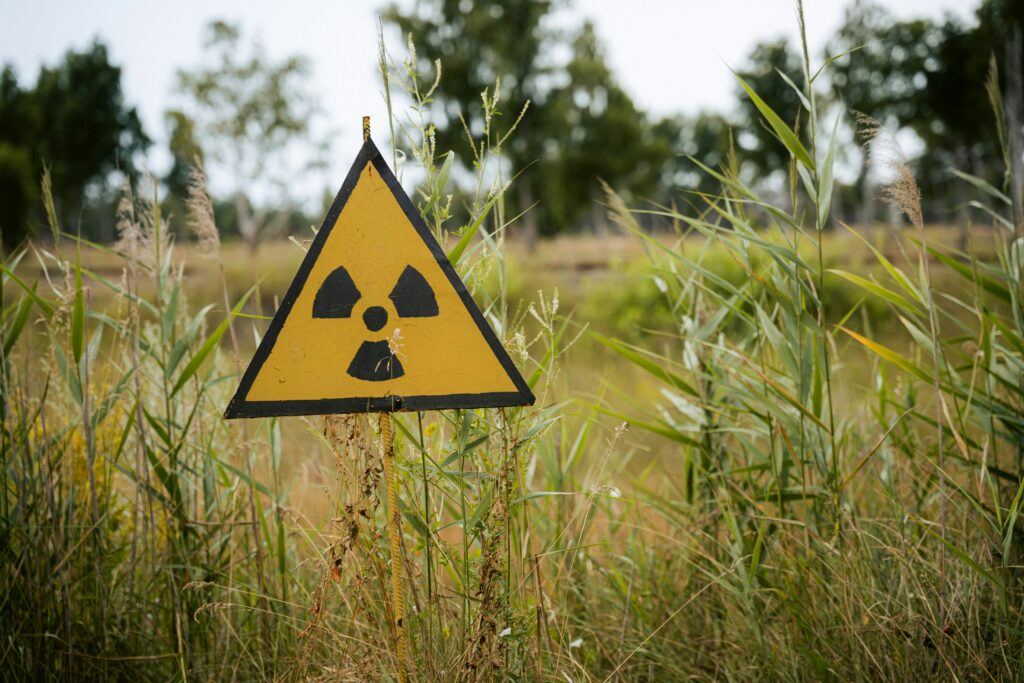
Radioactivity is a natural or artificial physical phenomenon that requires close monitoring in the agri-food , environmental , nuclear, and healthcare sectors. While some radioactive sources are used for medical or industrial purposes, uncontrolled exposure poses serious risks to human health and the environment. Accidental contamination or contamination from poorly controlled imports can lead to the presence of radionuclides in food, water, or materials. To ensure product safety and regulatory compliance, specific radiological analyses are necessary, such as gamma spectrometry or tritium measurement. This article examines the origins of radioactivity, its potential impacts, regulatory requirements, and analytical methods for detecting it in various matrices.
Table of Contents
Introduction
A fundamental physical phenomenon
Radioactivity refers to the property of certain unstable atomic nuclei to spontaneously disintegrate, emitting radiation. This emission can be of three types: alpha (particles composed of two protons and two neutrons), beta (electrons or positrons), and gamma (high-energy electromagnetic radiation). This radiation, by interacting with matter, can alter molecular structures, cause mutations, or generate heat.
This phenomenon was discovered at the end of the 19th century by Henri Becquerel, then studied in depth by Marie and Pierre Curie. It is the basis of many scientific and technological advances, particularly in the fields of nuclear energy, medicine (radiotherapy, imaging) and fundamental research.
A natural presence… but also an anthropogenic one
Radioactivity exists in nature: it is found in rocks, soil, water, air, and also in our own bodies. The main naturally occurring radionuclides come from the decay chains of uranium-238, thorium-232, and potassium-40. These elements have been present since the Earth's formation.
However, some human activities have generated or released artificial radionuclides into the environment. This is particularly true of atmospheric nuclear tests, major accidents (Chernobyl, Fukushima), and the civilian and military use of nuclear energy. These contaminations require rigorous monitoring to prevent health and environmental risks.
A major challenge for industry and society
Controlling radioactivity has become a cross-cutting issue. It concerns not only nuclear facility operators but also building industry professionals, food manufacturers, health authorities, and local governments.
Ionizing radiation, if left unchecked, can cause harmful effects on human health (cancers, genetic damage) and have a lasting impact on ecosystems. This is why regulations impose exposure thresholds, contamination limits, and monitoring requirements across a wide range of sectors.
What is radioactivity?
The principle of nuclear disintegration
Radioactivity is the result of a fundamental physical phenomenon: the decay of an unstable atomic nucleus. An unstable atom seeks to regain a more stable configuration by releasing energy in the form of particles or electromagnetic radiation. This transformation can give rise to a different atom, called a "daughter" or decay isotope, which can itself be radioactive, thus forming a decay chain.
This process is random but statistically predictable, and is measured using a key parameter: the half-life. This is the time it takes for half of the nuclei in a given sample to decay. The half-life can vary from a few milliseconds to several billion years, depending on the isotope involved.
The three types of ionizing radiation
Radioactivity is expressed through the emission of three main types of ionizing radiation:
- Alpha (α) radiation : Composed of two protons and two neutrons, it is relatively heavy and poorly penetrating. It can be stopped by a simple sheet of paper or the superficial layer of skin, but proves dangerous if inhaled or ingested.
- Beta radiation (β) : This consists of electrons (negative beta) or positrons (positive beta) emitted during the transformation of a neutron or proton within the nucleus. More penetrating than alpha radiation, it can be blocked by a few millimeters of aluminum.
- Gamma (γ) radiation : This is a very high-energy electromagnetic wave emitted during the reorganization of the nucleus after alpha or beta decay. Highly penetrating, it requires heavy shielding such as lead or concrete to be effectively attenuated.
These radiations interact with matter and can ionize atoms, that is, remove electrons from them, creating free radicals that can degrade biological structures and materials.
Natural radioactivity and artificial radioactivity
Radioactivity has been present in the environment since the Earth's origin. Several natural sources exist:
- Primordial radionuclides (present since the formation of the planet) such as uranium 238, thorium 232 and potassium 40.
- Cosmogenic radionuclides , produced by the interaction of cosmic radiation with the atmosphere (e.g., carbon-14, beryllium-7).
- The radioactive decay products of these elements, notably radon 222, a rare gas derived from uranium, which is closely monitored for its pulmonary toxicity.
artificial radionuclides produced by human activity. These originate from:
- Atmospheric nuclear tests conducted between 1945 and the 1980s.
- Major accidents (Chernobyl in 1986, Fukushima in 2011).
- Controlled discharges from nuclear power plants and medical or industrial facilities.
- Radiotherapy, imaging or sterilization devices.

The main radionuclides monitored in the laboratory
Isotopes with varied behaviors
The radionuclides analyzed in the laboratory differ in their nature (alpha, beta, gamma), their half-life, their mobility in the environment, their toxicity, and their origin (natural or artificial). Laboratories must therefore adapt their methods according to the isotopes being sought, the matrix being analyzed (water, soil, air, food, material), and the monitoring objectives (health, environmental, regulatory).
The most closely monitored isotopes
- Cesium-134 and -137 : Originating from nuclear accidents or military tests, these artificial isotopes emit beta and gamma radiation. Cesium-137 has a half-life of 30 years and readily accumulates in biological tissues. It is frequently detected in soils, fungi, agricultural products, and imported foodstuffs.
- Iodine-131 : A short-lived radioisotope (8 days), it is associated with releases from nuclear power plants and accidents. Highly mobile in the environment, it accumulates in the thyroid. It is closely monitored in dairy products, leafy vegetables, and drinking water after a nuclear incident.
- Strontium-90 : A pure beta emitter, it mimics calcium and accumulates in bones. Its half-life is 28.8 years. It originates primarily from nuclear tests and major accidents. Its analysis requires complex chemical separation.
- Uranium-238 and Thorium-232 : Naturally occurring in the Earth's crust, these heavy isotopes are the source of long radioactive decay chains. They are monitored in construction materials, aggregates, groundwater, and industrial sites.
- Radon-222 : A radioactive gas produced by the decay of uranium-238, it diffuses into the air and accumulates in confined spaces (homes, basements, public buildings). It is the leading cause of lung cancer in non-smokers. Its measurement is essential for radiation protection.
- Plutonium-238 and Americium-241 : Artificial alpha-emitting radionuclides found in radioactive waste, contaminated soils, and certain industrial materials. They require highly sensitive alpha spectrometry techniques.
The sectors concerned by the radioactivity analyses
Environmental monitoring
Monitoring radioactivity in the environment is a regulatory requirement in many countries. Analyses aim to control contamination levels in surface water, groundwater, soil, sediments, and ambient air. They are particularly important near nuclear sites, former mining areas, or in the context of remediation projects. Sampling campaigns make it possible to detect anomalies, assess the impact of facilities, and ensure compliance with environmental standards.
Agri-food and import-export
Radioactive contamination of food is a major food safety issue. Since the Chernobyl and Fukushima accidents, European legislation has imposed strict contamination limits on commercially available foodstuffs. Plant-based products (mushrooms, algae, dried fruit), animal products (milk, meat, fish), and food supplements must be analyzed to verify the absence of radionuclides such as cesium or iodine. These tests are mandatory for imports from sensitive areas.
Human and animal health
In the medical field, radioactivity is used for diagnostic or therapeutic purposes (radiotherapy, nuclear medicine). Controls are necessary to ensure the safety of patients and exposed staff. In the veterinary sector, certain analyses are used to verify the contamination of animal feed or the exposure of livestock to radioactive sources.
Construction materials and extractive industries
Certain raw materials (granite, phosphogypsum, rare earth elements) may contain high levels of natural radioactivity. Analyses are required to assess the risks associated with their use in construction, infrastructure, or industrial manufacturing. Specific measures must also be implemented at sites where these materials are extracted, processed, or stored.
Industrial waste and nuclear dismantling
Managing waste containing radionuclides requires precise radiological characterization. Whether the waste originates from nuclear facilities, chemical industries, or contaminated sites, these analyses allow for waste classification, determine treatment methods, and define disposal pathways. They are also essential for dismantling and decontamination operations.
Radiation protection and workplace safety
Companies exposing their staff to sources of ionizing radiation must implement radiation protection measures. This includes dosimetric monitoring of workers, control of the radiological environment, and verification of the absence of contamination on equipment or in effluents. Laboratory analyses make it possible to identify the isotopes present, quantify exposure, and adjust safety protocols.
Are you looking for an analysis?
Regulatory issues related to radioactivity
A structuring European legal framework
In Europe, radiological risk management is primarily based on European Union directives and regulations stemming from major nuclear incidents of the 20th and 21st centuries. Several of these key texts are binding on member states:
- Directive 2013/51/EURATOM establishes requirements for the protection of the public health against radioactive substances present in water intended for human consumption. It mandates rigorous monitoring of tritium, overall alpha activity, and residual beta activity.
- Regulation (EU) 2016/52 sets the maximum permissible levels of radioactive contamination of iodine 131 , cesium 134 , cesium 137 , strontium 90 and plutonium 239 in food and feed following a nuclear accident or radiological emergency.
- Regulation (EU) 2020/1158 concerns the conditions for importing food and feed from third countries following the Chernobyl accident. It establishes the thresholds for radionuclide contamination for different food groups (dairy products, meat, fish, cereals, mushrooms, etc.).
- Regulation (EC) No 1048/2009 , which amends Regulation (EC) No 733/2008, specifies that the cumulative radioactivity of cesium 134 and cesium 137 must not exceed 600 Bq/kg in imported foodstuffs.
These texts apply to all economic operators involved in the production, import, processing or distribution of foodstuffs, materials, substances or products that may contain radionuclides.
Specific obligations for manufacturers
Manufacturers subject to these regulations must implement appropriate analytical controls to demonstrate the conformity of their products. This implies:
- The identification of radionuclides potentially present in raw materials, finished products or effluents.
- Compliance with regulatory thresholds for mass or volume activity (expressed in Bq/kg or Bq/L).
- The implementation of representative sampling plans.
- Sending samples to laboratories accredited according to ISO /IEC 17025 and, where applicable, recognized by the competent authorities (COFRAC in France).
Analysis results must be archived, tracked, and made available to the authorities in the event of a regulatory inspection or audit. If thresholds are exceeded, immediate corrective measures must be implemented (batch blocking, product recall, investigation into the source of contamination, etc.).
The importance of standardizing analytical methods
To ensure consistency and reliability of results, analytical methods must adhere to validated and standardized protocols. Several standards govern radionuclide measurement techniques according to the matrices:
- NF EN ISO 9696 : Determination of overall alpha activity in water.
- NF EN ISO 13160 : Determination of tritium by liquid scintillation.
- NF ISO 18589-1 to 6 : Protocols for sampling and measurement of radioactivity in soils.
- NF EN 61577 : Methods for measuring radon in air.
Adherence to these standards not only ensures the comparability of data between laboratories, but also meets the requirements of certification bodies and public health authorities.
A matter of collective responsibility
Regulations concerning radioactivity are not solely aimed at administrative compliance. They are part of a broader strategy to protect public health , preserve natural resources , and ensure the sustainable management of technological risks . Every stakeholder—producer, processor, importer, distributor—is responsible for controlling radioactivity in their operations and must be able to demonstrate its traceability.
Methods for analyzing radioactivity in the laboratory
The main families of measurement techniques
Analytical methods vary depending on the nature of the radiation emitted by the targeted radionuclides. Each technique offers specific advantages depending on the matrix to be analyzed and the required sensitivity.
- Gamma spectrometry : This is the reference method for identifying and quantifying gamma-emitting radionuclides, such as cesium-137, cobalt-60, or potassium-40. It relies on the detection of gamma photons using a high-resolution germanium detector. It allows for non-destructive, direct, and multi-isotopic analysis.
- Alpha spectrometry : Used to measure alpha-emitting radionuclides, such as plutonium-239 or americium-241. This technique requires prior chemical separation because alpha rays have low penetrating power. It is particularly well-suited to complex matrices such as soils or waste.
- Liquid scintillation : This method is used for low-energy beta emitters (tritium, carbon-14). It involves mixing the sample with a scintillation liquid, which emits light when struck by radiation. The light is then converted into an electrical signal by a photomultiplier tube.
- Beta counting : A technique suitable for beta radionuclides such as strontium-90. Counting is performed after chemical separation using low-background detectors. This method requires precise preparation and regular calibration.
- Passive or active dosimetry : Used to monitor personnel exposure to ionizing radiation. It relies on portable devices such as dosimetric films, thermoluminescent detectors (TLDs) or ionization chambers.
- Radon measurement : Radon-222 is analyzed either by passive dosimeters (LR115 film) or by continuous electronic detectors. The instruments are placed in living or working spaces to measure average exposure over several days or weeks.
Analytical parameters to consider
Each analytical method relies on specific technical parameters, which determine the quality and representativeness of the results.
- Specific activity : It is expressed in becquerels per unit mass or volume (Bq/kg, Bq/L). It allows for the comparison of radioactivity levels between different matrices.
- Limit of detection (LOD) and limit of quantification (LOQ) : These thresholds define the method's ability to detect or quantify a radionuclide. Some techniques allow detection down to a few mBq/kg, depending on the isotope.
- Counting time : This corresponds to the time required to collect a reliable signal. The lower the radioactivity, the longer the measurement time must be (several hours to several days).
- Sample preparation : Depending on the matrix, different steps may be required: filtration, evaporation, calcination, acid digestion, or chemical separation. This phase is essential to isolate the target isotope and eliminate interferences.
- Packaging : Samples must be stored in suitable containers (airtight bottles, shielded caps) to avoid any loss or cross-contamination.

Examples of matrix analysis
Drinking water, natural water and wastewater
The analysis of radioactivity in water is essential for environmental monitoring and public health safety. It applies to several types of water: drinking water, surface water, groundwater, borehole water, swimming pool water, thermal water, and industrial effluents.
The most common analyses concern:
- Global alpha and global beta activity , general indicators of contamination.
- Tritium (H-3) , sought after particularly around nuclear power plants.
- Radon 222 , in spring water or underground water intakes.
- Gamma-emitting isotopes (Cs-137, Co-60, I-131) according to current regulations.
Samples must be collected in airtight plastic or glass vials, free of air bubbles, and sometimes acidified to stabilize dissolved radionuclides. Analyses may involve liquid scintillation, gamma spectrometry, or combined methods after evaporation.
Soils and sediments
Soil and sediment analyses allow for the assessment of radioactive contamination at a site, the monitoring of the impact of an industrial facility, or the characterization of hazardous materials. These matrices are complex and require thorough preparation (drying, sieving, grinding, melting, or acid digestion).
The radionuclides most often sought are:
- Natural elements such as uranium, thorium, potassium 40.
- Artificial elements such as cesium-137, strontium-90, or plutonium-239.
The analyses are carried out by gamma spectrometry, alpha spectrometry or beta counting after chemical separation.
Food products and nutritional supplements
Radiological monitoring of food is a regulatory requirement for products originating from sensitive areas or imported from third countries. The matrices concerned include:
- Plants : mushrooms, berries, leafy vegetables, algae, aromatic plants .
- Animal products : meat, milk, eggs, fish, shellfish.
- Processed products : essential oils, spices, food supplements.
The most closely monitored radionuclides are cesium-134/137, iodine-131, strontium-90, and potassium-40. Samples are homogenized, sometimes mineralized, and analyzed by gamma spectrometry or liquid scintillation. Detection thresholds must be sufficiently low to ensure compliance with the limits set by the European Union.
Construction materials and raw materials
Some building materials may contain naturally occurring radionuclides in significant concentrations, including:
- Granite, bauxite, phosphate gypsum, clays, zircon.
- Fly ash or industrial waste is used in concrete.
The analysis aims to assess the gamma emission index or radiological potential of materials, in order to limit the exposure of occupants. Specific measurements are also carried out on recycled materials or those originating from contaminated industrial areas.
Biological matrices: urine, milk, tissues
In certain specific contexts (accidents, occupational monitoring, medical research), analyses are performed on human or animal biological matrices. The objectives are multiple: to assess internal exposure, to verify accidental ingestion, or to document environmental contamination.
The analyses may focus on:
- Urine , to detect tritium, uranium or plutonium.
- Milk , to measure strontium or iodine 131 contamination.
- Tissues or organs , in a medico-legal or epidemiological context.
These analyses require delicate preparation and complex separation techniques, combined with measurements by alpha spectrometry or liquid scintillation.
Each type of matrix imposes its own constraints and requires specific analytical expertise. The choice of protocol, the sensitivity of the method, the traceability of the sampling, and adherence to standards guarantee the reliability of the results obtained.
YesWeLab: a centralized solution for your radioactive analyses
Easier access to multi-sector expertise
YesWeLab relies on a network of over 200 partner laboratories across France and Europe. This diversity allows us to meet a wide variety of needs, whether for environmental, agri-food, cosmetic, nutraceutical, or industrial analyses.
The radiological analyses offered cover all stages of the analytical chain:
- Selection of the most suitable method (gamma spectrometry, liquid scintillation, alpha spectrometry…).
- Handling of complex matrices (soils, sediments, effluents, foodstuffs, materials…).
- Managing analysis deadlines according to client constraints.
- Delivery of clear results
Thanks to this multi-sector approach, YesWeLab can support manufacturers regardless of their sector of activity, their level of technical expertise or their regulatory requirements.
An all-in-one digital platform
YesWeLab's strength also lies in its intuitive digital platform, designed to simplify the logistics of laboratory analyses. Users can:
- Find their analysis among a catalogue of more than 10,000 references.
- Order online and schedule sample shipments.
- sample processing and analysis progress in real time
- Access their results and analysis certificates from a secure area.
This digitalization allows for the centralization of all data, optimizes traceability, and significantly reduces administrative processing times. It also facilitates the management of multi-site campaigns or regulatory audits by ensuring immediate availability of reports.