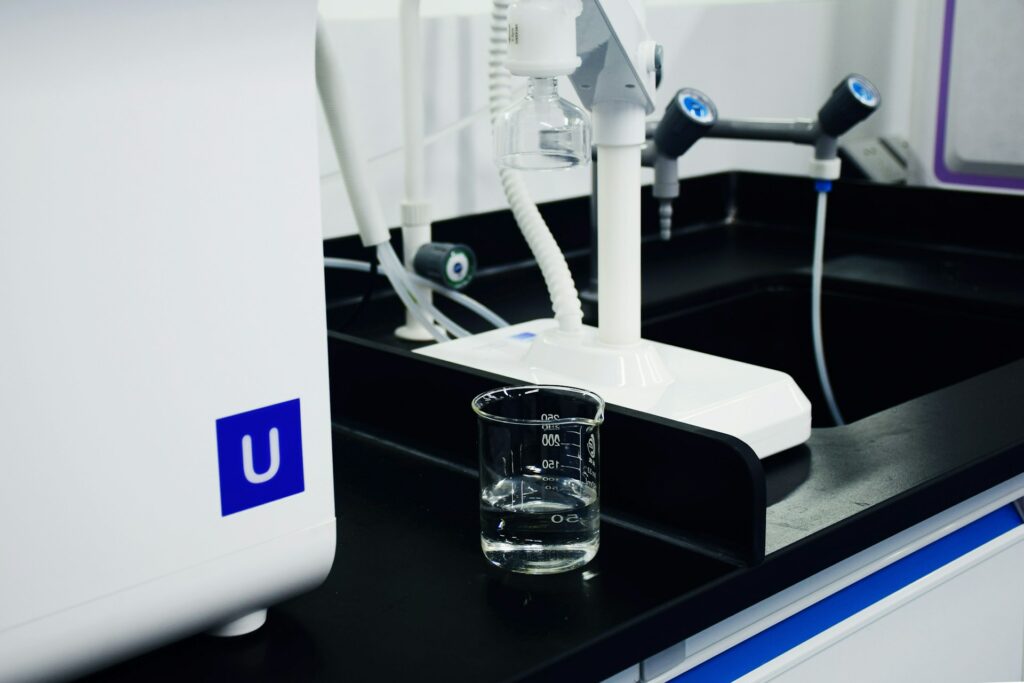
Trifluoroacetic acid (TFA) is a ubiquitous chemical compound in industry and laboratories. Its usefulness stems from its unique properties, but it also raises environmental concerns due to its persistence and the difficulty in disposing of it. This article explores the characteristics, uses, and challenges posed by TFA, while emphasizing the importance of appropriate monitoring and regulation to ensure a balance between environmental protection and safety . It also highlights the importance of collaborating with accredited laboratories to ensure accurate analyses that comply with applicable standards.
1. Introduction
Definition and general characteristics
Trifluoroacetic acid (TFA) is a strong carboxylic acid characterized by the presence of three fluorine atoms attached to a methyl group, giving it a particularly high acidity. Its pKa, estimated at 0.23, illustrates its ability to release hydrogen ions more efficiently than acetic acid, making it approximately 100,000 times more acidic. TFA is completely miscible in water and highly polar, resulting in a stable chemical compound that is difficult to biodegrade.
A compound of strategic importance
TFA is widely used in the organic and industrial chemistry sectors due to its ability to act as a catalyst, reagent, and solvent. It plays a key role in the manufacture of numerous products, such as pharmaceuticals, pesticides, and refrigerants, thanks to its stability and its properties that facilitate chemical reactions.
Remarkable physicochemical properties
The physicochemical properties of TFA make it a unique compound in its field. Its volatility and solubility in organic solvents enhance its usefulness in various industrial processes. However, the strength of its carbon-fluorine bonds and its compact structure explain its persistence in the environment, posing challenges for treatment and remediation.
Why should we be interested in TFA?
Although widely used, TFA is also a growing concern in the environmental and health sectors. Its ubiquitous presence in water, resulting from various sources of contamination, raises questions about its long-term effects on aquatic ecosystems and human health. This article aims to provide a comprehensive understanding of this compound, from its uses to its environmental impacts, and to explore possible solutions for its management and analysis.
2. What is TFA?
A precise chemical definition
Trifluoroacetic acid, with the chemical formula CF₃COOH, is a carboxylic acid containing a trifluoromethyl group (CF₃) attached to a carboxyl group (COOH). The presence of three highly electronegative fluorine atoms induces increased polarization of the chemical bonds. This structure makes TFA much more acidic than acetic acid (CH₃COOH), its fluorine-free counterpart.
TFA is generally available as a liquid at room temperature. It is colorless, with a pungent odor characteristic of carboxylic acids. Its high density and low boiling point (72.4 °C) make it suitable for use in processes requiring specific conditions.
Distinctive physicochemical properties
The physicochemical properties of TFA make it unique among carboxylic acids. Its very low pKa (0.23) reflects its high acidity. This characteristic results from the ability of the trifluoromethyl group to stabilize the acid's conjugate base (CF₃COO⁻) by inductive effect, making dissociation easier.
TFA is also very chemically stable, due to its carbon-fluorine bonds, which are among the strongest in organic chemistry. This stability translates into high resistance to biodegradation, making its removal difficult once released into the environment. Furthermore, TFA is completely miscible with water and soluble in most organic solvents, making it a versatile compound.
Differences with other carboxylic acids
Compared to other carboxylic acids, such as acetic acid, TFA stands out for its potency and stability. While acetic acid is relatively weak and readily biodegradable, TFA persists in the environment and is only minimally affected by natural degradation processes.
For example, sulfuric acid, although extremely acidic, is more oxidizing and does not exhibit the same stability as TFA in aquatic or organic environments. In contrast, hydrochloric acid, another strong acid, is easier to obtain but lacks the combination of volatility and stability that characterizes TFA.
A structure at the crossroads of chemistry and industry
The trifluoromethyl group is a sought-after chemical signature in numerous industrial applications. By modifying the electronic properties of molecules, it improves their efficiency, solubility, and strength. This ability explains why TFA is widely used in sectors such as pharmaceuticals, agrochemicals, and polymer manufacturing.
Are you looking for an analysis?
3. The main uses of TFA
Organic synthesis: an essential catalyst and solvent
TFA is widely used as a catalyst in complex chemical reactions. Its high acidity facilitates esterification, acylation, and condensation reactions, which are essential for the production of many organic compounds. For example, TFA is commonly used in the synthesis of pharmaceuticals and high-value chemicals.
As a solvent, TFA is particularly valued for its ability to dissolve a wide range of compounds, including polymers. Its volatility also allows for easy recovery after reaction, making it a preferred choice in processes requiring efficient solvent recycling.
Industrial applications: from pharmaceuticals to agrochemicals
In the pharmaceutical industry, TFA is a key component for the synthesis of complex molecules, including the active ingredients of drugs. It also plays a role in the purification of peptides and proteins, facilitating their separation and identification during analyses.
In agrochemicals, TFA is used as an intermediate in the manufacture of pesticides and herbicides. Its chemical properties improve the effectiveness of active substances by increasing their stability and solubility, resulting in better crop yields.
Laboratory use: precise and reliable analyses
TFA is a valuable reagent for many analytical techniques in the laboratory. In high-performance liquid chromatography (HPLC), it is used as an ion-pairing agent, enabling the efficient separation of peptides, small proteins, and other organic compounds. Its compatibility with sensitive techniques such as NMR spectroscopy makes it a preferred choice for the structural analysis of molecules.
Furthermore, TFA is often used to adjust the pH in complex solutions, particularly in purification protocols. Its ability to interact with a wide range of compounds makes it an essential tool for chemists and biologists.
A key role in research and development
In scientific research, TFA is used for its stabilizing and catalytic properties, which facilitate the study of chemical reactions. It is also an essential tool in the design of new materials and the optimization of industrial processes. Due to its volatility and ease of handling, it is often preferred for small-scale testing before scaling up to industrial production.
4. TFA and the environment
Sources of contamination: multiple origins
TFA can be introduced into the environment from various sources. One of the main sources is the degradation of perfluorinated and polyfluorinated substances (PFAS), which release TFA as a metabolite. These substances, widely used in pesticides, industrial coatings, and household products, are a major source of TFA.
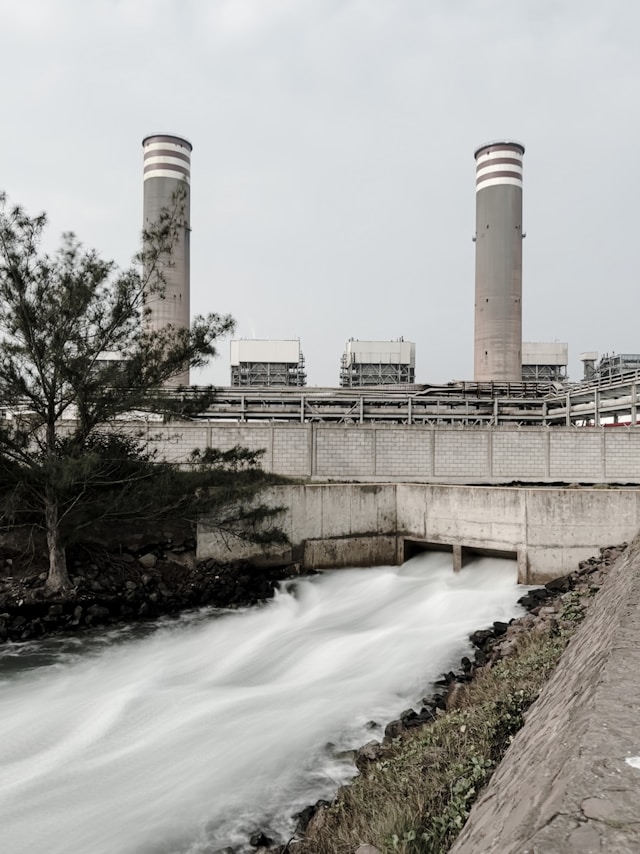
Industrial discharges are another significant source. Factories manufacturing fluorinated compounds, including pharmaceuticals and pesticides, release TFA into wastewater. These discharges, often poorly treated by conventional facilities, lead to accumulation in waterways. For example, high concentrations have been detected in the Seine in Paris and the Neckar River in Germany, sometimes reaching several micrograms per liter.
Finally, the use of certain fluorinated anesthetics and refrigerants also contributes to the presence of TFA in the air and, by extension, in precipitation, which transports it to soils and waters.
Presence in surface water, groundwater and drinking water
TFA is widely ubiquitous in the aquatic environment. Due to its high solubility and chemical stability, it accumulates in surface and groundwater. Studies conducted in Europe have revealed average concentrations ranging from 1 to 2 µg/L in many rivers, with peaks exceeding 80 µg/L in areas near industrial discharges.
While concentrations in drinking water are generally below current regulatory limits, they raise concerns for the future. The inability of water treatment facilities to effectively remove TFA could lead to an increase in these levels, particularly in areas where drinking water is drawn from contaminated rivers.
Ecological impact: persistence and mobility
The chemical stability of TFA, due to its carbon-fluorine bonds, prevents its natural degradation. Unlike many organic pollutants, it is not metabolized by microorganisms, which contributes to its persistence in ecosystems.
As a highly mobile molecule, TFA can spread over long distances through waterways and groundwater. This characteristic complicates its management, as it can easily cross borders and affect ecosystems far from the sources of contamination.
Although TFA is unlikely to accumulate in living organisms, its impact on aquatic ecosystems remains a concern. At high concentrations, it can disrupt biological processes in aquatic organisms, particularly algae, which play a key role in the food chain.
A growing environmental problem
The increasing presence of TFA in the environment reflects a broader issue related to the management of fluorinated compounds. Without strict regulation and improved treatment techniques, TFA will continue to pose a significant risk to water quality and ecosystems. Regular monitoring and analysis are essential to better understand its long-term impact and to guide efforts toward sustainable solutions.
5. Regulations and legal framework of the TFA
A lack of strict regulation
Currently, TFA is not specifically regulated in most countries, whether in laws relating to drinking water, industrial discharges, or chemicals. In Europe, although it is recognized as a metabolite of perfluorinated substances, it is not among the priority substances in the Water Framework Directive. This means that no strict limits have been imposed on its concentrations in the environment.
For example, in Germany, TFA was classified in 2008 as a "non-significant" metabolite under plant protection product legislation. This status limited the possibilities of imposing restrictions on substances that degrade into TFA.
Current guidance values
Some countries have established guideline values for TFA, although these are rarely binding. In Germany, a health-related guideline value (GOW) has been set for drinking water at 3 µg/L, with an intervention limit of 10 µg/L. However, these values are provisional and require further studies for refinement.
These values are primarily aimed at protecting human health, but they do not always take into account broader ecotoxicological impacts, such as effects on aquatic ecosystems.
Proposals for strengthened regulation
Faced with increasing concentrations of TFA in the environment, several initiatives have been proposed to strengthen the regulation of this compound:
- Inclusion in the Water Framework Directive : Classifying TFA as a priority substance would require the establishment of environmental quality standards at the European Union level.
- Restricting precursor substances : Banning or limiting substances containing trifluoromethyl (CF₃) groups that degrade into TFA could reduce indirect emissions.
- Implementation of REACH regulation : A general restriction on PFAS, including their metabolites such as TFA, could be applied under this European regulation.
Gaps in the application of existing regulations
Even when regulations exist, their enforcement can be ineffective. For example, manufacturing companies can choose which EU country they submit their products to for initial assessment. If one country applies less stringent criteria, other member states are obliged to recognize this assessment, leading to a race to the bottom in standards.
Furthermore, the lack of systematic monitoring of TFA in drinking water and industrial discharges prevents a full understanding of its impact and limits the possibilities for rapid intervention.
Towards comprehensive and coherent management
To address the challenges posed by TFA, a coordinated and comprehensive approach is needed. This includes establishing binding standards, promoting advanced treatment technologies, and increasing transparency in industrial processes. Clear regulation, combined with regular monitoring, would not only reduce TFA concentrations in the environment but also better protect ecosystems and human health.
6. Laboratory methods for analyzing TFA
Importance of TFA analysis
The persistence of TFA and its ability to be found in various environments, such as water, soil, and air, necessitate rigorous monitoring. Analyses allow for the determination of precise TFA concentrations in complex matrices, such as wastewater, surface water, and industrial effluents. This data is essential for assessing environmental impacts and ensuring regulatory compliance.
TFA analysis is also crucial in the pharmaceutical and chemical industries to ensure that manufacturing processes do not generate unacceptable residual concentrations in final products or waste.
Commonly used analytical techniques
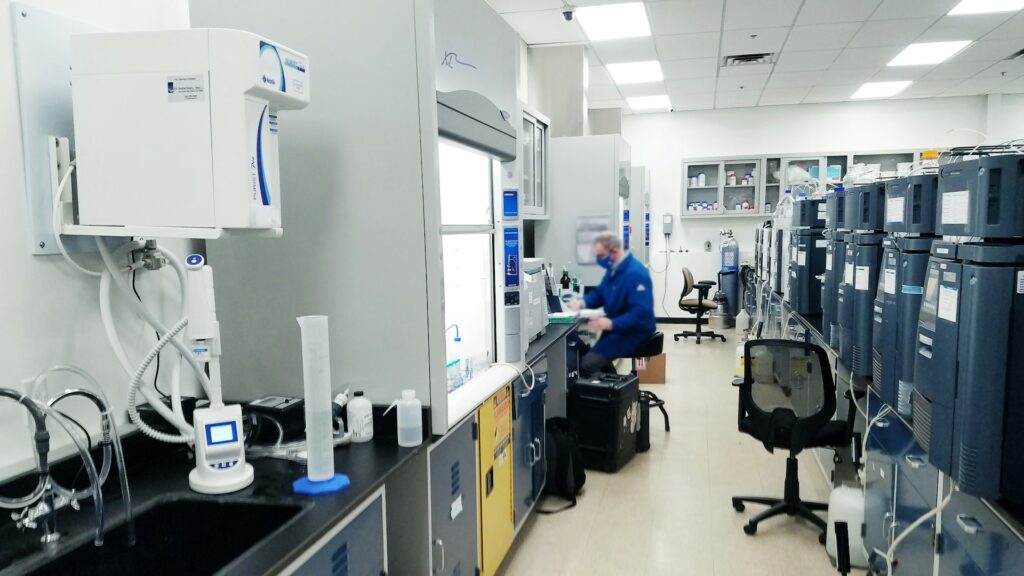
Laboratories primarily use two techniques to analyze TFA: gas chromatography (GC) and high-performance liquid chromatography (HPLC). These methods, often coupled with advanced detectors, ensure accurate and reliable detection of TFA, even at very low concentrations.
HS-GC-MS (Headspace-Gas Chromatography-Mass Spectrometry)
This technique is particularly well-suited for analyzing volatile compounds such as TFA. Samples are generally collected in airtight, inert containers to prevent contamination. Once in the instrument, the compound is separated by gas chromatography, then identified and quantified by mass spectrometry. This method offers remarkable sensitivity, with quantification limits as low as 0.1 mg/L.
HPLC (High-Performance Liquid Chromatography)
High-performance liquid chromatography (HPLC) is a method often used for aqueous matrices containing TFA. Combined with detectors such as UV or fluorescence, it allows for rapid and reliable analysis. This technique is also ideal for complex mixtures requiring prior separation of components.
Reliability and accuracy of analyses
To guarantee reliable results, laboratories follow strict protocols, often developed in-house and validated according to international standards such as ISO 17025. These protocols include essential steps such as sample preparation, quality control, and instrument calibration. These precautions help reduce errors and ensure complete traceability of analytical data.
Applications of the analyses in different sectors
TFA analyses are not limited to the environment. They also play a key role in:
- The pharmaceutical industry , to check for TFA residues in active ingredients.
- Agriculture , in order to monitor pesticide metabolites in soils and water.
- Environmental tests , to assess the impact of industrial discharges on aquatic ecosystems.
7. YesWeLab and TFA analysis
A network of accredited laboratories
YesWeLab collaborates with over 200 partner laboratories across France and Europe, many of which are accredited to ISO 17025. This accreditation guarantees the quality and reliability of analytical results, meeting regulatory requirements and specific client needs. YesWeLab's partner laboratories possess the expertise to analyze TFA in various matrices, such as water, soil, and industrial effluents.
The YesWeLab laboratory also offers PFAS testing, including TFA, under COFRAC accreditation. This certification guarantees analyses that meet the most rigorous standards, essential for sectors subject to strict regulatory requirements.
Solutions tailored to specific needs
YesWeLab offers customized TFA analyses tailored to the constraints and requirements of each sector. Whether it's measuring TFA concentration in wastewater, monitoring residues in chemicals, or tracking industrial discharges, YesWeLab provides personalized services.
YesWeLab's digital platform simplifies the process of ordering and tracking analyses. In just a few clicks, users can select the necessary analyses, send their samples, and receive their results securely. This centralized approach reduces turnaround times and improves the operational efficiency of manufacturers.
Advanced analytical techniques accredited by COFRAC
Thanks to its network of partners, YesWeLab offers advanced analytical techniques for detecting and quantifying TFA. Among the available methods are those that allow for precise detection even at very low concentrations. Our partners are also accredited for this analytical service. The protocols used comply with international standards, guaranteeing reliable and reproducible results.