Ethylene oxide (ETO) is a chemical contaminant under close scrutiny in the food, cosmetics, and pharmaceutical industries. Used in some countries as a sterilizing agent, it is now strictly prohibited in the European Union due to its proven toxic effects on human health. However, residues of this substance continue to be detected in imported products, exposing manufacturers to significant regulatory and health risks. To address these challenges, specific analyses are available, such as ethylene oxide testing , which allows for effective verification of product compliance. To learn more, discover our laboratory chemical contaminant analysis , including testing for regulated residues such as ethylene oxide.
This article explores in depth the properties of ethylene oxide, its uses, the associated risks and the analytical methods for detecting it in products.
Table of Contents
What is ethylene oxide?
Definition and chemical characteristics
Ethylene oxide, also known as 1,2-epoxyethane or oxirane, is an organic compound with the molecular formula C₂H₄O. It is the simplest of the cyclic ethers in the epoxide family. At room temperature, it is a colorless, highly volatile gas with a slightly ethereal odor. Its boiling point is extremely low (11 °C), and it is completely miscible in water. Ethylene oxide is also highly reactive: it readily polymerizes or forms bonds with other organic compounds.
This gas is compressible in liquid form, but remains highly flammable with an explosive limit between 3% and 100% by volume in air. Its flash point is -57°C, making it a high-risk substance for industrial handling.
Its CAS number is 75-21-8, and it is listed in the IARC (International Agency for Research on Cancer) classification as a substance belonging to group 1 , i.e., a known human carcinogen.
Toxicological properties
Ethylene oxide is classified as a CMR substance: carcinogenic, mutagenic, and reprotoxic . It is an alkylating agent that can interact with DNA and proteins, causing cellular mutations. Several epidemiological studies have highlighted a link between exposure to ethylene oxide and an increased risk of lymphoid, stomach, and breast cancers.
If inhaled, this gas can cause irritation of the mucous membranes, headaches, respiratory problems, and even seizures or pulmonary edema. Cases of peripheral neuropathy, memory loss, and impaired hand-eye coordination have also been reported in occupational environments exposed to concentrations as low as 3 ppm.
Chronic exposure is particularly concerning. In occupational settings, the permissible exposure limit set by OSHA (United States) is 1 ppm (8-hour time-weighted average), with a short-term exposure limit of 5 ppm over 15 minutes. It should be noted that the olfactory detection threshold varies between 250 and 700 ppm, meaning that the gas can be toxic even before it is detectable by smell.
Presence in finished products
Ethylene oxide is considered a contaminant when present as a residue in products intended for human or animal consumption, or for cosmetic use. It can also be detected as 2-chloroethanol, a byproduct of its degradation or transformation.
Conformity analyses take into account the sum of ethylene oxide and 2-chloroethanol , expressed as ethylene oxide equivalent. This definition is that adopted by European Commission Regulation (EC) No 396/2005.
The presence of this contaminant in finished products, even in very small quantities, can lead to the immediate withdrawal or recall of the affected batches, particularly when it comes to foodstuffs, organic products or nutritional supplements.

What is the use of ethylene oxide? Industrial uses and applications
Despite its well-established hazards, ethylene oxide remains used in many countries for its exceptional properties. It is a broad-spectrum compound with applications in several industrial sectors: food processing, medical, chemical, and pharmaceutical. This section explores its two main uses: as a biocidal agent and as a chemical intermediate in the synthesis of industrial products.
A powerful biocide for sterilization
Ethylene oxide is a highly effective gaseous disinfectant against bacteria, molds, yeasts, and spores. It is used to sterilize heat-sensitive products that cannot be treated by autoclave or ionizing radiation.
a) Disinfection of food and cosmetic products
Historically, ethylene oxide has been widely used to treat spices, dried plants, aromatic herbs, seeds, and nuts, particularly during their export from tropical regions. This process ensured the microbiological safety of batches while preserving the organoleptic properties of the foodstuffs (color, taste, texture), unlike more aggressive heat treatments.
However, this practice is now banned in the European Union because ethylene oxide residues pose serious health risks. Despite this, several third countries, such as India, Canada, the United States, and Australia, continue to use this gas in post-harvest treatments.
This situation explains the numerous cases of non-compliance detected in imported products, such as in 2020, when more than 268 tons of sesame seeds were withdrawn from the European market after showing contamination levels 3,500 times higher than the maximum permitted limit (0.05 mg/kg). This case, reported by the RASFF system, highlighted the extent of the use of this substance in certain exporting countries.
b) Sterilization of medical equipment
Ethylene oxide is also widely used in the medical sector for sterilizing sensitive devices such as:
- Bandages, sutures, implants, syringes, catheters
- Teats, bottles, devices for premature babies
- Surgical instruments made of plastic or silicone
It is particularly used when materials cannot withstand heat or gamma rays. This sterilization method is governed by strict standards, such as NF EN 550, which defines the requirements for validation, control, and process safety.
However, this technique has given rise to several health controversies , particularly in France in the 2000s. Ethylene oxide residues were detected in sterilized teats and baby bottles intended for use in maternity wards. These findings led to a revision of regulations and a ban on the use of this substance on food contact materials.
c) Other biocidal uses
Ethylene oxide has also been used in:
- Disinfection of archives and historical documents , to eliminate mold without damaging fragile materials.
- Fumigation of buildings (now banned in Europe)
- Sterilization of packaging or laboratory equipment
A key intermediary in the chemical industry
Ethylene oxide is not only a sterilizing agent. It is also a chemical precursor for the manufacture of major industrial derivatives , particularly in the plastics, solvents, cosmetics and pharmaceutical industries.
a) Synthesis of ethylene glycol
The main industrial application of ethylene oxide is the production of ethylene glycol (EG) . This compound is used for:
- Automotive coolants (antifreeze)
- Solvents
- Inks and resins
- The manufacture of polyester fibers
The reaction is simple: ethylene oxide is hydrolyzed to ethylene glycol under controlled conditions.
b) Production of polyethers and surfactants
Ethylene oxide is also a monomer for the polymerization of polyethylene glycol (PEG) , used as:
- Cosmetic additive
- Pharmaceutical excipient
- Texturizing or emulsifying agent
- Component of hand sanitizers
It is also used in the composition of non-ionic surfactants , via a process called ethoxylation : the gas is added to molecules such as fatty alcohols to form mild cleaning agents, used in household products, shampoos and laundry detergents.
c) Manufacturing of complex derivatives
Ethylene oxide enables the synthesis of crown ethers , cyclic oligomers capable of forming complexes with metal ions. These compounds have applications in:
- Research in organic chemistry
- The manufacture of selective membranes
- Liquid-liquid extraction processes
However, their high cost limits their use to laboratory applications.
Data on global production and consumption
According to industry data (Chemical Weekly, 2010):
- Global demand for ethylene oxide was 16.6 million tonnes in 2004.
- It reached 20 million tons in 2009
- The estimated growth rate is 5.7% per year
Despite increasing restrictions, ethylene oxide remains a mainstay of the global chemical industry , particularly in countries where regulations are less stringent than in Europe.
Are you looking for an analysis?
Why is ethylene oxide banned in the European Union?
Ethylene oxide is now strictly banned in the European Union for all food and sanitary uses due to its extremely concerning toxicological profile . Classified as a carcinogenic, mutagenic, and reprotoxic (CMR) substance , it is subject to very strict regulations that apply to food products, cosmetics, and materials intended to come into contact with food.
A risk recognized for several decades
a) Documented toxicity
The genotoxic nature of ethylene oxide was established as early as 1968 by Swedish researchers (Hogstedt & Ehrenberg). However, it was not until 1994 that this property was officially recognized by European authorities.
The International Agency for Research on Cancer (IARC) classifies ethylene oxide in Group 1 : known human carcinogen. In parallel, the European Union's CLP Regulation lists it in category:
- 1B for carcinogenicity (H350)
- 1B for mutagenicity (H340)
- 1B for reproductive toxicity (H360)
Exposure to this gas, even in low doses, can cause numerous harmful effects, including:
- Breast, lymphoid and gastric cancers (according to epidemiological studies)
- Chromosomal mutations and genetic abnormalities
- Neurological disorders (headaches, memory loss, neuropathies)
- Teratogenic effects and hormonal disruptions
b) A small safety margin
Unlike other chemicals, ethylene oxide does not have a "safe" exposure threshold . Its toxicity is present even at very low doses, which justifies the zero-tolerance adopted by European authorities, particularly in France.
A strict ban on food uses
a) Prohibition of use in Europe
Since Regulation (EC) No 396/2005 , ethylene oxide can no longer be used as a pesticide or disinfectant in food processing within the European Union. It is also prohibited for:
- The processing of seeds, spices, plants, and aromatic herbs
- Fumigation of foodstuffs
- Direct or indirect contact with food contact materials (FCM)
Its use remains possible in certain medical devices, but under strict conditions of sterilization and validation (e.g., NF EN ISO 10993-7 standard for medical devices).
b) Maximum residue limits (MRLs)
European regulations impose extremely low limits for the presence of ethylene oxide in foodstuffs. These thresholds are defined in Regulation (EC) No 396/2005 and its annexes.
Here are some examples of MRLs:
| Product type | Maximum Residue Limit (MRL) |
| Sesame seeds, organic spices | 0.05 mg/kg (or 0.01 mg/kg for organic) |
| Fruits, vegetables, cereals | 0.02 mg/kg |
| Tea, infusions, dried herbs | 0.1 mg/kg |
| Processed products (composites) | lowest MRL of ingredients |
In the case of composite products , the MRL applied is that of the most sensitive ingredient , unless a validated transformation factor
c) Zero tolerance for organic products
organic products , the regulatory limit is set at 0.01 mg/kg , which is the limit of quantification . Any detection, even a trace amount, constitutes non-compliance , requiring:
- The organic operator must inform their certification body
- Quarantine or batch withdrawal
- Notification to customers or distributors
The attitude of the French authorities: strictness and mandatory withdrawal
In France, the administration adopts a strict position , particularly with regard to imported products:
- Any non-compliant batch must be withdrawn or recalled, including for animal feed.
- The use of contaminated raw materials is prohibited , even in diluted formulations.
- Measurement uncertainty cannot be invoked to justify exceeding the limit.
Since 2020, controls have been intensified, with particular attention paid to products from third countries. The DGCCRF regularly publishes lists of recalled products, such as in June 2021 , when more than 7,000 items were affected .
Self -monitoring is strongly recommended by the authorities: any operator having doubt about the conformity of a raw material or a processed product must carry out a laboratory analysis to guarantee regulatory compliance.
The role of RASFF in monitoring imports
The European Rapid Alert System for Food and Feed (RASFF) plays a key role in monitoring contaminated products. It enables:
- To centralize notifications of non-compliance between Member States
- To trigger product recalls on a European scale
- To strengthen border controls on certain categories of high-risk products
Which products are affected by ethylene oxide contamination?
Ethylene oxide contamination is not limited to a single sector or product type. On the contrary, many plant-based raw materials , processed products , and even cosmetic formulations can be exposed to this contaminant, which is often used during their processing or packaging in exporting countries. This section reviews the product categories most at risk , recent incidents , and recommendations to follow to avoid any non-compliance.
Most sensitive plant-based raw materials
Certain ingredients are systematically identified as being at high risk of contamination, due to:
- From their origin (tropical areas with a humid climate)
- Their packaging method (bulk storage, long transport time)
- From sensitivity to mold and microbial contamination
Here is a non-exhaustive list of products frequently tested positive for ethylene oxide :
- Sesame seeds : the flagship product of the 2020 scandal
- Dried medicinal plants and aromatic herbs (thyme, mint, chamomile…)
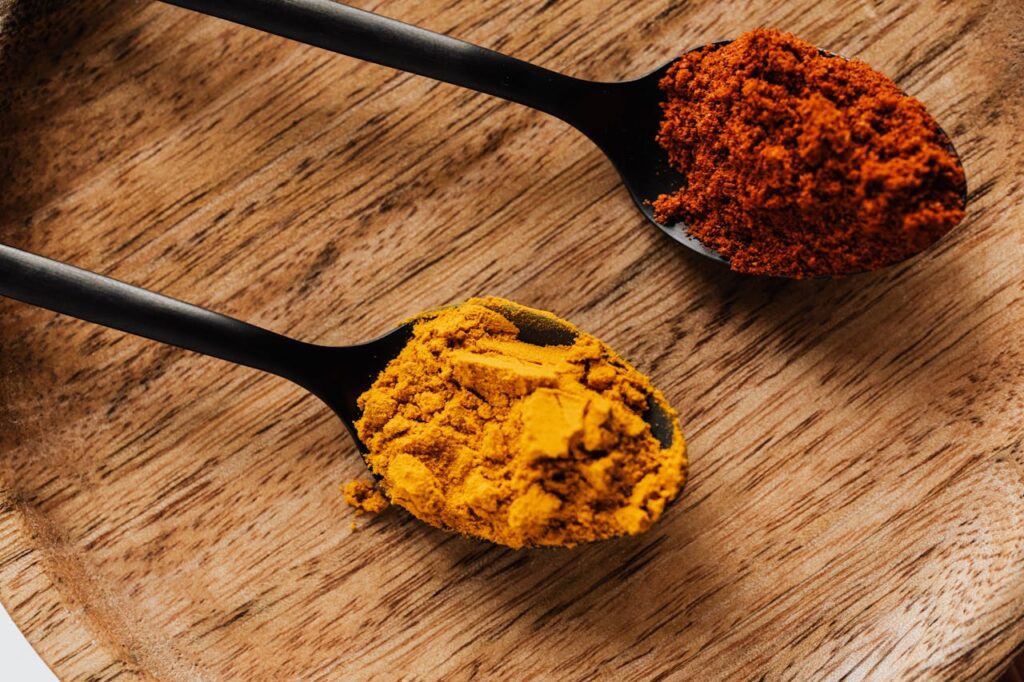
- Loose spices : turmeric, pepper, cumin, coriander, chili pepper, ginger
- Dried fruits : figs, raisins, dates
- Dried vegetables : onions, garlic, dried tomatoes
- Nuts and seeds : cashews, almonds, pistachios
- Cereals and flours from tropical agriculture
- Guar gum, gum arabic and other plant-based thickeners
Note: some food supplements use these raw materials as excipients or functional actives (e.g. psyllium, organic spices, superfoods), and are therefore also affected.
Processed products and composite foodstuffs
Finished products can also be contaminated if one or more of their ethylene oxide residues
This concerns:
- Biscuits and cereal bars containing sesame, spices or nuts
- Vegetarian ready-made meals based on lentils or chickpeas
- plant-based drinks (infusions, teas, juices made with superfoods)
- Ice creams and creams containing additives such as locust bean gum (E410)
In these cases, regulations require that the lowest MRL applicable to one of the ingredients be used to judge the conformity of the final product.
Processed organic products are particularly at risk of withdrawal, as the applicable MRL is set at 0.01 mg/kg , with no margin of tolerance.
Emblematic cases of contamination: the sesame scandal
The case of sesame seeds imported from India in September 2020 remains the most striking example of massive ethylene oxide contamination:
- 268,453 kg of contaminated sesame, with levels up to 186 mg/kg
- More than 7,000 product references recalled in Europe
- More than 300 brands involved : Carrefour, Casino, Intermarché, La Vie Claire, Biocoop, etc.
- Initial detection by Belgium , then relayed via the RASFF
This crisis highlighted the risks associated with the origin of raw materials and the importance of implementing enhanced self-monitoring on imported products. Since this episode, many manufacturers have reviewed their sourcing policies, strengthened supplier specifications, and implemented systematic laboratory analyses .
Other sectors involved: cosmetics, animal, environment
a) Cosmetic products
Ethylene oxide can be found in plant-based cosmetic ingredients , including:
- Dry plant extracts
- Natural thickeners and gelling agents
- Essential oils or hydrosols not certified organic
Natural formulations or certified organic cosmetic products are the most exposed, as suppliers may use treatments banned in Europe to guarantee the microbiological stability of the materials.
b) Raw materials for animal feed
European regulations prohibit any use of contaminated raw materials for animal feed, regardless of their concentration.
A note from AFCA-CIAL and SNIA (October 22, 2021) specifies that any detection of ethylene oxide in a batch intended for animal feed automatically results in its non-compliance, as well as that of all products derived from it.
c) Indirect environmental risks
Although not used directly in agriculture in the EU, ethylene oxide can pose environmental risks in the event of accidental release or improper treatment of waste containing residues (packaging, powders, wash water, etc.). Specific controls may be required for industries subject to environmental authorization.

What are the current regulations regarding ethylene oxide?
Regulations surrounding ethylene oxide are among the strictest regarding contaminant residues, due to its toxicological profile. These regulations apply to food, cosmetic, and pharmaceutical products, as well as food contact materials (FCMs). This section presents the relevant European and international rules, maximum residue limits (MRLs), and specific cases such as processed products, organic products, and animal products.
Strict European regulations: Regulation (EC) No 396/2005
Regulation (EC) No 396/2005 forms the regulatory basis for pesticide residues, including ethylene oxide. It sets maximum residue limits (MRLs) according to the matrix, i.e., the type of product concerned.
The definition of residue according to the regulation is as follows:
Ethylene oxide = sum of ethylene oxide and 2-chloroethanol, expressed as ethylene oxide equivalent.
This approach allows us to take into account the degradation of ethylene oxide into 2-chloroethanol, often found alone or combined in contaminated products.
Maximum residue limits (MRLs) by product type
The values below are the thresholds that must not be exceeded , under penalty of regulatory non-compliance:
Product type | Regulatory MRL (mg/kg) |
Sesame seeds, spices, herbs | 0.05 mg/kg |
Fruits, vegetables, cereals | 0.02 mg/kg |
Tea, herbal teas | 0.1 mg/kg |
Dietary supplements (according to the matrix) | 0.01 to 0.05 mg/kg |
Organic products (all categories) | 0.01 mg/kg |
These thresholds are set at a very low level , often equivalent to the limit of analytical quantification , which implies that no measurable trace should be detected in the products.
Special cases: processed products and composite foodstuffs
In the case of processed or composite products (cereal bars, ready meals, plant-based preparations, etc.), conformity is assessed according to the following rules:
- If a transformation factor is known, it can be applied.
- If not, the lowest among the ingredients is retained.
- The sum of the residues (ethylene oxide + 2-chloroethanol) remains the reference value.
Example: a cereal bar containing sesame (MRL: 0.05 mg/kg) and raisins (MRL: 0.02 mg/kg) → the MRL applied will be 0.02 mg/kg .
Specifics for products from organic farming
certified organic products are even stricter:
- Single MRL: 0.01 mg/kg
- Any detection, however minor, is considered non-compliant.
- The operator must immediately:
- Inform your certification body
- Remove the product from the market
- Informing your customers
Note: the failure to take into account measurement uncertainty in compliance decisions for organic products is a point very specific to European regulations.
Case of products for animal feed
Foodstuffs or raw materials intended for animal feed must not contain ethylene oxide , regardless of the dose detected.
According to a joint note from AFCA-CIAL, Coopération Agricole Nutrition Animale and SNIA (2021), any exceedance of regulatory thresholds results in the prohibition of placing the batch concerned on the market.
This also applies to by-products or co-products , which cannot be recovered or reused in animal feed.
International regulations: USA
In the United States, the thresholds are higher than in the European Union. For example:
- The maximum permitted limit in spices can reach 7 mg/kg
- Ethylene oxide remains authorized in certain disinfection processes
This implies that legally imported products manufactured in the USA may be non-compliant in Europe , even if they meet local regulations.
How to detect and quantify ethylene oxide in the laboratory?
Detecting ethylene oxide in food, cosmetic or pharmaceutical products requires a rigorous analytical approach , given its volatility , high toxicity at very low concentrations, and the need to comply with very low regulatory limits (down to 0.01 mg/kg).
The laboratories therefore use specific chromatography methods , accredited to ISO 17025, capable of detecting and quantifying both ethylene oxide and its metabolite, 2-chloroethanol , in accordance with the regulatory definition of the residue.
Analytical techniques used for the determination of ethylene oxide
a) Gas chromatography coupled with mass spectrometry (GC-MS/MS)
GC-MS/MS is now the reference method for the detection of ethylene oxide in complex matrices.
- It allows the separation of volatile compounds (ethylene oxide, 2-chloroethanol)
- It ensures precise quantification down to levels on the order of micrograms per kilogram (μg/kg)
- It is COFRAC ISO 17025 accredited , guaranteeing the reliability of the results
- Analysis time is generally 3 to 5 business days , with the possibility of urgent processing.
food matrices (seeds, spices, plants), cosmetics (plant-based formulations, essential oils) or environmental matrices .
b) HS-GCMS (Headspace – GC-MS)
The HS-GCMS technique is an optimized variant for sensitive or semi-solid products.
- The sample is heated in a sealed flask to release volatile compounds
- The vapors are then analyzed by GC-MS
- It is ideal for cosmetics , vegetable oils , paste formulations , or food additives (guar gum, E410)
It allows analysis without direct contact with the liquid sample, limiting interference and ensuring good analytical sensitivity.
c) Exhaustive extraction + targeted analysis
Some laboratories offer methods for complete extraction of the matrix to maximize the recovery of residues:
- Use of appropriate solvents depending on the nature of the product
- Extraction by stirring, heating or microwave
- GC-MS/MS analysis after concentration
This approach is particularly relevant for complex formulations fatty products (vegetable butters, oils, creams).
Method validation and ISO 17025 accreditation
Any method for determining ethylene oxide must be:
- Analytically validated (detection limit, linearity, repeatability, recovery…)
- Traceable , with a sample tracking system that complies with good practices
- Performed in an ISO 17025 accredited laboratory to guarantee the regulatory validity of the results
Application case: self-monitoring and compliance
The analyses are requested in various industrial contexts:
- Quality control of raw materials upon receipt (seeds, spices, powders)
- Regulatory compliance verification before placing on the market
- Analysis of organic products subject to stricter rules
- Migration studies for packaging and food contact materials (tests according to EC Regulation No. 1935/2004)
Manufacturers in the food, cosmetics or nutraceutical sectors can integrate these analyses into their control plan or their HACCP plan , particularly for imported products.
pesticide analysis services meet the strictest requirements, including for imported or organic products.
The role of YesWeLab in the detection of ethylene oxide residues
YesWeLab supports you in the analysis of ethylene oxide through its digital platform and its network of accredited laboratories in France and Europe. Thanks to validated methods, you benefit from:
- Reliable and traceable results in accordance with ISO 17025 standards
- Short lead times
- 100% digital tracking up to ****report delivery
food contaminant analysis service