Introduction
Combustible powders and dusts represent a major ATEX risk in many industrial sectors handling powdered materials, whether of organic, mineral, or synthetic origin. This risk particularly concerns the food processing (flours, sugars, starches, powdered milk), cosmetics and nutraceuticals (active ingredients, excipients, plant powders), pharmaceuticals , chemicals , as well as the materials, polymers, plastics , wood , metal , recycling, and waste treatment .
In an international context, these tests are also referred to as “combustible dust testing service” , used to describe laboratory analyses aimed at assessing the risks of explosion and ignition of powders and dusts.
Unlike flammable gases or vapors, the hazard posed by powders is often underestimated, particularly when the products are not classified as flammable under the CLP Regulation. However, during routine operations such as grinding, mixing, drying, pneumatic conveying, silo storage, or packaging, fine dust particles can become suspended and create explosive atmospheres .
Explosivity and flammability tests of powders allow for the precise characterization of the behavior of a powdered material in the face of ignition and explosion risks. Conducted in the laboratory according to standardized protocols, these tests provide essential data for ATEX risk assessment, the definition of preventive measures, the zoning of facilities, and the securing of industrial processes throughout the product's lifecycle.
Table of Contents
What is an ATEX risk related to combustible powders and dusts?
An explosive atmosphere (ATEX) is defined as a mixture of flammable or combustible substances in the form of gases, vapors, mists, or dusts with air under normal atmospheric conditions. In the case of powders, the risk arises when fine particles are suspended and reach a concentration sufficient to form an explosive cloud.
Unlike a fire, a dust cloud explosion is characterized by extremely rapid combustion, generating a sudden overpressure that can damage equipment and endanger people. The severity of an explosion depends on several factors, including the chemical nature of the powder, its particle size, its moisture content, as well as the presence of ignition sources and confinement.
The ATEX risk associated with powders affects numerous industrial environments: production areas, silos, transfer systems, and grinding, mixing, or packaging operations. Even products considered harmless in their bulk form can become hazardous as fine dust.
Why perform explosivity and flammability tests on powders?
The risk of explosion of combustible powders cannot be reliably assessed solely based on a product's chemical composition or regulatory classification. In practice, a powder's explosive behavior depends heavily on its physical characteristics and the conditions of its industrial use . Explosivity and flammability tests allow for the objective assessment of this risk and avoid the often inadequate reliance on theoretical approaches.
The risk varies greatly depending on the properties of the powder
The explosive and flammable potential of a powder can vary significantly depending on several key parameters.
Particle size plays a crucial role. The finer the particles, the higher their specific surface area, which promotes combustion reactions. Coarse powder may therefore present a limited risk, while the presence of fines or dusty fractions resulting from wear, grinding, or transport can be enough to create an explosive atmosphere.
Humidity humidity can, in some cases, reduce particle suspension and limit the risk of ignition. Conversely, accidental or intentional drying of the product (drying, prolonged storage, dry atmosphere) can significantly increase the ATEX risk.
the formulation and composition of the product are essential factors. The presence of additives, binders, mineral fillers, or process residues can alter its explosiveness and flammability properties. Two chemically similar powders can therefore exhibit very different behaviors depending on their formulation or industrial origin.
Major security and industrial continuity challenges
The consequences of a dust explosion can be particularly serious. Explosivity and flammability tests of powders are primarily aimed at ensuring the safety of people by reducing the risk of serious or fatal accidents at industrial sites.
They are also essential for the protection of installations . Knowledge of parameters such as the potential violence of an explosion or sensitivity to ignition makes it possible to correctly size equipment, adapt explosion protection devices and limit material damage and production stoppages.
Finally, these tests are part of a regulatory compliance . ATEX regulations require operators to identify, assess, and control explosion risks related to explosive atmospheres. The results of laboratory tests constitute essential objective elements for ATEX zoning, the drafting of the single document for the assessment of occupational risks (DUERP), and the document relating to protection against explosions (DRPCE).
Particularly affected industrial sectors
ATEX analyses of powders are essential in many sectors handling combustible powdered materials. They particularly concern the agri-food sector (flours, sugars, starches, dairy powders), cosmetics and nutraceuticals (active ingredients, excipients, vegetable powders), the pharmaceutical industry , fine chemicals , as well as the fields of polymers, plastics and composite materials .
Other sectors are also highly exposed, such as wood processing , metalworking (metal dust), or recycling and waste treatment , where the heterogeneous and evolving nature of the powders reinforces the need for precise characterization of the ATEX risk.

Powder explosivity tests: characterizing the force of an explosion
Powder explosiveness tests aim to assess the potential severity of an explosion when a cloud of combustible dust is suspended and ignited. They allow for quantifying the force of the explosion and anticipating its consequences for people, equipment, and structures. These tests are essential for designing safe installations and defining appropriate protective measures in an ATEX environment.
Class St: classification of dust explosiveness
The St class is a synthetic indicator used to classify combustible dusts according to their explosive potential . It is determined from the value of the Kst parameter and allows for the distinction of several levels of severity:
St 0 : non-explosive dust
St 1 : weak explosion
St 2 : moderate explosion
St 3 : strong explosion
This classification is widely used to compare materials and to guide design choices for industrial facilities. However, the St class alone is insufficient to characterize the risk, as it does not take into account all implementation conditions or sensitivity to ignition.
Kst: Powder deflagration index
Kst of the fundamental parameters in ATEX analyses of powders. It corresponds to a deflagration index that reflects the maximum rate of pressure rise during the explosion of a dust cloud under standardized conditions.
The higher the Kst value, the faster and more violent the explosion. This parameter is used to classify dust into St classes and to compare the relative hazard of different powdered products. In an industrial context, Kst is used in particular to:
size the explosion vents,
choose explosion suppression or isolation systems,
assess the potential consequences of an accident.
It is important to note that Kst is highly dependent on the particle size and physical state of the powder being tested, which justifies carrying out tests that are representative of the actual process conditions.
Pmax: maximum explosion pressure
Pmax corresponds to the maximum pressure reached during the complete explosion of a dust cloud. It reflects the overpressure capacity generated by the rapid combustion of the dust-air mixture.
This parameter is essential for assessing the required mechanical resistance of equipment, enclosures, silos, or pipelines that may be exposed to an internal explosion. A high Pmax value indicates the potential for significant damage to structures, even with protective devices in place.
Combining Pmax and Kst values provides a more complete view of the severity of an explosion, integrating both its maximum intensity and its dynamics.
VMP: maximum rate of pressure rise
The maximum rate of pressure rise , sometimes denoted dP/dt max or VMP, describes the speed at which pressure increases during an explosion. This parameter is directly related to the severity of the event and the ability of the protection systems to react in time.
A very rapid pressure increase can exceed the response capabilities of some safety devices, limiting their effectiveness. Therefore, the VMP (Velocity of Pressure Measure) is a key parameter for the design of explosion protection systems and for analyzing the most severe accident scenarios.
CMI / CME: minimum explosion concentration
The minimum explosion concentration , also called MIC or MEC, corresponds to the lowest concentration of airborne dust from which an explosion can occur in the presence of an ignition source.
This parameter is particularly important for assessing ATEX risk in areas where dust may be diffusely released. It helps identify the conditions under which a dust cloud becomes hazardous and allows for the adaptation of preventive measures, particularly regarding ventilation, dust collection, and facility cleaning.
Are you looking for an analysis?
Powder flammability tests: assessing sensitivity to ignition
Unlike explosiveness tests, which characterize the force of an explosion , powder flammability tests aim to assess how easily a powder can ignite in the presence of an energy source. These tests are essential for understanding how susceptible a powder is to common ignition sources found in industrial environments, such as electrostatic sparks, hot surfaces, or mechanical friction.
A powder may exhibit moderate explosiveness but very high flammability , which significantly increases the ATEX risk during daily handling, transfer or storage operations.
EMI: Minimum Inflammation Energy
The minimum ignition energy (MIE) corresponds to the lowest energy capable of igniting a cloud of dust suspended in the air. It is generally expressed in millijoules and allows for the assessment of a powder's sensitivity to electrical sparks , particularly those generated by electrostatic discharges.
A low EMI value indicates that very little energy is needed to trigger ignition, making the powder particularly dangerous in environments where electrostatic charges can accumulate. This parameter is crucial for:
risk assessment related to ungrounded equipment,
the management of pneumatic or mechanical transfer operations,
the definition of preventive measures against electrostatic discharge.
EMI testing is therefore essential to adapt grounding procedures, the choice of contact materials and the operating conditions of installations.
TAI layer and TAI cloud: auto-ignition temperatures
The auto-ignition temperature (AIT) corresponds to the minimum temperature at which a powder can spontaneously ignite without a direct flame or spark. It is measured according to two distinct configurations, which correspond to different industrial situations.
Cloud-based ignition technology ( ITT ) characterizes the ignition of airborne dust upon contact with a warm atmosphere. It is particularly relevant for assessing risk in areas where dust clouds may form near heating equipment or hot gases.
Layer ignition refers to the ignition of a powder deposit resting on a hot surface. This is common in industrial environments where dust accumulates on motors, heating elements, heat exchangers, or heated surfaces. A layer of powder can gradually self-heat until it reaches a critical temperature, causing ignition and potentially a secondary explosion.
The distinction between TAI layer and TAI cloud is essential for defining maximum permissible temperatures for equipment and for adapting cleaning and maintenance programs.
Powder resistivity and electrostatic risk
The electrical resistivity of powders is a key parameter in ATEX risk assessment, as it determines a powder's ability to accumulate and dissipate electrostatic charges. Highly resistive powders tend to retain electrical charges, which promotes the generation of discharges that can ignite a dust cloud.
Resistivity measurement helps identify risk situations during handling, mixing, or transport operations, particularly when insulating materials are involved. This parameter is closely linked to EMI (Electromagnetic Ingress) and contributes to a comprehensive understanding of flammability.
The analysis of powder resistivity thus helps to define appropriate prevention strategies, such as grounding equipment, choosing conductive or dissipative materials, and controlling environmental conditions.
Influence of particle size on ATEX risk
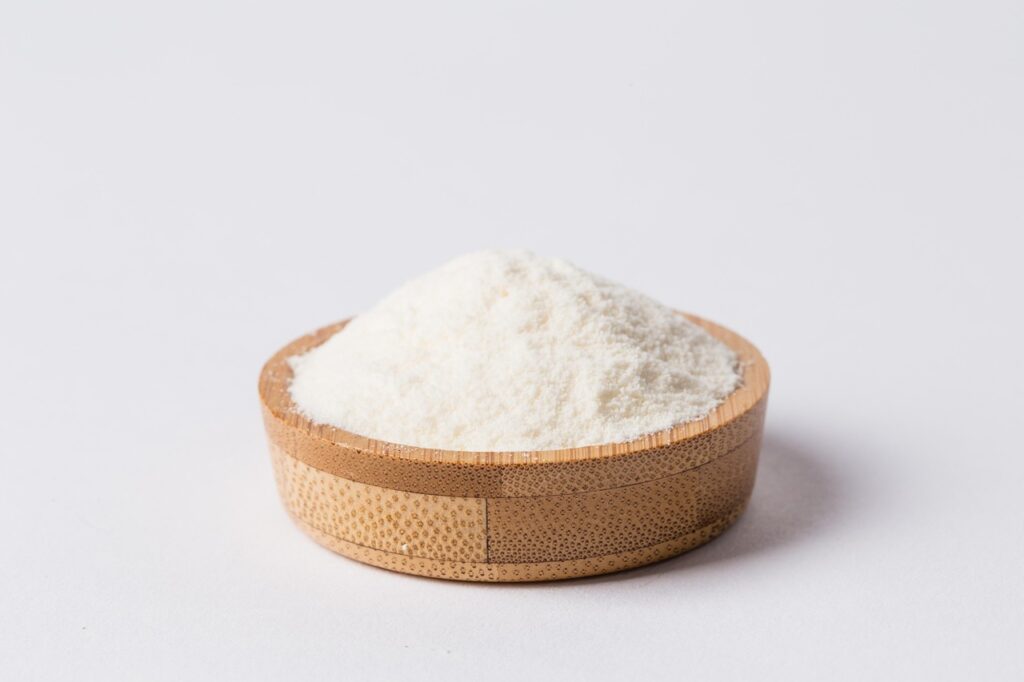
Particle size is a determining factor in the explosive and flammable behavior of powders. With identical chemical composition, a fine powder can present a significantly higher ATEX risk than a coarse powder, due to its larger specific surface area and better dispersion in air.
As particle size decreases, the contact surface area between the fuel and oxygen increases, which promotes faster combustion. Fine particles also become more easily suspended, increasing the likelihood of the formation of an explosive cloud reaching the minimum concentration for detonation. This phenomenon is particularly critical in processes that generate secondary fines, such as grinding, attrition, pneumatic conveying, or mechanical wear of materials.
Particle size distribution directly influences several ATEX parameters, including the Kst value, the minimum explosion concentration, and the minimum ignition energy. Even a small variation in particle size distribution can significantly alter the risk level. Therefore, particle size analysis must be integrated into any ATEX characterization process to ensure that the tests performed are representative of actual process conditions.
The role of ATEX laboratory testing in preventing the risk of explosion
Laboratory-based ATEX tests are a key tool for preventing the risk of powder explosions. They allow us to rely on measured and reproducible data, rather than on theoretical assumptions or generic classifications that are often inadequate.
The results of explosive and flammability tests are used to inform risk analysis, define a coherent ATEX zoning, and adapt technical and organizational prevention measures. They play a key role in the design or modification of industrial facilities, the selection of equipment, the implementation of explosion protection devices, and the development of operating and maintenance procedures.
These tests are also essential for meeting regulatory requirements, particularly in the context of drafting the single document for assessing occupational risks (DUERP) and the document relating to protection against explosions (DRPCE). They allow for the objective assessment of decisions made and the justification of technical choices to authorities, insurers, and industrial partners.
Performing explosivity and flammability tests on powders with YesWeLab
YesWeLab assists manufacturers in conducting and interpreting ATEX analyses of powders , based on their processes, regulatory constraints, and safety objectives. After a precise definition of the requirements, YesWeLab selects the most relevant tests and relies on a network of specialized laboratories equipped with the necessary equipment for characterizing combustible dusts.
The support offered goes beyond simply conducting tests. YesWeLab also assists with analyzing the results, putting them into perspective with real-world operating conditions, and integrating them into a comprehensive ATEX risk prevention strategy. This approach provides manufacturers with reliable data to secure their facilities, optimize their processes, and ensure regulatory compliance.
ATEX Characterization Tests
| Measured Parameter | Reference Standard | Equipment Used | Utility Security |
| Explosiveness (Maximum pressure / Explosion constant) | NF EN 14034-1 & 2 | 20 Litre Sphere | Sizing of vents and calculation of silo resistance. |
| Flammability (Minimum Ignition Energy) | NF EN 13821 | Capacitive discharge device | Prevention of risks related to electrostatic discharge (ESD). |
| Thermal sensitivity (Auto-ignition temperature) | NF EN 50281-2-1 | Godbert-Greenwald Oven | Securing hot spots, motors and mechanical friction. |
| Explosive Limit (Minimum Concentration) | NF EN 14034-3 | 20 Litre Sphere | Determining the danger threshold based on cloud density. |