
Surface tension is a fundamental phenomenon in fluid physics that influences numerous industrial processes. From the stability of emulsions in the food industry and the adhesion of coatings in cosmetics to the control of foams in the environment, mastering this property is essential to guaranteeing product quality and performance. Measuring and optimizing surface tension allows for the adaptation of formulations and ensures compliance with regulatory standards.
To support manufacturers in these challenges, YesWeLab offers precise and reliable surface tension analyses, carried out by a network of accredited laboratories and accessible via an intuitive digital platform.
Table of Contents
Introduction
Surface tension is a fundamental physical phenomenon that plays a key role in many industrial and scientific processes. It is involved in fields as diverse as food processing, cosmetics, materials, and the environment. This property influences emulsion formation, foam stability, coating adhesion, and many other aspects related to liquid-solid interactions.
In an industrial setting, understanding and controlling surface tension are essential for optimizing product formulations and ensuring performance. Specialized laboratories use advanced measurement methods to characterize this property and guarantee compliance with regulatory standards.
In this article, we will explore in detail what surface tension is, how it is measured in the laboratory, and what its industrial applications are.
What is surface tension?
Surface tension is a force that appears at the interface between a liquid and a gas (or another liquid) due to molecular interactions. It results from the cohesive forces between the molecules of the liquid and manifests as a tendency for the liquid to minimize its surface area.
Physical and chemical explanation
Molecules within a liquid experience equal attractive forces in all directions. However, molecules at the surface are only subject to forces directed inwards, as there are no liquid molecules above them to counteract these forces. This difference in force distribution causes the liquid surface to contract, giving it surface tension.
The unit of measurement for surface tension is the milliNewton per meter (mN/m) or dyne/cm , with 1 mN/m = 1 dyne/cm. For example, pure water at 25°C has a surface tension of approximately 72.8 mN/m .
Concrete examples of surface tension
Surface tension is visible in many natural and industrial phenomena:
- Formation of water drops : A drop naturally takes a spherical shape in the absence of external forces, because this shape minimizes the surface area for a given volume.
- Insects walking on water : Some insects, like the water strider, exploit surface tension to move without sinking.
- Soap bubbles and foams : Surface tension controls the stability of bubbles and foams used in various products (cosmetics, detergents, food).
- Adhesion of inks and coatings : The interaction between the surface tension of a liquid and the surface energy of a solid influences the adhesion quality of paints, varnishes and printing inks.
Factors influencing surface tension
Several parameters modify the surface tension of a liquid:
- Temperature : In general, surface tension decreases with increasing temperature, because thermal energy reduces the cohesive forces between molecules.
- Presence of surfactants : Surfactants, or surface-active agents, reduce surface tension by adsorbing at the air/liquid interface. They are widely used in detergents, cosmetics, and emulsion stabilizers.
- Contaminants and impurities : Certain impurities (oils, solvents, microorganisms) can modify surface tension, thus influencing the wettability and dispersion of liquids on solid surfaces.
Are you looking for an analysis?
How to measure surface tension?
Surface tension measurement is an essential step in many industrial and scientific fields. It allows for the optimization of product formulations, the control of emulsion quality, and the evaluation of liquid adhesion to solid substrates.
Specialized laboratories use various methods to accurately characterize this property. These techniques are essential to ensure product compliance with applicable standards and regulations.
There are several techniques for measuring surface tension, each suited to specific applications.
Hanging drop method
pendant drop method relies on analyzing the shape of a liquid drop suspended from a needle. Due to surface tension forces, the drop adopts a characteristic shape that can be analyzed to determine its surface tension.
Principle:
- A drop is formed at the end of a syringe or capillary.
- A high-resolution camera captures the image of the droplet.
- Software analyzes the curvature of the droplet to calculate the surface tension.
Applications :
- Analysis of emulsions and surfactant solutions.
- Quality control of cosmetic and pharmaceutical formulations.
- Wetting studies for coatings and printing inks.
Wilhelmy blade method
Wilhelmy plate method is used to measure the surface tension of a liquid by immersing a thin plate (usually platinum) in the liquid and measuring the force exerted by the surface tension.
Principle:
- A blade is partially immersed in a liquid.
- A high-precision balance measures the force exerted by surface tension.
- Surface tension is calculated based on the contact angle and the measured force.
Applications :
- Study of the wettability of liquids on different surfaces.
- Characterization of surfactants in solutions.
- Measurement of interfacial tension between two immiscible liquids.
Du Noüy's ring method
The du Noüy ring is based on measuring the force required to detach a metal ring from the surface of a liquid. This force is proportional to the surface tension of the liquid.
Principle:
- A platinum ring is immersed in the liquid to be analyzed.
- A force is applied to lift the ring out of the liquid.
- Surface tension is calculated from the maximum force required to detach the ring.
Applications :
- Quality control of industrial liquids (oils, solvents, inks).
- Measurement of the stability of foams and emulsions.
- Evaluation of the wetting properties of liquids used in the food industry.
Drop method (contact angle)
The contact angle is a key parameter for evaluating the interaction between a liquid and a solid surface. It is used to indirectly measure surface tension and characterize the wettability of materials.
Principle:
- A drop of liquid is deposited on a solid surface.
- The angle formed between the drop and the surface is measured using a camera.
- A low angle indicates good wettability, while a high angle indicates poor liquid adhesion.
Applications :
- Study of the adhesion of coatings and adhesives.
- Analysis of the effectiveness of wetting agents in cosmetic formulations.
- Characterization of protective films in agri-food and packaging.
Comparison of measurement techniques
Each method for measuring surface tension has advantages and limitations depending on the type of sample analyzed:
| Method | Benefits | Disadvantages |
|---|---|---|
| Hanging drop | Highly precise, suitable for complex liquids | Requires advanced analysis software |
| Wilhelmy's Blade | Compatible with viscous liquids, easy to implement | Sensitive to impurities on the blade |
| Ring of the Noüy | Industry standard, reliable measurement for many liquids | May be affected by ring contamination |
| Contact angle | Evaluates the wettability of solid surfaces | Does not directly give the surface tension of the liquid |
The choice of technique depends on the industrial application, the required precision, and the nature of the liquid being studied.
Surface tension in industry and its applications
Surface tension plays a crucial role in many industrial sectors. Whether in food processing, cosmetics, materials, or the environment, its control allows for the optimization of formulations, ensures product stability, and improves performance.
In this section, we will examine the impact of surface tension in several industrial fields and its specific applications.
In the food industry
In the food industry, surface tension influences the stability and texture of liquid and semi-liquid products. It plays a key role in emulsion formation, foam management, and controlling the adhesion of liquids to food surfaces.
Emulsions and stability of food products
Emulsions, such as salad dressings, creams, or sauces, rely on a balance between surface tension and the presence of emulsifying agents (such as lecithin). Excessive surface tension prevents the homogeneous dispersion of the aqueous and oily phases, causing the components to separate.
Example : In ice cream, controlling surface tension improves texture and prevents the formation of excessively large ice crystals.
Foam and bubble management
Some food products need to contain air bubbles to improve their texture (chocolate mousses, beers, cappuccinos). Conversely, other formulations require strict control of the bubbles to avoid instability or a deterioration in quality.
Example : In the brewing industry, measuring surface tension allows for adjusting foam formation and optimizing its persistence.
Adhesion of liquids to food surfaces
Surface tension also influences how a liquid interacts with a solid substrate (packaging, cooking surfaces, industrial equipment).
Example : Food coatings, such as glazes or sauces, require optimal surface tension to ensure even distribution and good adhesion to the product.

In cosmetics
In the cosmetics industry, surface tension is essential for the formulation of creams, lotions, shampoos, and makeup products. It affects the texture, the penetration of active ingredients into the skin, and the stability of the products.
Formulation of cosmetic emulsions
Creams and lotions are often water-in-oil emulsions stabilized by surfactants. Proper control of surface tension prevents phase separation and results in a homogeneous texture that is pleasant to apply.
Example : A moisturizing cream with too high a surface tension will be difficult to spread, while too low a tension may make the texture too fluid and unstable.
Wettability and application of products
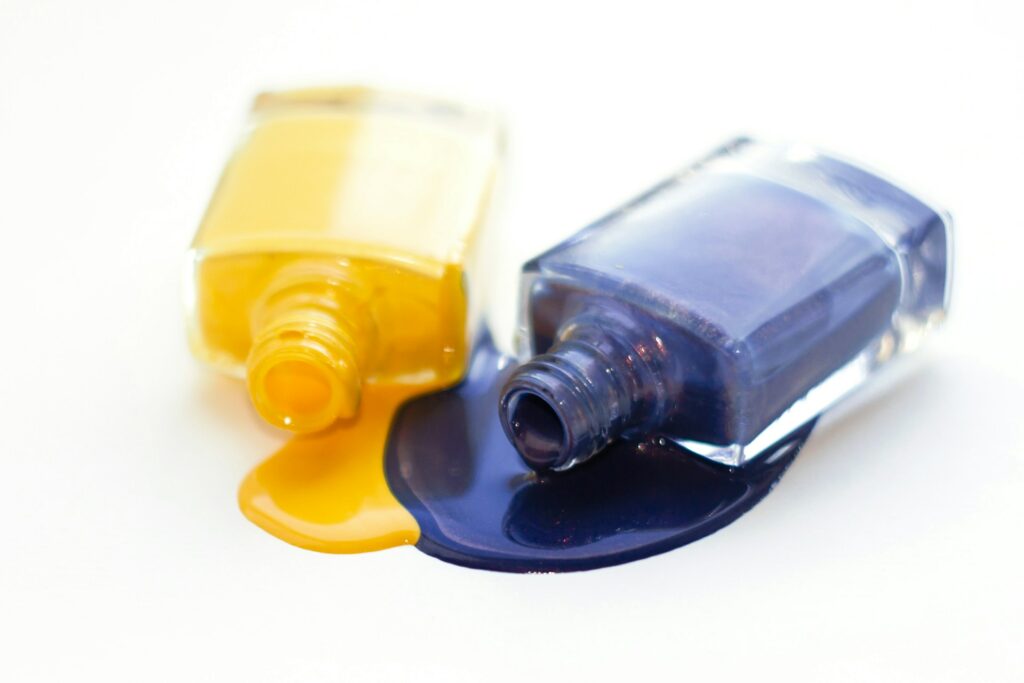
Lipsticks, nail polishes and foundations must have an optimized surface tension to ensure good adhesion to the skin or nails without leaving unsightly marks.
Example : A well-formulated nail polish should spread evenly over the surface of the nail without forming bubbles or streaks.
Stability of cleansing foams and gels
Cleansing foams and gels rely heavily on surface tension to ensure even distribution on the skin and effective removal of impurities.
Example : Shampoos contain surfactants that lower the surface tension of water, thus facilitating the removal of grease and impurities from the hair.
In the environment and water treatment
Surface tension also plays a role in the environmental field, particularly in water treatment and pollution control.
Flotation processes and contaminant separation
In wastewater treatment plants, dissolved air flotation is a technique that uses microbubbles to carry solid particles to the surface. The surface tension of water plays a key role in the effectiveness of this process.
Example : In industrial wastewater treatment, optimized surface tension allows for more efficient separation of polluting oils and greases.
Cleaning of hydrocarbons and chemicals
Dispersants used in oil spills are designed to reduce the surface tension of the oil in order to promote its emulsification and biodegradation.
Example : During marine pollution, the addition of surfactants promotes the dispersion of hydrocarbons and facilitates their degradation by microorganisms.
In the materials and polymers industry
In the materials and polymers industry, surface tension influences the adhesion of paints, inks and coatings to different surfaces.
Adhesion of coatings and inks
The application of a coating (paint, varnish, printing ink) depends directly on the interaction between the surface tension of the liquid and the surface energy of the material.
Example : An industrial paint with too high a surface tension will have difficulty adhering to a metallic surface, resulting in application defects.
Characterization of polymers and packaging
Plastic materials used for food packaging must be analyzed to ensure they have adequate surface tension, thus preventing contamination of food products.
Example Tensiometry tests make it possible to assess the compatibility of plastics with the liquids they contain and to limit the risks of migration of undesirable substances.

Laboratory analyses on surface tension
Laboratory surface tension analysis is essential for quality control of industrial products, optimizing formulations, and ensuring compliance with regulatory standards. These tests allow for the evaluation of liquid wettability, emulsion stability, and the effectiveness of surfactants.
Specialized laboratories, such as those in the YesWeLab , use high-precision instruments to measure surface tension and provide tailored recommendations to manufacturers.
Analytical techniques for measuring surface tension
Laboratory analyses use several advanced techniques to characterize the surface tension and interfacial tension of liquids.
Static and dynamic tensiometry
Tensiometry is the most commonly used laboratory method for measuring the surface tension of a liquid. It can be applied in static form (measurement at equilibrium) or dynamic form (measurement as a function of time and external conditions) .
Example of application:
- Quality control of surfactants in cosmetic formulations.
- Optimizing food emulsions for improved stability.
Analysis by optical spectroscopy
optical spectroscopy techniques to analyze the molecular interactions responsible for surface tension.
Example of application:
- Study of the adsorption of surfactants on a liquid-gas interface.
- Analysis of detergent and cleaning agent formulations.
Surface tension sensors for industry
Modern sensors allow for real-time measurement of the surface tension of liquids in the production line.
Example of application:
- Monitoring the quality of inks and varnishes in industrial printing.
- Optimizing industrial cleaning processes to reduce water and solvent consumption.
Importance of standards and accreditations
Accredited laboratories follow strict standards to ensure the reliability of surface tension analysis results.
ISO 17025 standard and COFRAC accreditation
Laboratories specializing in surface tension characterization must comply with ISO 17025 , which defines the general competence requirements for calibration and testing laboratories.
Why is this important?
- To ensure reliable and reproducible analysis results.
- Ensure that industrial products comply with applicable regulations.
COFRAC accreditation in France reinforces this quality requirement, particularly for analyses intended for export.
Compliance with European and American regulations
The food and cosmetics industries must comply with strict regulations regarding the formulation of their products and the interactions between packaging and food.
Regulation (EC) No 1935/2004 : Regulation of materials in contact with food.
FDA standards : requirements for products intended for the US market.
Concrete examples of laboratory analyses
Laboratory tests allow industrial formulations to be adapted and product performance to be optimized according to their surface tension.
Case study 1: Control of cosmetic emulsions
Objective : To verify the stability of a moisturizing cream containing natural surfactants.
Analysis : Measurement of surface tension and viscosity of the emulsion.
Result : Adjustment of the formulation to improve the dispersion of the active ingredients in the aqueous phase.
Case study 2: Optimizing inks for industrial printing
Objective : To ensure good adhesion of the ink to a plastic substrate.
Analysis : Measurement of the surface tension of the ink and the surface energy of the substrate.
Result : Addition of a wetting agent to improve adhesion and prevent printing defects.
Case study 3: Control of surfactants in detergent products
Objective : To evaluate the effectiveness of new cleaning agents.
Analysis : Dynamic tensiometry to test the action of surfactants under real conditions.
Result : Optimization of the concentration of active agents for better efficacy.
Conclusion
Surface tension is a key parameter in many industrial sectors, influencing product formulation, stability, and performance. Whether in food processing , cosmetics , environmental , or materials , its measurement and control enable process optimization and ensure compliance with applicable regulations.
Thanks to the various measurement techniques available in the laboratory, it is possible to precisely analyze this property and adapt formulations accordingly. Optimizing surface tension ensures better adhesion, improved dispersion, and greater efficiency of the finished products.
YesWeLab, with its network of partner laboratories , supports manufacturers in the analysis and control of surface tension . Thanks to an innovative digital approach , we simplify the management of analyses and provide reliable, fast, and standards-compliant results.
Do you need expert support for your surface tension analyses? Contact YesWeLab today to benefit from a customized service and optimize your formulations!