The PDCAAS (Protein Digestibility Corrected Amino Acid Score) is a key indicator for assessing the nutritional quality of a protein. Adopted by the WHO and the FAO, it determines the extent to which a dietary protein meets the body's essential amino acid requirements after digestion. This score has become an indispensable tool for professionals in the food , nutraceutical, and clinical nutrition sectors, particularly in the formulation of protein-rich products, nutritional labeling , and the development of dietary supplements. In this article, we will explore in detail what the PDCAAS is, how it is calculated, why it is relevant, and how it can be measured in the laboratory.
Table of Contents
Introduction to PDCAAS: a reference tool for assessing protein quality
Understanding the concept of protein quality
Not all proteins are created equal from a nutritional standpoint. A high-quality protein is one that provides the body with all the essential amino acids in the right proportions and is well digested and absorbed. This is where the PDCAAS comes in: it measures a protein's ability to meet human physiological needs, taking its digestibility into account.
The PDCAAS is based on two scientific pillars: the essential amino acid profile of a food, compared to a reference model established by the FAO/WHO, and the digestibility of that protein in the body. This dual criterion allows for a reliable assessment of a protein's nutritional value and its suitability for human nutrition.
A standardized method adopted at the international level
The PDCAAS was officially introduced in 1989 by the World Health Organization (WHO), the Food and Agriculture Organization (FAO), and the United Nations University (UNU) as a standard method for assessing protein quality in relation to human needs. Since then, it has been used in numerous international regulations, notably to determine the criteria for claims such as "source of protein" or "high in protein."
The PDCAAS score is expressed on a scale of 0 to 1:
- A score of 1 means that the protein provides 100% or more of the essential amino acid requirements after digestion. This is the case, for example, with whole eggs or milk protein.
- A score of 0 indicates that the protein does not provide any essential amino acids usable by the body.
It is important to note that, even if some foods have an amino acid score greater than 1 , the PDCAAS is truncated to 1 , as requirements are considered to be met beyond this value.
A strategic issue for manufacturers
For food manufacturers, PDCAAS is much more than just a technical indicator. It is essential for:
- nutritionally balanced products
- Validate nutritional claims on packaging (e.g., "high in protein"), in accordance with European regulations (INCO Regulation, EC No. 1924/2006).
- Optimize protein blends based on plant sources (peas, rice, soy, etc.) to achieve a high PDCAAS score.
How is PDCAAS calculated?
Step 1: Analysis of the essential amino acid profile
The first step in calculating PDCAAS involves measuring the protein's content of essential amino acids , meaning those that the body cannot synthesize and must obtain from food. These amino acids include lysine, methionine, threonine, valine, leucine, isoleucine, phenylalanine, tryptophan, and histidine.
The content of each amino acid in the protein is then compared to a reference model defined by the FAO/WHO, which varies according to the consumer's age. The ratio obtained for each amino acid makes it possible to determine the first limiting amino acid , that is, the one whose relative concentration is lowest compared to the requirements.
This ratio is called the amino acid score or chemical index . This initial score, based solely on composition, will serve as the basis for the final calculation.
Step 2: Taking digestibility into account
A protein may have a good amino acid profile, but if it is not properly digested, its nutritional value remains limited. The PDCAAS therefore incorporates a digestibility factor, which measures the amount of protein actually absorbed by the body after ingestion.
This digestibility is generally expressed as a percentage , determined from the true fecal digestibility . This is calculated by analyzing the nitrogen in feces, comparing the amount ingested and the amount excreted, while correcting for endogenous nitrogen losses.
Digestibility values vary depending on the protein source:
- Egg: 97%
- Milk: 95%
- Meat: 94%
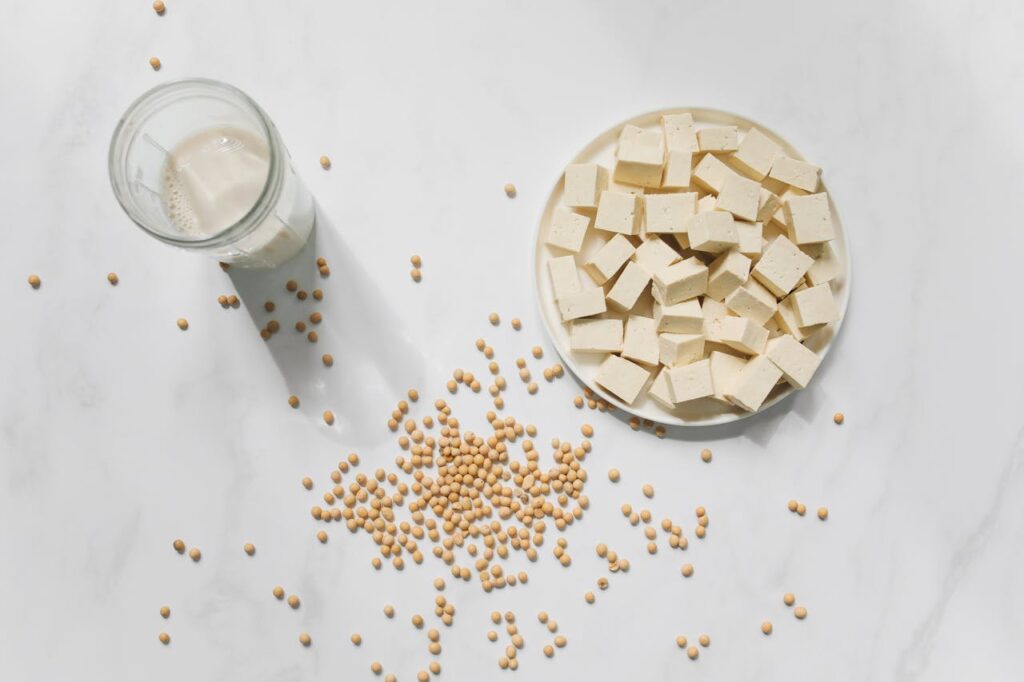
- Soy protein: 95%
- Rice: 88%
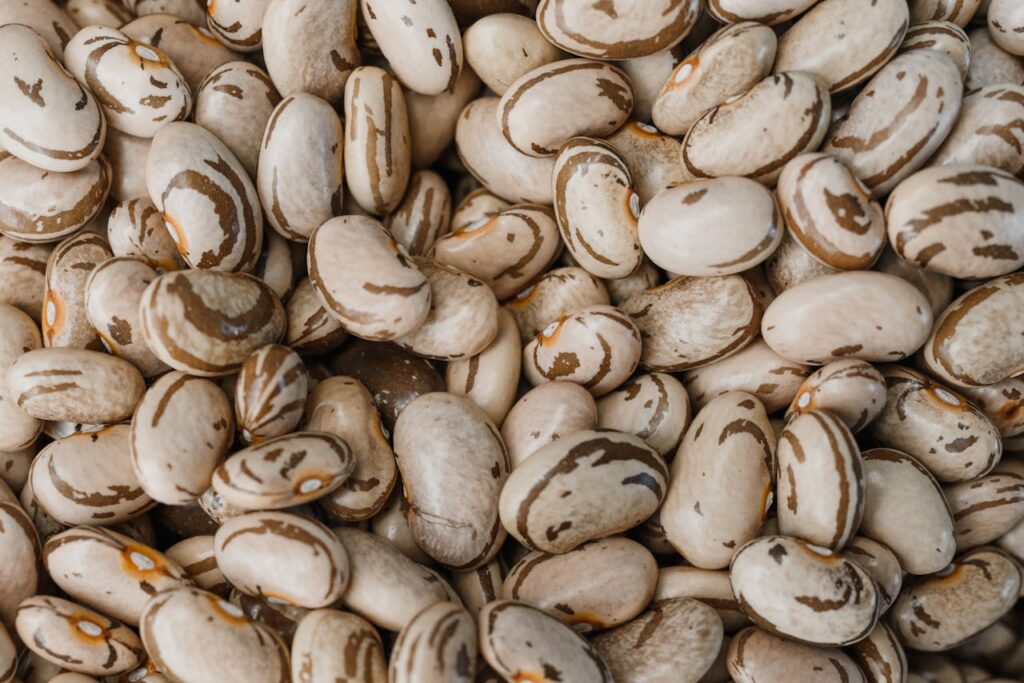
- Dried beans: 78%
The limiting amino acid score value is then multiplied by the digestibility rate to obtain the final PDCAAS.
Step 3: Truncation of the final score
Even though the score obtained after correction can exceed 1, it is truncated to 1 in the PDCAAS model. This means that a protein that exceeds human requirements for essential amino acids will not have a score above 1 recognized as such. This truncation aims to standardize the evaluation and avoid false comparisons between "more than perfect" proteins.
For example :
- A protein with an amino acid score of 1.14 and a digestibility of 100% will have a theoretical score of 1.14.
- This score will be reduced to 1.00 in the PDCAAS system.
Simplified calculation example
Let's take the example of a pea protein with the following data:
- Limiting amino acid score (e.g., methionine): 0.85
- True digestibility: 94%
The PDCAAS is therefore: 0.85 × 0.94 = 0.799 → PDCAAS = 0.80
This score means that pea protein covers approximately 80% of the essential amino acid requirements after digestion. To achieve a score close to 1, it may be beneficial to combine this protein with another complementary source (such as rice) to increase the overall score.
The role of PDCAAS in nutrition strategies
Calculating PDCAAS allows formulators of food products or supplements to:
- To objectively compare different protein sources.
- Identify the proteins best suited for a targeted use (sports, infant nutrition, veganism).
- Adjust the recipes to ensure complete coverage of amino acid requirements.
Are you looking for an analysis?
Examples of PDCAAS scores for different foods
Animal proteins: naturally high scores
Animal-based proteins are generally recognized for their excellent nutritional quality. They contain all the essential amino acids in optimal proportions and have high digestibility, allowing them to achieve or approach a PDCAAS score of 1.
Here are some examples:
- Whole egg : AA score of 1.21, digestibility of 97%, PDCAAS truncated to 1.
- Milk : AA score of 1.06, digestibility of 95%, PDCAAS = 1.
- Whey protein (whey protein) : AA score of 1.14, digestibility of 100%, PDCAAS = 1.
- Beef or chicken meat : score close to 1, digestibility around 94%, PDCAAS = 0.94 to 1.
These proteins are considered complete , meaning they provide all essential amino acids in sufficient quantities, without requiring supplementation.
Plant proteins: more variable profiles
Plant-based proteins sometimes exhibit unbalanced amino acid profiles. Some may lack lysine (such as cereals), while others may lack methionine (such as legumes). They also contain antinutritional factors (phytates, tannins) that can affect digestibility.
Here is a table of some PDCAAS derived from plant proteins:
- Isolated soy protein : AA score of 1.03, digestibility of 95%, PDCAAS = 1.
- Pea protein concentrate : AA score of 0.95, digestibility of 94%, PDCAAS ≈ 0.89.
- Rice protein : AA score of 0.95, digestibility of 90%, PDCAAS ≈ 0.86.
- Chickpeas : AA score of 0.92, digestibility of 85%, PDCAAS ≈ 0.78.
- Sunflower seeds : AA score of 0.96, digestibility of 89%, PDCAAS ≈ 0.85.
- Peanuts : AA score of 0.55, digestibility of 94%, PDCAAS ≈ 0.52.
- Whole hemp : AA score of 0.60, digestibility of 85%, PDCAAS ≈ 0.51.
- Whole grain rice : digestibility of 75%, PDCAAS often less than 0.5.
These results show that organic plant proteins , although interesting from an environmental and ethical point of view, often require a suitable formulation to fill the gaps in amino acids.
Complete or incomplete proteins: how to interpret the PDCAAS score?
A PDCAAS score close to 1 indicates that the protein can be used as the primary protein source in the diet without risk of essential amino acid deficiency. Conversely, a score below 0.8 requires particular attention in food formulations, especially regarding:
- Products intended for vegetarians or vegans .
- Dietary products or intended for sports nutrition .
- Low-calorie diets where protein intake must be optimized.
In these cases, PDCAAS serves as a guide to design complementary mixtures , enabling an optimal overall score to be achieved.
Advantages of protein mixtures
Combining complementary protein sources is a classic strategy in nutrition. For example:
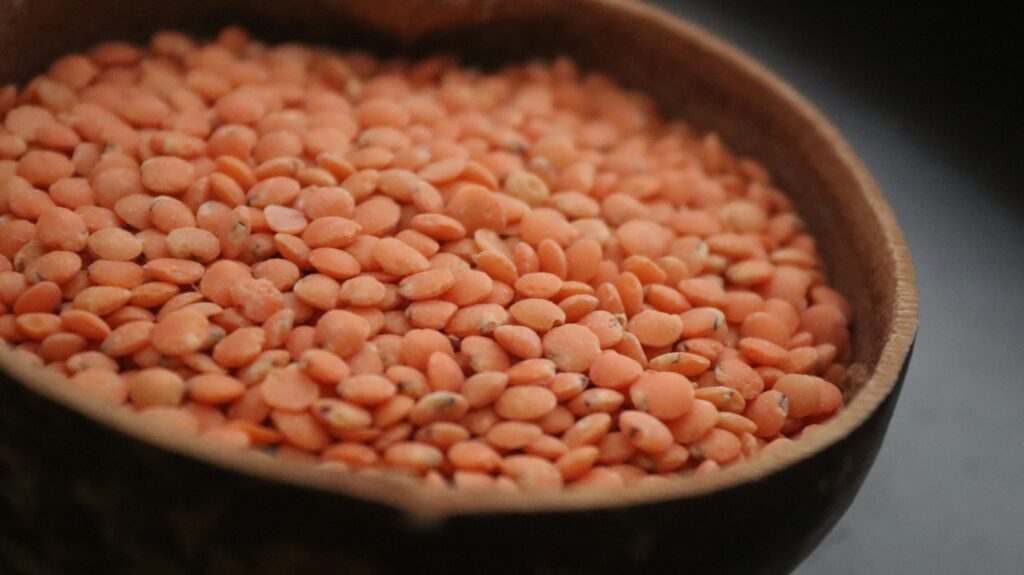
- Rice , which is deficient in lysine, can be combined with legumes (lentils, chickpeas), which are rich in lysine but poor in methionine .
- Combining 2 parts rice with 8 parts lentils results in an overall PDCAAS greater than 0.7, compared to 0.5 and 0.63 respectively if consumed separately.
This principle is widely used in processed vegetarian products or plant-based protein supplements .

Limitations of PDCAAS and existing alternatives
A truncation of the score that masks the differences in quality
One of the major criticisms of the PDCAAS lies in its systematic truncation of scores to 1 , regardless of the actual calculation result. For example, a protein with an amino acid score of 1.14 and 100% digestibility will display a PDCAAS score truncated to 1. This masks the superiority of some proteins over others and reduces the accuracy in comparing high-quality sources .
In industrial practice, this truncation can distort formulation decisions if the objective is to optimize nutritional density or achieve targeted performance (sports nutrition, medical nutrition, etc.).
A standardized amino acid profile, not suitable for all ages.
The PDCAAS is based on an amino acid requirements model established by the FAO/WHO , which applies primarily to children aged two and over. However, nutritional needs vary considerably according to age, sex, physiological state (growth, pregnancy, old age) or pathologies.
This single model does not reflect the diversity of human needs , which can lead to an overestimation or underestimation of the actual quality of a protein for certain target populations.
Failure to take into account antinutritional factors
The PDCAAS does not take into account the presence of antinutritional factors in food, such as:
- Phytates,
- Tannins,
- Protease inhibitors,
- Insoluble fibers.
These compounds, very common in plant-based sources , can reduce the effective digestibility of proteins , even if theoretical calculations indicate a satisfactory score. In other words, a protein can achieve a good PDCAAS score but not be fully bioavailable in the body.
This poses a problem in the context of formulations based solely on ingredients of plant origin, where the results may overestimate the actual nutritional value .
A test based on fecal digestibility: a controversial approach
The PDCAAS calculation is based on true fecal digestibility , that is, the measurement of ingested and excreted nitrogen. This method does not distinguish between:
- The nitrogen actually absorbed by the intestine,
- And the nitrogen lost through fermentation or microbial excretion.
Therefore, PDCAAS can overestimate the actual digestibility of proteins , particularly in cases of significant intestinal fermentation. This methodological bias has led the scientific community to seek more precise solutions.
The emergence of DIAAS: a more comprehensive method
Faced with these limitations, the Food and Agriculture Organization of the United Nations (FAO) proposed an alternative method: the DIAAS (Digestible Indispensable Amino Acid Score) . Unlike the PDCAAS, the DIAAS:
- Uses true ileal digestibility , measured at the level of the small intestine,
- Do not truncate scores to 1.
- age-adjusted amino acid requirements .
- Takes into account the effects of antinutritional factors on absorption.
The DIAAS therefore allows for a more precise, specific, and relevant of dietary protein quality. It is particularly useful for:
- formulations for infants or the elderly ,
- Specialized medical or nutritional foods ,
- Applications in high-performance sports nutrition .
The PDCAAS remains a regulatory reference
Despite its limitations, PDCAAS remains the reference method in many regulations , particularly in Europe and the United States. It is still used for:
- Determining the quality of proteins in nutritional tables ,
- Justify nutritional claims (“source of protein”, “high in protein”),
- Evaluate the protein value of processed foods or food supplements.
The transition to DIAAS, although envisaged by several health authorities, will require compliance of analytical protocols and regulatory harmonization which will still take time.
In the meantime, knowing the strengths and weaknesses of PDCAAS remains essential for any professional in the agri-food, nutritional formulation or quality control sectors who wishes to control their products and anticipate regulatory changes.
Laboratory analysis of PDCAAS: methodology and techniques used
The matrices analyzed and the sampling conditions
PDCAAS can be determined on many food matrices, including:
- Isolated proteins (plant or animal),
- Processed products (bars, powders, protein drinks),
- Dietary supplements (capsules, tablets, solutions).
Samples must be collected on suitable media , generally in airtight and inert containers to prevent degradation or contamination. It is essential that the matrices do not contain non-protein nitrogen sources (such as urea or creatine), as this would skew measurements of the true protein content.
The laboratory must also be informed of composition estimates , particularly to adjust the necessary volumes, dilutions, or analytical conditions.
Amino acid profile: AOAC method 994.12
The first step in the analysis involves determining the amino acid profile according to the internationally recognized AOAC 994.12 acid hydrolysis of the sample, followed by chromatographic separation and precise quantification of each amino acid.
This profile is then compared to the FAO/WHO reference model , which allows the limiting amino acid . The amino acid score is then established based on this.
The measurement is carried out with a spectrophotometer or an amino acid analyzer by chromatography , depending on the laboratory equipment.
Simulation of digestion: in vitro or in vivo protocol
Once the profile is determined, the digestibility of the protein must be evaluated. Two approaches exist:
- In vitro method : A simulation of human digestion is performed using digestive enzymes (pepsin, pancreatin) under standardized pH and temperature conditions. The released amino acids are then quantified by reaction with ninhydrin , a colored reagent allowing for spectrophotometric measurement.
- In vivo method : Used primarily in historical protocols, it relies on bioassays in rats or human fecal analyses . Although closer to physiological conditions, this method is more expensive, longer, and less ethical.
In the industrial context, the in vitro method is preferred for reasons of standardization, cost and speed .
Results obtained and deliverables from the laboratory
A PDCAAS analysis report typically provides:
- The complete amino acid profile (quantities in mg/g),
- The limiting amino acid identified,
- Simulated or measured digestibility
- The amino acid score ,
- The final PDCAAS , with an indication of the method used,
- Possible technical recommendations to improve the score (recipe adjustment, mixing of sources, etc.).
These results are essential to validate a nutritional claim , assess regulatory compliance , or optimize a formulation within a product innovation framework.
The role of PDCAAS in nutrition labelling and claims
A regulatory requirement for protein-related claims
In Europe, Regulation (EC) No 1924/2006 governs the use of nutrition claims. To claim that a product is a source of protein , it must meet two cumulative criteria:
- At least 12% of the product's energy content must come from protein..
- The proteins must be of sufficient quality , i.e. with a PDCAAS score ≥ 0.9 recommended, although this is not yet mandatory in all cases.
For claims such as "high in protein" , the proportion of energy derived from protein must reach at least 20% .
Thus, PDCAAS constitutes an analytical validation tool that ensures that the proteins contained in a product are actually usable by the body, which gives a scientific basis to the claim.
Justify the quality of proteins in dietary supplements
In the dietary supplement , particularly for sports or nutrition, protein quality is a major selling point. Brands often have to provide technical files or laboratory analyses to support the following claims:
- "Promotes the maintenance of muscle mass,"
- "Contributes to muscle growth"
- "A complete source of protein."
A high PDCAAS score helps position the product as highly digestible , which strengthens the brand's credibility with informed consumers and professional distributors.
The value of PDCAAS in the formulation of vegan or vegetarian products
Manufacturers of plant-based protein products face a challenge: ensuring a complete intake of essential amino acids despite the natural deficiencies of some plant sources. PDCAAS is then used as a formulation optimization tool , enabling:
- To select the best plant-based sources (peas, rice, soy, sunflower),
- Adjusting the proportions to maximize the complementarity of amino acids ,
- To calculate an overall score that can be used to justify a nutritional claim.
For example, a product combining pea protein (PDCAAS ≈ 0.80) and rice protein (PDCAAS ≈ 0.86) can achieve a composite score high enough to meet regulatory thresholds if the mixture is well balanced.
Practical applications in product development
In the context of new product development, the PDCAAS evaluation allows us to:
- Validate a nutritional concept before launch,
- Avoid refusals during regulatory checks,
- Build a solid marketing argument based on scientific data,
- Optimize the formulation from the earliest R&D phases to save time.
Some companies even go so far as to integrate PDCAAS into their internal quality validation criteria , in addition to microbiological or stability analyses.
Towards greater transparency for consumers
At a time when consumers are increasingly attentive to the nutritional composition of products, the concept of protein quality is taking center stage. A high PDCAAS score is therefore becoming an indicator of confidence , particularly:
- For athletes seeking performance,
- For parents who want a balanced diet for their children,
- For people following a specific diet (meat-free, low-calorie, medically prescribed).
Conclusion: PDCAAS, a key indicator for controlling protein quality
The PDCAAS has become an essential tool for professionals in formulation, quality control, and regulatory affairs within the food, nutraceutical, and specialized nutrition sectors. By combining essential amino acid profile and digestibility, this score provides a reliable assessment of a protein's nutritional quality and addresses the growing demands of both consumers and health authorities.
Whether it is to develop an innovative protein supplement, justify a "high in protein" claim or optimize a plant-based recipe, the measurement of PDCAAS is fully integrated into an approach to nutritional performance and regulatory compliance.
Contact YesWeLab for your PDCAAS analyses.
YesWeLab supports manufacturers in the complete characterization of their proteins , thanks to a network of specialized and accredited partner laboratories. We offer:
- Determination of the amino acid profile according to the AOAC 994.12 method,
- In vitro digestibility assessment for accurate PDCAAS calculation,
- Comprehensive analytical reports to validate your claims or adapt your formulations,
- A digital platform to simplify ordering, sample tracking and results reception.
Whether you are a protein product manufacturer, formulator, or player in specialized nutrition, YesWeLab helps you control the protein quality of your products and guarantee their compliance.
Contact us now to get a quote or discuss your analysis project.
YesWeLab – your expert partner in nutritional analysis .