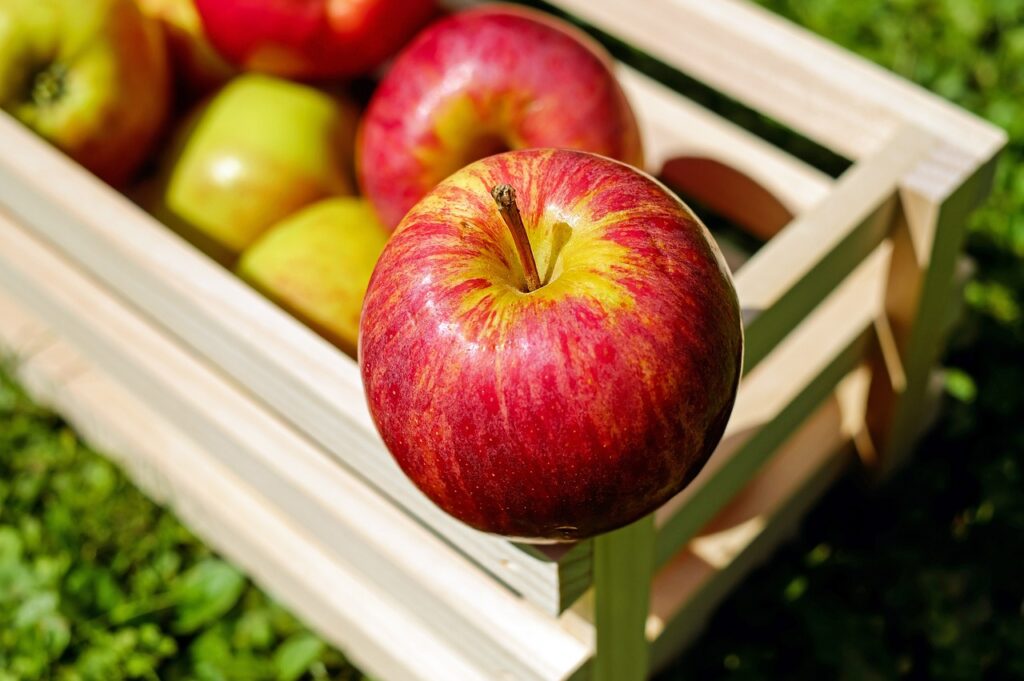
Patulin is a mycotoxin of fungal origin, primarily produced by Penicillium expansum. It is frequently found in damaged apples and their derivatives. Composed of an unsaturated lactone, patulin is distinguished by its chemical stability and toxicity, posing a significant food safety concern. Invisible to the naked eye and undetectable by taste, it requires rigorous monitoring in the food industry. Patulin testing is therefore an essential step to ensure regulatory compliance and protect consumers, particularly vulnerable populations such as children.
1. What is patulin?
Origin and discovery of patulin
Patulin owes its name to the fungus Penicillium patulum , which was the first identified as a producer of this mycotoxin. However, other molds of the genera Penicillium and Aspergillus , as well as certain species of Byssochlamys , are also capable of producing this toxic substance. Among these fungi, Penicillium expansum is particularly significant due to its health and economic impact, being the primary cause of contamination of apples and their derivatives. To better understand detection methods, consult our section on laboratory mycotoxin analysis .
The molecular characteristics of patulin
Patulin is an unsaturated lactone with a low molar mass (154 g/mol) and the chemical formula C7H6O4 . This structure gives patulin a certain chemical stability, making it difficult to degrade under typical conditions such as pasteurization or moderately acidic pH (between 3.0 and 6.5). These properties partly explain why it persists in processed products such as fruit juices and purees.
A pervasive but invisible problem
One of the problematic characteristics of patulin is that it is undetectable by taste and smell. Contaminated products have no noticeable difference in flavor or aroma compared to uncontaminated products. Only specialized laboratory analyses can confirm its presence in a food product. This invisibility makes adherence to quality standards and analytical protocols all the more crucial to guaranteeing consumer safety.
2. Where is patulin found?
Foods affected by patulin
Patulin is primarily associated with fruit, particularly apples, and their processed products. It is often found in damaged or rotten apples contaminated by molds such as Penicillium expansum . The most frequently affected processed products include:
- Apple juices : whether concentrated or reconstituted.
- Applesauce and apple puree : products widely consumed, especially by children.
- Cider and other fermented beverages are particularly susceptible when using damaged apples. Besides apples, patulin can also be detected in other fruits such as pears, peaches, grapes, and even in some silage products.
Factors that promote contamination
Patulin production is highly dependent on the condition of the fruit and its environment. Key factors include:
- Fruit rot : Penicillium expansum develops mainly on apples exhibiting "brown rot", characterized by disc-shaped areas of decay.
- Humidity : High humidity levels promote the growth of mold and, consequently, the synthesis of patulin.
- Physical damage : Fruit that is mechanically damaged or affected by insect infestations is more susceptible to colonization by patulin-producing molds. These conditions create an ideal environment for fungal growth and toxin production, highlighting the importance of proper fruit handling and storage.
Monitoring in the food production chain
In the food industry, the presence of patulin is used as an indicator of raw material quality, particularly in apples. A high concentration of patulin in a finished product often reflects poor fruit handling during harvesting, storage, or processing. This monitoring is crucial to limit upstream contamination and ensure products comply with health regulations.
3. The dangers of patulin to human and animal health
Effects on human health
Patulin is known to cause adverse effects when consumed, even in moderate amounts. The main identified consequences include:
- Gastrointestinal disorders : ulcerations of the intestinal mucosa, abdominal distension and internal bleeding may occur after prolonged exposure.
- Impaired kidney function : at higher doses, studies have shown that patulin can disrupt normal kidney function.
- Genotoxic risk : research indicates that patulin has mutagenic potential, with effects on DNA that may increase the risk of developing cancers.
These effects vary depending on the dose ingested, the frequency of exposure, and the vulnerability of individuals, with infants and young children being particularly at risk.
Consequences for animals
In animals, the effects of patulin are similar to those observed in humans. Warm-blooded animals exposed to this toxin often exhibit symptoms such as:
- Gastrointestinal ulcerations.
- Abnormalities in cellular and tissue development.
- A deterioration of metabolic functions.
Studies on animal models have provided a better understanding of the toxicity mechanisms of patulin, thus reinforcing the need to limit its ingestion in feed intended for livestock.
Importance of critical doses and prolonged exposure
Patulin toxicity is dose- and duration-dependent. While a single ingestion of small amounts may be safe in the immediate future, prolonged or cumulative consumption significantly increases the risks. International regulators, such as the European Food Safety Authority (EFSA), have established maximum concentration limits to minimize these risks.
Are you looking for an analysis?
4. Regulations on patulin
Maximum limits in food products
The European Union and other international organizations have set maximum levels of patulin for various food products to limit risks to consumers. These limits are adjusted according to the most vulnerable populations, particularly infants and young children. Here are the main limits set by European regulations:
- Fruit juices, spirits and ciders : 50 µg/kg.
- Solid apple-based products intended for immediate consumption (compotes, purees): 25 µg/kg.
- Baby food, apple juice and apple products for toddlers : 10 µg/kg.
These values take into account the potential exposure to patulin through regular consumption, particularly for the most sensitive groups.
International standards
In addition to European rules, similar thresholds are in place in other parts of the world, although the values may vary slightly depending on local regulations. The Codex Alimentarius standards, for example, serve as a basis for harmonizing limits globally and facilitating trade between countries.
Importance of compliance
Adherence to these limits is a legal obligation for food producers and processors. Companies must implement rigorous controls at every stage of the production chain, from fruit harvesting to the marketing of finished products. Violations of regulations can lead to financial penalties, product recalls, and a loss of consumer confidence.
Controls and audits
Health authorities regularly conduct checks to verify that products comply with established limits. Audits and inspections ensure that manufacturing processes adhere to current standards. These measures help reduce the risk of contamination and guarantee safe products for consumers.
5. How to eliminate patulin?
Limitations of conventional treatments
Patulin is known for its chemical stability, making it difficult to degrade in typical food environments. Here are some key points about conventional treatments:
- Pasteurization : Although widely used to eliminate pathogens in fruit juices and purees, it has only a limited impact on patulin due to its short-term heat resistance.
- pH Modification : Patulin remains stable within a pH range of 3.0 to 6.5, which includes the majority of fruit-based products. This stability limits the possibilities of elimination by simple acidification or alkalization.
These limitations highlight the need to develop specific strategies for dealing with contaminated food.
Methods to reduce patulin
Despite the challenges, some techniques have proven effective in reducing the concentration of patulin in food products:
- Vinegar production : The production of vinegar from contaminated apples results in the destruction of patulin through prolonged acidic conditions and the fermentation process.
- Advanced filtration : The use of specific membranes can reduce the concentration of patulin in juices. However, these techniques require significant investment for large-scale implementation.
- Purification columns : Columns based on MIP (Molecularly Imprinted Polymers) technology allow for targeted and efficient extraction of patulin, especially in complex matrices such as juices or purees.
Innovations in research
Current research is exploring several promising approaches for more effective elimination of patulin:
- Degrading enzymes : Studies show that certain enzymes, such as pectinase, can help reduce patulin levels by acting on components of the food matrix.
- Nanotechnologies : Specific materials based on nanoparticles are being developed to absorb and eliminate patulin without altering the organoleptic quality of food.
- Ultraviolet light treatments : UV light, although requiring prolonged exposure, is being studied for its ability to degrade patulin molecules.
Prevention upstream
In addition to curative methods, prevention plays an essential role in limiting patulin contamination:
- Crop management : Harvesting fruit when ripe and avoiding physical damage reduces the risk of contamination.
- Humidity control : Storing fruit in dry, well-ventilated conditions limits mold growth.
- Use of natural fungicides : Some natural treatments, such as essential oils, have shown effectiveness in inhibiting the growth of the molds responsible.
6. Laboratory analysis of patulin
Classical techniques for analysis
Laboratories use robust analytical methods to detect patulin in food and beverages. The main techniques include:
- Liquid chromatography coupled with mass spectrometry (LC-MS/MS) : This method is widely used for its accuracy and ability to detect low concentrations of patulin, with limits of quantification down to 2.5 µg/kg .
- HPLC (High Performance Liquid Chromatography) : A method used for the separation and quantification of patulin molecules, ideal for simple matrices such as fruit juices.
These techniques allow laboratories to meet regulatory requirements while offering reliable analyses for industry.
Importance of sample preparation
The accuracy of the analysis depends largely on sample preparation. The steps include:
- Extraction : Toxins are extracted from food matrices using specific solvents.
- Purification : Immuno-affinity columns or SPE (Solid Phase Extraction) systems are often used to eliminate interferences.
- Standardization : Patulin standards are used to calibrate instruments and ensure the accuracy of results.
The guarantees offered by accredited laboratories
Laboratories accredited according to ISO 17025 standards offer analyses that comply with international standards. This accreditation guarantees:
- Accuracy and traceability of results.
- Reliability of the methods used.
- Regulatory compliance for audits and inspections by authorities.