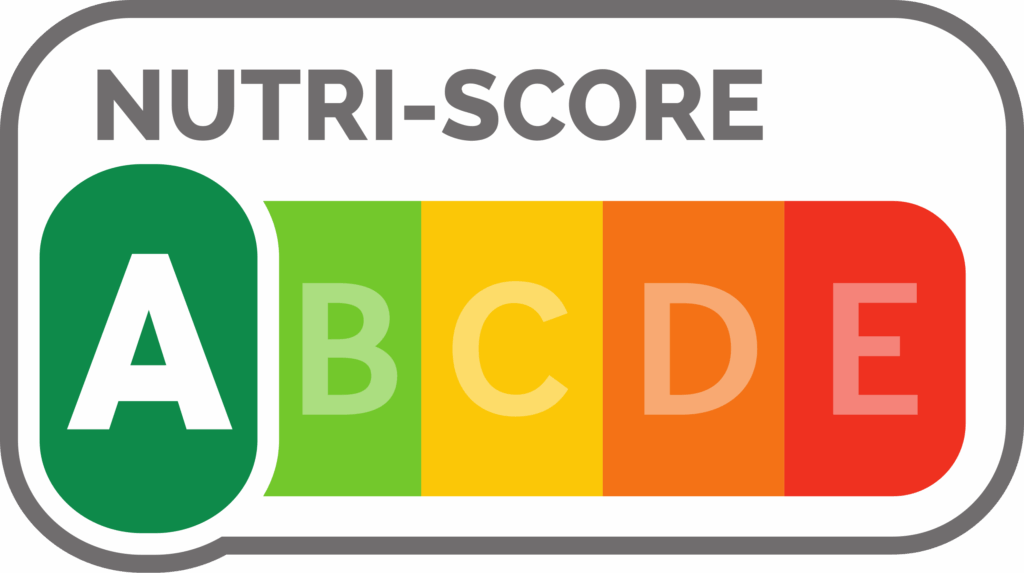
In November 2025, the National Assembly voted on an amendment making Nutri-Score labeling mandatory on most pre-packaged foods, marking a significant step in nutritional transparency policy. Although the measure has not yet been definitively adopted, its likely implementation is already forcing manufacturers to anticipate the technical, regulatory, and economic impacts of this change. Between the recent revision of the algorithm (March 2025), stricter nutritional criteria, and partial exclusions for certain products with quality labels (PDO, PGI, AOC), the agri-food sector finds itself at a strategic turning point.
This article analyzes the challenges of this potential obligation, its implications for manufacturers, and how YesWeLab can support companies in complying with, reformulating and controlling their nutritional labeling .
Table of Contents
The Nutri-Score: regulatory reminder and European framework
From the INCO regulation to simplified nutritional labeling
The regulatory framework for nutritional information in Europe is based on EU Regulation No. 1169/2011 (INCO) , which has harmonized food labeling across the European Union since 2011. For reliable nutritional assessment, a complete nutritional analysis . This regulation forms the basis of all current consumer information requirements, including mandatory nutritional declarations , ingredient lists, allergens, net quantities, and identification of the producer.
Since its entry into force in France in 2016, the INCO regulation has provided a common basis, but does not prescribe how this information should be made more accessible. It is precisely within this framework that the Nutri-Score is situated: a voluntary presentation supplementing the nutrition declaration, authorized by Articles 35 to 37 of the INCO regulation.
Thus, the Nutri-Score is not intended to replace mandatory information: it is a simplified visual interpretation , designed to facilitate understanding by the general public. Our existing article on INCO labeling already highlights these structural requirements; the current development is a logical extension of European standards.
Nutri-Score: objective, operation, history
Created at the request of the Ministry of Solidarity and Health, the Nutri-Score was developed by Public Health France , with the support of ANSES, the HCSP, and the work of Professor Serge Hercberg's team. First deployed in 2017 , it is based on a scale from A to E and from dark green to dark orange , reflecting the nutritional quality of a product according to:
Nutrients to limit: energy, saturated fatty acids, sugars, salt.
Elements to favour: fibre, protein, fruits and vegetables, legumes.
Its adoption then spread:
Belgium
Germany
Swiss
Spain
The Netherlands
Luxembourg
These countries have put in place a transnational coordination mechanism aimed at standardizing practices and facilitating the deployment of Nutri-Score at the European level.
Despite an initially voluntary adoption, regulatory and political dynamics show a clear trend towards the generalization of the tool , particularly in the French context where the system is gaining importance after the 2025 revision.
Transnational governance, revisions and developments
To ensure scientific and operational consistency between countries, a steering committee and a transnational scientific committee were created in 2021. Their role: to coordinate the implementation of Nutri-Score, analyze consumption data, integrate feedback from manufacturers and adapt the algorithm according to scientific advances.
From 2021 onwards, several calls for contributions allowed economic operators and consumer associations to express their needs regarding possible changes to the model.
This work led the scientific committee to propose major modifications in:
2022 for solid foods,
2023 for drinks.
The objectives:
strengthen the consistency of Nutri-Score with national and European nutritional recommendations;
better classify products according to their actual nutritional profile;
to incorporate the innovations and reformulations of manufacturers.
The changes have been adopted by the seven participating countries and are being implemented gradually. The new algorithm has come into effect :
January 1, 2024 in several European countries (Germany, Belgium, Switzerland, Netherlands),
March 5, 2024 in Luxembourg,
and on March 16, 2025 in France , via the publication of the official decree.
This revision has led to a significant downgrade in ratings for many categories: sugary foods, fatty products, sweetened or flavored drinks, processed meats, etc. Manufacturers have had to adjust their formulations and revise their labeling strategy in order to limit the impact on their product ranges.
These changes constitute the essential context in which the current debate on the possible obligation of Nutri-Score , now at the heart of French parliamentary discussions.
News 2025–2026: Towards a mandatory Nutri-Score in France?
The vote of November 7–8, 2025: what was adopted
During the night of November 7-8, 2025 , the National Assembly adopted, as part of the Social Security financing bill (PLFSS) 2026, an amendment aimed at making the display of the Nutri-Score mandatory on food packaging.
This adoption, carried out by a show of hands , resulted from amendments put forward by socialist and ecologist deputies, whose common objective was to guarantee consumers clear and directly comparable nutritional information between products.
Green Party MP Sabrina Sebaihi defended the measure, emphasizing the value of making a currently voluntary indicator mandatory, in order to "allow consumers to make informed choices." The debates also highlighted the argument that some major brands—particularly in the beverage and sugary product sectors—have never committed to voluntary labeling.
The amendment also includes a financial penalty for failure to display the required information, equivalent to 5% of turnover, payable to the national health insurance system. While this element remains a subject of debate, it illustrates the desire to strengthen the regulatory framework.
Products excluded from the scheme: PDO, PGI, and quality labels
A sub-amendment put forward by Renaissance MP Jean-François Rousset introduces an important exception: products benefiting from a national or European quality label would not be subject to the obligation.
This includes, in particular:
PDO (Protected Designation of Origin)
AOC (Appellation d'Origine Contrôlée)
PGI (Protected Geographical Indication)
This addition aims to avoid "comparing local products to ultra-processed products," an argument widely echoed in the chamber.
This exclusion, however, drew criticism from Professor Serge Hercberg , creator of the Nutri-Score. In his interview on FranceInfo on November 11, 2025, he pointed out that nutritional quality is not linked to the traditional or heritage nature of a product , and that excluding certain categories amounts to depriving consumers of transparent information .
He also highlights a risk of confusion:
a product based on an ancestral recipe may well have an unfavorable nutritional profile, and the consumer must be informed to adjust their consumption quantities.
Limitations and uncertainties: a measure still far from being definitively adopted
Despite its media attention, the vote on November 7–8 does not mean that the Nutri-Score is already mandatory. Several obstacles remain:
1 — The text must be adopted in the final version of the 2026 Social Security Financing Bill
This is a crucial step. An amendment adopted in session can still be deleted, modified or rejected during the parliamentary process or the final validation.
2 — The government issued an unfavorable opinion
Health Minister Stéphanie Rist pointed out that this measure could contravene European Union law , since harmonized nutritional labeling falls under Community regulations.
3 — Risk of European sanctions
An overly strict national obligation could expose France to:
an infringement procedure,
a challenge to the measure by the European Commission.
4 — Operational complexity
Several members of parliament have raised concerns about:
the difficulty of applying a penalty of 5% of turnover,
the logistical implications for manufacturers,
integration with other existing regulations.
Rapporteur Thibault Bazin stressed that "it will not be easy to implement", referring to the lack of a clear operational mechanism and the time needed to adapt packaging.
5 — Opposition from certain parties
Notably :
criticisms of the creation of new constraints,
denunciation of a “regulatory straitjacket” for SMEs/VSEs,
questions about the economic and territorial impact.
European context: between initial ambitions and political obstacles
At the European Union level, the debate on harmonized nutritional labeling on the front of packaging has been going on for several years.
Initially: a desire for harmonization
The Nutri-Score had been considered a serious candidate to become the common European system. Several countries committed to transnational governance supported this approach.
But since 2023–2024, the project has been stalled
Some sources indicate an unofficial abandonment of the idea of a single mandatory nutrition label at EU level, notably due to:
reservations from some member states,
disagreements on methodology,
economic and political pressures.
Direct consequence for France
The lack of European harmonization makes any strict national initiative more difficult.
This is precisely the argument put forward by Minister Stéphanie Rist to justify her unfavorable opinion on the amendment.
France could, however, move forward alone.
Recent history shows that:
The Nutri-Score was initially launched voluntarily in France before being adopted by other countries.
Mandatory national adoption could create a ripple effect.
However, legally, any obligation will remain fragile until the EU makes a decision.

What are the impacts for manufacturers? A structural reform for the food supply
The potential mandatory use of the Nutri-Score comes at a time already marked by a tightening of the algorithm (March 2025) and growing consumer expectations for transparency. For manufacturers, this represents not only a regulatory challenge, but above all a major lever for transforming their product offerings , impacting formulation, marketing, supply chains, and brand strategy.
General impacts: a paradigm shift for the agri-food sector
The shift from a voluntary Nutri-Score to a mandatory Nutri-Score represents a major break.
Widespread decline in grades with the new algorithm (2025)
The interview with Professor Serge Hercberg reminds us that many products have seen their classification deteriorate with the application of the new algorithm.
Examples cited:
Products previously rated B are now rated D.
Sweetened or flavored drinks are rated more severely.
Fatty or salty products are reassessed at a lower price.
This movement is not anecdotal: it profoundly alters the perception of ranges in the radius.
Increased pressure on reformulation
With a rating visible on the packaging, the ability to:
reduce salt,
limit added sugars,
reduce saturated fatty acids,
increase fiber,
becomes a competitive issue.
A new hierarchy of products on the shelf
Mandatory labeling would lead to a phenomenon already observed in other countries:
the consumer compares at a glance, which favors well-rated products , but heavily penalizes those rated D or E.
For some categories, this represents a risk of being excluded from shelf space.
A direct impact on brand image
While some large companies do not yet use the Nutri-Score (e.g., Coca-Cola, Ferrero, according to parliamentary debates), making it mandatory could lead to:
rethinking the recipes for flagship products,
rebalancing product range portfolios,
repositioning CSR commitments.
Operational challenges: calculation, updating, packaging and inventory management
1. Systematic recalculation of the Nutri-Score (new algorithm)
Each product must be recalculated using the algorithm that came into effect in France in March 2025 (and has been active since 2024 in other countries).
This implies:
a complete nutritional analysis according to current criteria
verifying the quantities of fruits/vegetables/legumes,
the update of fiber content,
the revaluation of R&D data.
For multi-site or multi-country companies, it is necessary to manage several implementation schedules .
2. Packaging adaptation
The requirement to display entails:
redesign of the graphic identity,
adherence to the official charter,
repositioning of the logo on the front panels
BAT revalidation,
printing of new stock.
The time required to dispose of old packaging is becoming a major issue, especially for players with large volumes.
3. Registration is mandatory for use of the trademark
Even if the obligation comes into effect, the use of the Nutri-Score requires:
a registration on the Public Health France (France) platform,
an international registration for multi-country trademarks.
This registration implies a contractual commitment to respect the use of the logo across the entire relevant range .
4. Oqali Transmission
The obligation to transmit data to Oqali is currently suspended , but could be reactivated at the end of the transition phase.
Quality departments should therefore anticipate the possible return of this requirement.
5. Inventory Management
The rapporteur for the Social Security Financing Bill (PLFSS) reiterated that, operationally, it is "not simple."
Industry must plan for:
Possible delabeling
management of unsold goods,
synchronization of logistics flows,
Gradual phase-out of older versions.
Regulatory issues: compliance, sanctions and coordination with INCO
Potential obligation = structuring legal framework
Making it mandatory would place the Nutri-Score in the same category as:
the nutritional declaration,
the mandatory INCO information,
conservation or origin information.
Penalties stipulated in the amendment: fine of up to 5% of turnover
This level of sanction is exceptionally high in the food sector.
Even though this provision may still change, it sends a clear signal to manufacturers.
Compatibility with European law
As the Minister of Health points out:
The obligation could be challenged at the European level.
Manufacturers could find themselves facing conflicting directives depending on the country.
Interaction with nutrition claims (Regulation 1924/2006)
A product displaying a negative Nutri-Score:
cannot always make certain claims (e.g., "reduced sugar"),
must verify the consistency between marketing discourse and the displayed nutritional profile.
Economic stakes: reformulation costs, marketing and segmentation
Reformulation costs
They vary greatly depending on the category:
R&D development
organoleptic tests,
regulatory analyses,
gradual reformulation to limit the impact on taste.
Packaging costs
Between repositioning the logo, reprinting packaging, and updating INCO content, the budgetary impact can be significant, particularly for:
SMEs/VSEs,
manufacturers of seasonal products with high turnover.
Market segmentation
The obligation could create new standards:
“Good grades” (A/B) would become a marketing tool.
Grades C/D/E could result in:
loss of market share
strategic repositioning
removal of certain SKUs that were too heavily penalized.
Competitive risk
Brands already committed to the Nutri-Score system would have an advantage.
Those that have opposed it could face a higher entry cost.
Are you looking for an analysis?
Analysis by sector: which manufacturers will be most impacted?
The potential mandatory use of the Nutri-Score comes at a time when the revised algorithm (2025) has already led to a noticeable decline in ratings across many categories. However, not all sectors are affected equally. Some see their nutritional profile heavily penalized, while others can leverage this reform to enhance their image or optimize their product ranges.
Processed and ultra-processed products
Processed products, especially those high in sugars, salt or fats, are among the most affected by the tightening of the calculation.
Key issues:
Mechanical lowering of grades due to stricter thresholds.
Strategic importance of reformulation (reduction of sugar, fats, salt).
High sensitivity to comparisons on the shelf: breakfast cereals, biscuits, snacks, aperitif products.
Risks:
Switching from C to D or even E , depending on the categories.
Immediate loss of attractiveness in a context of mandatory display.
Savory products: deli meats, prepared dishes, soups, sauces
The algorithm heavily penalizes:
salt ,
saturated fatty acids ,
energy .
Critical categories:
delicatessen meats (pâtés, rillettes, sausages, dry-cured hams),
prepared dishes and sauces,
industrial soups, broths.
Consequences for manufacturers:
It's difficult to improve the rating without altering the taste or texture.
Strong pressure to reformulate or reposition products.
There is a risk that some categories will remain structurally in D/E , even with adjustments.
Sweet products and drinks
Beverages are one of the categories most heavily impacted by the reform:
Sodas, flavored drinks or energy drinks very often receive a D or E .
Sweetened drinks also see their ratings decline.
Regarding sweet products:
Desserts, confectionery, chocolate bars, and sweet biscuits are subject to stricter sugar limits.
Challenges :
Reformulation is difficult (issues of aromas, stability, preservation).
Highly sugary brands, often not committed to the Nutri-Score, would be forced to display an unfavorable rating.
Dairy products, cheeses and regional specialties
Dairy products are impacted to varying degrees depending on their fat and salt content:
Products potentially penalized:
mature cheeses (often high in fat and salt),
creams, butters, sweetened dairy desserts.
But :
Some products with quality labels (PDO/AOC/PGI) could be excluded from the obligation, according to the sub-amendment voted at the end of 2025.
Strategic issues:
Producers not affected by the exclusion will have to adapt their product ranges.
Manufacturers will need to clarify their positioning: terroir vs nutritional profiling.
Plant-based products and alternatives
Plant-based alternatives represent a growing sector and are relatively favored by certain aspects of the algorithm:
Strengths:
often higher fiber content
increased presence of legumes and vegetables (positive criteria of the Nutri-Score).
Boundaries :
Some plant-based products are very salty or sweet.
The revised algorithm still penalizes energy density and saturated fatty acids (e.g., oil-based foods, plant-based desserts),
Plant-based drinks may be at a disadvantage if they are sweetened.
Impact :
The best students (A/B) will benefit from the obligation,
Others will be forced to reformulate in order to remain competitive.
Sports nutrition, "healthy" products and supplements
Dietary supplements are not subject to the Nutri-Score.
However, borderline products (protein drinks, nutrition bars, fortified snacks) are.
Challenges :
Energy density is often high.
sometimes significant levels of added sugars,
It is necessary to rephrase in order to avoid being overcharged or poorly positioned.
Brands focused on “healthy” will need to consolidate their marketing messages with the results they show.
Organic, artisanal and premium products
Contrary to popular belief, an organic does not necessarily get a good Nutri-Score.
Market realities:
An organic biscuit can be in D.
, homemade sauce can be high in E.
An organic sweetened yogurt is not exempt from the ranking.
Risks:
dissonance perceived by the consumer between the “natural” promise and the nutritional rating,
The need to rephrase is essential to maintain trust.
Products excluded from the obligation: a limited competitive advantage
If the obligation is confirmed, PDO/AOC/PGI products or products with official quality labels could be exempt.
Advantage :
No mandatory display = no direct impact on nutritional perception.
Boundaries :
Professor Hercberg highlights a lack of informational fairness.
The consumer might interpret the absence of a display as a voluntary withdrawal.
Distributors might still request nutritional transparency.

How can manufacturers anticipate this?
The potential for Nutri-Score to become mandatory should not be viewed as a mere regulatory constraint. For manufacturers, it represents a strategic lever for competitiveness , provided they anticipate and implement a structured approach.
Here are the key areas for effective preparation.
Perform a complete Nutri-Score diagnosis
The first step is to establish a precise inventory for each product sold.
1. Calculate the Nutri-Score using the new algorithm (2025)
As the algorithm was revised in 2025 in France (and 2024 in several European countries), it is essential to recalculate the scores based on:
energy content,
sugars,
saturated fatty acids,
salt (sodium),
fibers according to AOAC methods
proteins,
percentage of fruits/vegetables/legumes.
Some categories require specific calculations (e.g., beverages, fats).
2. Identify the “critical” products
It is useful to classify the products into three zones:
Favorable zone (A–B) : potential for development.
Neutral zone (C) : risk of switching unfavorably according to competing reformulation.
Unfavorable zone (D–E) : immediate actions to be considered.
3. Create a map by product range and by market
For brands distributed in several countries (France, Germany, Switzerland, Belgium), the variations in timing and implementation of the new algorithm must be taken into account.
Reformulating products: the most fundamental challenge
In many cases, reformulation will become the only solution to avoid a bad grade.
Axis 1 — Reduce sugar
This is one of the most penalizing criteria, particularly in biscuits, drinks and desserts.
Possible actions:
Gradual decrease in total sugar
adjustment of aromatic profiles,
reformulation with natural alternatives in accordance with regulations.
Axis 2 — Reduce salt / sodium
Crucial for savory products (prepared dishes, deli meats, sauces).
Possible actions:
working with matrices,
step-by-step reduction,
optimization of flavoring agents.
Axis 3 — Reduce saturated fatty acids
Suitable for dairy products, snacks and pastries.
Possible actions:
review of the fats used,
use of more favorable oils,
process optimization.
Axis 4 — Increase fiber, fruits, vegetables, legumes
Often the most effective method for earning positive points.
Axis 5 — Re-evaluation of portions and recipes
Even though the Nutri-Score is calculated per 100g, formulation adjustments can greatly influence the score.
Adapting packaging: a cross-cutting project
The requirement would lead to an almost systematic revision of packaging.
1. Compliance with the Nutri-Score graphic charter
The logo must:
appear on the front panel,
respect the proportions, colours and formats defined in the charter.
be applied uniformly on all products of the same brand (contractual condition).
2. Coordination with other regulatory requirements
To be coordinated with:
the INCO nutritional declaration,
nutritional claims (if present),
the origin statements,
Marketing requirements.
3. Packaging inventory management
A critical point for medium-sized manufacturers:
phasing-out planning,
logistics management,
anticipating printing deadlines (high season).
Communicating internally and with consumers
The Nutri-Score display has a direct impact on product perception. Communication must be planned in advance.
Internal communication:
raising awareness among R&D, marketing, quality, regulatory, and production teams
training in the calculation and interpretation of the Nutri-Score,
preparation of sales pitches.
External communication:
transparency regarding the nutritional approach
explanation of the reformulations (with or without a change in taste),
recognition of improved scores,
consistency with CSR commitments.
Companies already committed to nutrition (sugar reduction, active reformulation) will be able to capitalize on their foresight.
How does YesWeLab support manufacturers in meeting the Nutri-Score requirement?
The evolution of the Nutri-Score towards potential national implementation, combined with the tightening of the algorithm in 2025, presents manufacturers with major technical challenges: reliable nutritional analyses, reformulation, compliance with INCO + Nutri-Score standards, systematic recalculation, and multi-country harmonization.
Thanks to its network of partner laboratories and its expertise in nutritional labeling, YesWeLab is able to support all of these steps .
Perform the nutritional analyses necessary for calculating the Nutri-Score
Obtaining a reliable Nutri-Score relies primarily on accurate laboratory analyses , performed according to standardized methods. YesWeLab offers all the necessary analyses:
Key nutritional analyses (according to INCO and Nutri-Score algorithm):
Energy (kJ / kcal) — calculated from Atwater factors.
Total lipids
Saturated fatty acids (SFAs)
Total carbohydrates / sugars
Dietary fiber (AOAC-approved methods)
Proteins
Salt / sodium
Fruit, vegetable, and legume content (if necessary for composite products)
This data allows us to obtain an accurate Nutri-Score that complies with the new 2025 algorithm.
Advantages for manufacturers:
reliable data for calculation,
INCO compliance and consistency between nutrition facts panel and Nutri-Score
anticipation of reformulations.
Complete Nutri-Score audit and comparative analyses
YesWeLab can guide manufacturers through a detailed diagnostic , including:
1. Calculation of the Nutri-Score for the entire range
application of the updated algorithm (France 2025 / 2024 versions for other countries),
Product-by-product diagnosis
classification A/B/C/D/E.
2. Identifying areas for improvement
Targeted reduction of salt, sugar or saturated fatty acids
Increased fiber/legume intake,
analysis of reformulation options.
Support for reformulations and nutritional optimization
YesWeLab can leverage its network of laboratories and experts to help companies improve their products, particularly in the most sensitive categories.
Proposed actions:
interim analyses to validate R&D approaches,
nutritional checks after each reformulation stage,
Final validation before launching the new packaging.
Interest for manufacturers:
reduce the degree of uncertainty,
to secure the rating obtained by the reformulated product,
optimize the sensory/minimal impact on recipes.
INCO + Nutri-Score compliance: comprehensive support
The Nutri-Score requirement must be integrated into the overall regulatory labeling system. YesWeLab can assist manufacturers with:
1. Validation of nutritional labeling
consistency between analyses, INCO table and Nutri-Score
regulatory verification of mandatory information.
2. Packaging compliance
support for the correct use of the logo (graphic charter),
aids to harmonious integration into the packaging,
support regarding printing constraints.
3. Scaling up to multiple countries
managing differences in calendars between:
France (algorithm 2025),
Germany, Belgium, Switzerland, Netherlands (2024),
Luxembourg (2024).
Packaging adapted to local requirements.
A reliable partner to anticipate regulatory changes
The evolution of the Nutri-Score towards mandatory use is still under discussion, but manufacturers must now:
evaluate their portfolio,
anticipate regulatory changes,
to secure their nutritional analyses,
prepare their reformulation strategies.
YesWeLab, thanks to its digital platform and its network of more than 200 partner laboratories, is able to effectively support this transition.