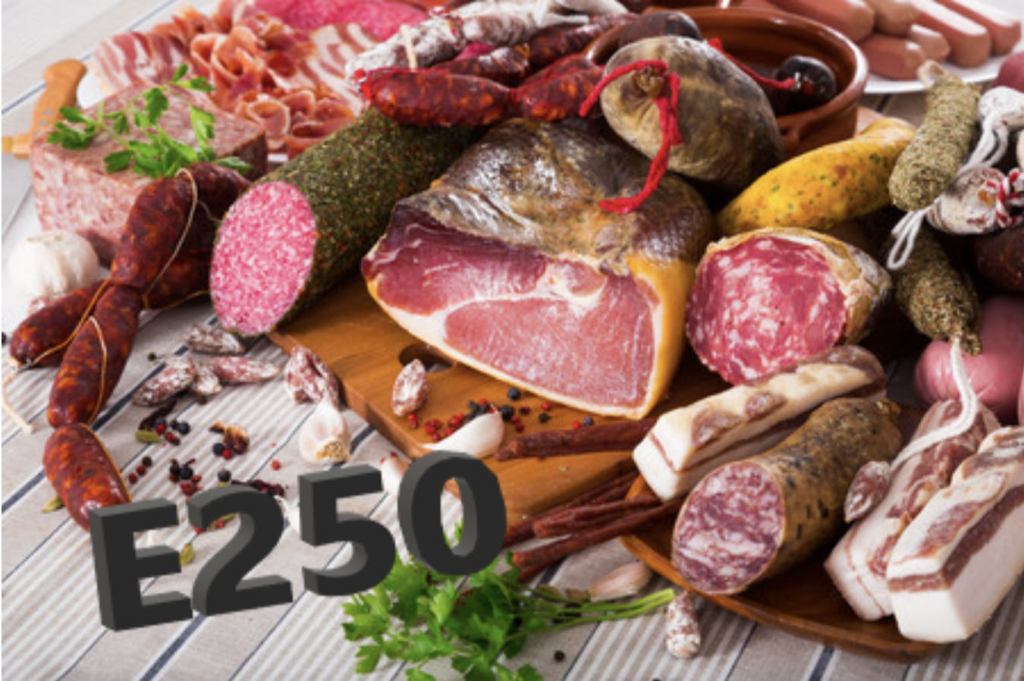
On February 3, 2022, the National Assembly adopted at first reading, with amendments, the bill concerning the progressive regulation of the use of nitrate additives in food products and particularly in processed meats.
What are nitrites?
What is it for?
Why do we want to eliminate them from food products?
Many questions that we will try to answer.
Origin and operation
Meat preservation techniques (cooking, drying, smoking, or salting) are ancient. For example, 5,000 years ago, meat was preserved in saltpeter, also known as nitrate. In a favorable chemical environment, nitrate (NO3-) is reduced to nitrite (NO2-), a compound that effectively preserves meat by reducing lipid oxidation and preventing the growth of pathogenic bacteria such as Clostridium botulinum, which causes neurological disorders. These nitrites are also responsible for the beautiful pink color of ham and the briny aroma of certain cured meats. They are therefore added today as an additive in the form of nitrite salts (E249 to E252). However, these nitrites can themselves be transformed into a group of compounds called nitrosamines, some of which are carcinogenic.
Indeed, the International Agency for Research on Cancer (IARC) classifies ingested nitrates and nitrites in category "2A - probably carcinogenic to humans" based on their possible transformation during digestion into newly formed carcinogenic compounds.
Thus the Acceptable Daily Intakes (ADIs) of Nitrites and Nitrates set by the experts of the European Food Safety Authority (EFSA) are respectively 0.07 and 3.7mg per kg of body weight per day; and the use of nitrite additive is therefore regulated in Europe (150mg nitrites per kg of processed meat) (1).
In France, a National Individual Study on Adult Food Consumption (INCA 2) shows that adults consume on average 36g of processed meats per day (2): a value well below the 50g reference taken into account by the IARC for its studies (3).
Nitrites, with their important technological and organoleptic roles but also their role as precursors to carcinogenic compounds, have been under scrutiny for many years. A reduction in their use has already begun among many processed meat manufacturers, taking consumer acceptance into account: for example, you can already see ham products labeled “25% less salt” on the shelves.
The proposed law aims to monitor and regulate the use of these nitrite salts in order to eliminate them by January 2025 and thus give the meat industry time to find suitable solutions to the removal of these additives.
Next, the French Agency for Food, Environmental and Occupational Health & Safety (ANSES) is expected to publish a report by April 2022 on the health risks associated with consuming nitrate additives in processed meats, to inform the debate surrounding this legislation. Within a year, a decree will establish a trajectory for reducing the maximum permitted level of nitrate additives, as well as the procedures for implementing specific labeling for food products containing nitrites.
(2) https://www.anses.fr/fr/system/files/PASER-Ra-INCA2.pdf
(3) Ingested Nitrate and Nitrite, and Cyanobacterial Peptide Toxins IARC Monographs on the Evaluation of Carcinogenic Risks to Humans Volume 94, 2010.