
Biomarker analysis is an analytical technique used to measure the concentration of specific biological substances in a fluid or tissue. These substances, called biomarkers , are valuable indicators of an organism's physiological, pathological, or nutritional state. They can include proteins, enzymes, hormones, metabolites, or compounds resulting from microbial activity.
In the laboratory, the measurement of these biomarkers plays an essential role in health monitoring, the diagnosis of pathologies, the assessment of exposure to contaminants, or the monitoring of the effectiveness of a therapeutic or nutritional intervention.
In the animal nutrition sector , this approach has become essential. It not only allows for the control of feed quality for livestock, but also for measuring the biological response of animals to rations, preventing metabolic disorders, and optimizing productivity while respecting animal welfare.
Thanks to technological advances in analytical biology, it is now possible to accurately detect minute variations in the organism, to exploit a wide variety of biological matrices, and to obtain reliable data to guide decisions in research, production or quality control.
This article explores the fundamentals of biomarker assays, their types, available analytical methods, commonly used matrices, and their specific applications, particularly in the field of animal nutrition.
Table of Contents
Typology of biomarkers
Biomarkers can be classified according to their function and usefulness in the diagnosis, prevention, or monitoring of a biological condition. This typology allows for the adaptation of the choice of analyses according to the objectives sought, particularly in sectors as varied as medicine, the environment, or animal nutrition .
Diagnostic biomarkers
They help identify a pathology or physiological disorder. Their measurement is often used to make an early diagnosis or confirm a clinical suspicion.
Examples:
- Troponin : diagnosis of myocardial infarction.
- Fecal calprotectin : detection of intestinal inflammation.
Prognostic biomarkers
They provide information on the likely progression of a disease or the risk of complications. In animal nutrition, certain biomarkers make it possible to anticipate metabolic disorders or declines in performance.
Example: liver enzyme levels in rapidly growing animals.
Predictive biomarkers
They help to anticipate the response to an intervention (medical treatment or nutritional change). They are key tools for the individualized adjustment of feeding strategies in livestock farming.
Example: volatile fatty acid profile in the rumen to predict the efficiency of a ration.
Exposure biomarkers
Used in toxicology and ecotoxicology , they reveal exposure to harmful substances or stressful environmental conditions.
Examples:
- Vitellogenin in male fish : exposure to endocrine disruptors.
- Mycotoxins in food matrices : exposure to fungal toxins.
Metabolic biomarkers
They reflect metabolic function and allow monitoring of an individual's nutritional or digestive balance. This type of biomarker is central to animal nutrition for assessing digestive health, feed conversion, and performance.
Examples:
- Free amino acids in milk : quality of the protein diet.
- Glutathione peroxidase (GPX) : antioxidant status of the animal.
Are you looking for an analysis?
Key applications of biomarker assays
Biomarker testing is used in many scientific and industrial fields to monitor health, detect imbalances, or optimize practices. In this section, we highlight its main applications, with a particular focus on animal nutrition .
In human medicine
Biomarker testing is a cornerstone of modern diagnostics. It allows us to:
- early detection of chronic diseases (diabetes, cardiovascular diseases),
- monitoring of therapeutic efficacy (e.g., glycated hemoglobin for diabetics),
- and monitoring of infections or inflammations via markers such as CRP.
It is also used to assess oxidative stress , kidney function , and hormonal balance .
In ecotoxicology
In environmental science, biomarkers allow us to:
- to detect exposure to pollutants (heavy metals, endocrine disruptors),
- to quantify the biological effects of contaminants on organisms,
- and to monitor the quality of aquatic or terrestrial ecosystems .
EROD enzymatic activity in fish is a marker of pollution by polycyclic aromatic hydrocarbons (PAHs).
In animal nutrition and agri-food
The animal nutrition sector is one of the biggest beneficiaries of advances in biomarkers . Targeted measurement of certain molecules allows action at several levels:
Food quality assessment
Analyzing biomarkers in raw materials or finished products allows us to:
- to control nutritional quality (e.g., free amino acids in milk),
- to detect the presence of contaminants (mycotoxins, drug residues),
- to verify that the food complies with regulatory requirements.
Monitoring the nutritional and metabolic status of animals
Biomarkers are used to:
- adapt rations to physiological needs (energy, protein, trace elements),
- detect metabolic imbalances (e.g., ruminal acidosis, deficiencies),
- optimize zootechnical performance (growth, milk production, reproduction)
Animal welfare and disease prevention
Certain biomarkers allow for the early detection of stress , pain, or inflammation:
- Salivary or plasma cortisol : marker of acute or chronic stress.
- C-reactive protein (CRP) and haptoglobin : systemic inflammation.
- Vitamin E and selenium : antioxidant status.
Their monitoring helps to reduce the need for curative treatments , to anticipate health risks and to improve the welfare of farm animals.
Thanks to an approach based on biological monitoring , biomarkers enable more precise, responsive, and sustainable livestock management. They thus become a strategic lever for stakeholders in the agri-food sector , keen to combine performance, quality, and safety .
Analytical methods for measuring biomarkers
The choice of analytical method depends on several factors: the nature of the biomarker , the biological matrix , the required sensitivity , the analysis time and the regulatory framework . The techniques used combine biochemistry, spectrometry, chromatography, and molecular biology to offer precision and reproducibility.
Immunoenzymatic methods
ELISA (Enzyme-Linked Immunosorbent Assay)
Reference technique for the measurement of proteins, hormones and cytokines. It is based on the interaction between a specific antibody and the target biomarker, coupled with enzymatic detection.
Benefits :
- High sensitivity
- Formats suitable for serial analysis
- Moderate cost
Common applications :
- CRP , cortisol , and interleukin levels
- Monitoring oxidative or inflammatory in animals
Colorimetric and photometric tests
Used for simple metabolic biomarkers (glucose, urea, liver enzymes). The chemical reaction produces a color change proportional to the concentration.
Chromatographic and spectrometric techniques
HPLC / UHPLC (high-performance liquid chromatography)
Enables the separation and quantification of complex biomarkers (amino acids, vitamins, toxins).
Frequently coupled with mass spectrometry (MS/MS) for better specificity.
GC-MS (gas chromatography-mass spectrometry)
Ideal for volatile or thermolabile compounds (VOCs, VFAs, pesticides).
Applications : ruminal profile, secondary metabolites, chemical residues.
UV-Visible / Infrared Spectroscopy (FTIR, NIR)
Rapid and non-destructive methods, suitable for routine analysis of food, blood or urine. Used to characterize overall biochemical components (dry matter, lipids, proteins, VFAs).
Electrochemical methods and biosensors
Electrochemical sensors (potentiometry, amperometry)
They allow direct detection of ions or metabolites in liquid matrices.
Examples : dosage of sodium, potassium, glucose.
Miniaturized and connected biosensors
Portable devices integrating biological receptors (antibodies, enzymes) and a signal transducer. They allow for real-time monitoring of biomarkers in the field.
Molecular Biology
PCR / qPCR
Genetic amplification techniques enabling the detection of specific DNA or RNA.
Applications :
- Identification of resistance or virulence genes
- Detection of pathogens or microorganisms in feces, milk or food
Transcriptomics and sequencing (NGS)
Cutting-edge methods used in research to identify new biomarkers of interest and understand the mechanisms of action at the genetic level.
Combining several techniques (e.g., ELISA + HPLC-MS) is often necessary to obtain reliable results, especially when multiple biomarkers are measured simultaneously. Adherence to ISO 17025 and good laboratory practices ensures the quality, traceability, and reproducibility of the analyses.
Biological matrices used for biomarker assays
The choice of biological matrix is a crucial step in biomarker analysis. It depends on the nature of the marker , the study objective (diagnosis, nutritional monitoring, contaminant detection), and the feasibility of sample collection . In animal nutrition, matrices must also be adapted to the farming conditions.
Blood: reference matrix
Blood is the most commonly used matrix in veterinary and human medicine. It allows for the measurement of:
- metabolic markers ( glucose, lipids, VFAs),
- stress markers ( cortisol, haptoglobin),
- liver or muscle enzymes ( AST, CPK),
- or even immune biomarkers (cytokines, leukocytes).
Benefits :
- Systemic view of health status
- Access to a wide range of biomarkers
- Controlled sampling methods (jugular vein, coccygeal vein, etc.)
Urine: metabolism and excretion
Urine reflects the body's metabolic activity and elimination capabilities
- measuring drug or toxin residues (mycotoxins, antibiotics),
- assess nitrogen balance (urea, ammonia),
- detect kidney abnormalities (creatinine, urinary proteins).
It is an easy matrix to collect , especially in animals kept in barns.
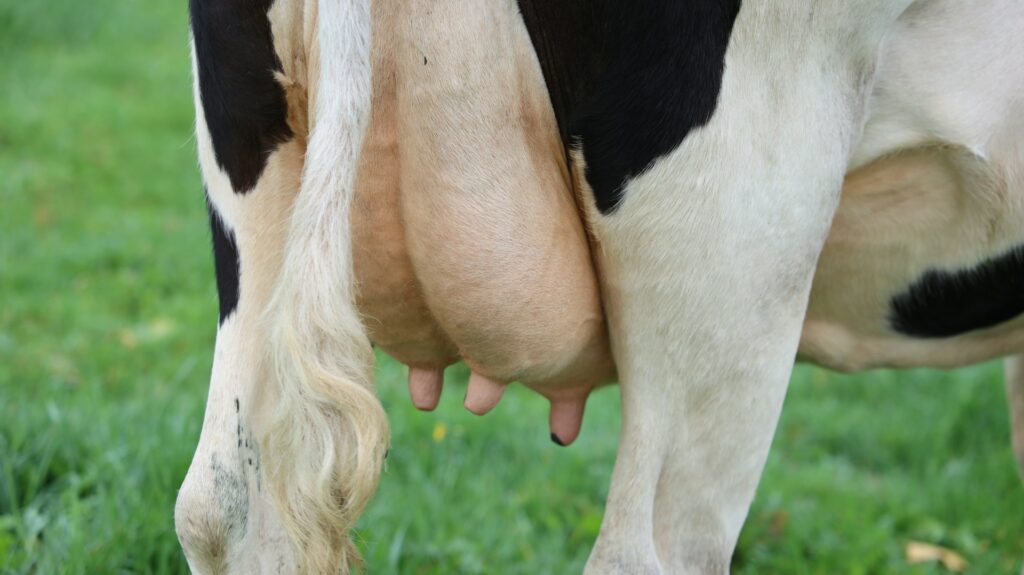
Milk: an indicator in dairy production
Milk is a key protein source for ruminants. It allows:
- Monitoring free amino acids : an indicator of nutritional quality
- analysis of oxidative stress biomarkers ,
- the detection of residues (antibiotics, mycotoxins) .
It is used to adjust rations, prevent diseases and improve performance.
Feces and droppings: microbiota and digestion
Fecal matter provides a direct insight into intestinal function , microbiota , and the presence of pathogens .
Typical applications:
- calprotectin assay (intestinal inflammation)
- analysis of bacterial metabolites ,
- search for microbial or chemical contaminants .
In poultry, droppings are also used to monitor the impact of diet or environment on digestive health.
Specific tissues, ruminal contents and matrices
For more in-depth or targeted analyses:
- Tissues (liver, muscle, intestine) are analyzed to identify protein or genetic biomarkers ,
- Rumen contents are sampled to monitor fermentation and volatile fatty acids (VFAs) .
- Other matrices such as eggs , saliva or cerebrospinal fluid can be used depending on the species and objectives.
Each matrix has its advantages and limitations (volume, stability, ease of sampling, analyte concentration). The selection must be based on the targeted biomarker , the type of farming , and the operational value of the expected results .
Table of the main biomarkers and their applications
Presentation of biomarkers and their characteristics
Biomarkers are diverse and cover a wide range of applications, from medical diagnostics to environmental analysis. The table below lists several essential biomarkers, specifying their role, their biological matrix for analysis, and the assay technique used.
| Category | Biomarker |
|---|---|
| Oxidative stress assessment | Glutathione peroxidase (GPX) |
| Oxidative stress assessment | Superoxide dismutase (SOD) |
| Oxidative stress assessment | Coenzyme Q10 |
| Nutritional assessment | Fasting blood glucose |
| Nutritional assessment | Insulin |
| Nutritional assessment | Hemoglobin A1c (HbA1c) |
| Neurotransmitter balance | Dopamine |
| Neurotransmitter balance | Serotonin |
| Neurotransmitter balance | Norepinephrine |
| Hematological and immune assessment | Hemoglobin |
| Hematological and immune assessment | Leukocytes |
| Hematological and immune assessment | Ferritin |
| Physiological and psychological assessment of stress | Cortisol wake-up |
| Physiological and psychological assessment of stress | DHEA sulfate |
| Vitamin balance | Vitamin D |
| Vitamin balance | Vitamin B12 |
| Vitamin balance | Vitamin E |
| Inflammatory profile and protein electrophoresis | C-reactive protein (CRP) |
| Inflammatory profile and protein electrophoresis | Albumin |
| Viral and bacterial assessment | Epstein-Barr virus (EBV) |
| Viral and bacterial assessment | HIV |
| Viral and bacterial assessment | Human papillomavirus (HPV) |
| Endocrine assessment | TSH |
| Endocrine assessment | Free testosterone |
| Endocrine assessment | Insulin |
| Liver function tests | SGOT |
| Liver function tests | Total bilirubin |
| Liver function tests | Alkaline phosphatases |
| Renal and urological assessment | Creatinine |
| Renal and urological assessment | Uric acid |
| Renal and urological assessment | Proteinuria |
| Hydromineral balance assessment | Sodium |
| Hydromineral balance assessment | Potassium |
| Hydromineral balance assessment | Chlorides |
| DNA methylation | DNA methylation |
| DNA methylation | DNA Hydroxymethylation |
| DNA methylation | MethylAg |
| Analysis of exhaled gases | Dihydrogen (H2) |
| Analysis of exhaled gases | Hydrogen sulfide (H2S) |
| Analysis of exhaled gases | Volatile organic compounds (VOCs) |
| Assessment of exposure to pollutants | Arsenic |
| Assessment of exposure to pollutants | Nickel |
| Assessment of exposure to pollutants | Mercury |
| Inflammatory profile and protein electrophoresis | Calprotectin |
| Inflammatory profile and protein electrophoresis | Fibronectin |
| Liver function tests | Alkaline phosphatase |
| Hematological and immune assessment | Ovotransferrin |
| Renal and urological assessment | Lipocaline 2 |
Interpretation and implications of the results
Biomarker testing provides valuable data, but its interpretation requires rigor and contextualization . Raw values are only meaningful when compared to established biological reference , the animal's or batch's history , and the sampling and rearing conditions .
Interpreting a biomarker: beyond the numerical value
A biomarker can indicate:
- a physiological anomaly (deficiency, excess, imbalance),
- exposure to an external factor (pollutant, pathogen, unsuitable diet),
- or an adaptive or pathological response (stress, inflammation, hormonal disruption).
Example in animal nutrition :
- A high level of urinary ammonia may signal an excess of unutilized protein in the diet.
- An elevated haptoglobin level indicates inflammatory or infectious stress.
- A drop in glutathione peroxidase (GPX) reflects an antioxidant deficiency, often linked to a selenium deficiency.
Factors influencing the results
Several factors can affect the reliability and interpretation of the results:
- Sampling conditions : time of day, stress, prior feeding.
- Species, age, physiological stage : what is normal for a calf is not normal for an adult dairy cow.
- Matrix chosen : some matrices exhibit stronger natural variations (e.g. urine vs plasma).
- Analysis method : sensitivity, linearity, specificity.
Hence the importance of a clear analytical framework : objectives, protocol, standards, and reference values by category of animals.
Strategic use of results
The value of biomarkers lies in their ability to aid decision-making . A proper interpretation allows us to:
- readjusting a food ration (proteins, minerals, energy),
- anticipate a metabolic or infectious disorder,
- assess the impact of a change in formulation,
- to verify the effectiveness of a supplement or additive,
- to validate the conformity of a production batch in the agri-food sector.
In a regular monitoring approach, the analysis of biomarkers also makes it possible to build references specific to the farm or the species , for faster and more accurate long-term diagnoses.
The interpretation of biomarkers cannot be automated or generalized: it relies on experience , biological understanding of the context , and collaboration between nutritionists, veterinarians, and analytical laboratories .

Technological developments and perspectives
The field of biomarker testing is evolving rapidly thanks to advances in bioanalysis, genomics, and instrumentation. These innovations are paving the way for more precise, faster, and more predictive measurements , particularly for industrial applications such as animal nutrition .
Metabolomics, proteomics and transcriptomics
Omics approaches allow for the exploration of complete biological profiles , rather than being limited to a few isolated biomarkers.
- Metabolomics analyzes all circulating metabolites, allowing the identification of subtle disturbances in energy or digestive metabolism .
- Proteomics us to characterize variations in protein expression, including digestive enzymes or stress proteins.
- Transcriptomics , through RNA analysis, offers insight into the mechanisms of cellular adaptation to diet, stress, or the environment .
These techniques make it possible to identify new biomarkers specific to the species, the type of production or a given pathology , and to personalize nutritional interventions .
Biosensors and connected technologies
Miniaturized biosensors and embedded devices now make it possible to analyze certain biomarkers in real time, directly in the field .
- Sensors for ruminal pH , glucose , cortisol or temperature mounted on collars, boluses or patches.
- Devices for monitoring thermal or oxidative stress integrated into livestock monitoring systems.
- Rapid immunological tests (ELISA type) adaptable for farm use for early diagnoses .
These tools facilitate continuous monitoring of animal health , real-time adjustment of feed intake , and reduction of curative interventions .
Automation, AI and predictive interpretation
The volumes of data generated by biomarker testing pave the way for decision support tools based on artificial intelligence :
- Predictive models : early detection of digestive disorders, stress or performance declines.
- Correlation between analytical data and zootechnical performance : to adapt formulation or treatment strategies.
- Automation of interpretation via algorithms integrated into connected platforms.
YesWeLab is part of this dynamic by relying on partner laboratories equipped with the latest technologies , capable of offering advanced biomarker analyses that are interpretable and operationally usable .
The future of biomarker testing lies in more integrated, accessible and strategic , serving more sustainable, precise and profitable animal nutrition .
YesWeLab, expertise in biomarker analysis for animal nutrition
YesWeLab supports manufacturers in the agri-food and veterinary sectors by offering solutions tailored to the specific needs of biomarker analysis.
YesWeLab relies on a network of accredited laboratories to offer accurate analyses that comply with current regulations. Our services cover a wide range of biomarkers used in animal nutrition, including:
- Metabolic biomarkers , such as volatile fatty acids and digestible proteins, to assess the effectiveness of feed rations.
- Biomarkers of oxidative stress , allowing monitoring of the immune response and animal welfare.
- Ruminal fermentation biomarkers are essential for optimizing feed formulations and improving livestock productivity.
Advanced analytical methods for reliable results
To guarantee accurate and reproducible analyses, YesWeLab offers advanced analytical technologies adapted to biomarkers in animal nutrition:
- UV-Visible and infrared spectroscopy for the analysis of biochemical components of food and blood.
- Liquid and gas chromatography (HPLC, GC-MS) for the identification and quantification of metabolites.
- Immunoenzymatic techniques (ELISA) for the quantification of proteins and hormones related to animal metabolism.
Our partner laboratories use validated protocols that comply with ISO 17025 , guaranteeing usable results for research, quality control and improvement of food formulations.
YesWeLab, a key partner for your biomarker analyses
By collaborating with YesWeLab, animal nutrition professionals benefit from tailored support for their analytical needs. Our strengths:
- Access to over 200 specialist laboratories , selected for their expertise in biological and chemical analyses.
- An intuitive digital platform , allowing centralized analysis requests, real-time monitoring of test progress, and easy access to results.
- A responsive and personalized service , with a team of experts at your disposal to guide you in choosing the most relevant analyses.
Optimize your animal nutrition strategies with reliable and tailored analyses.