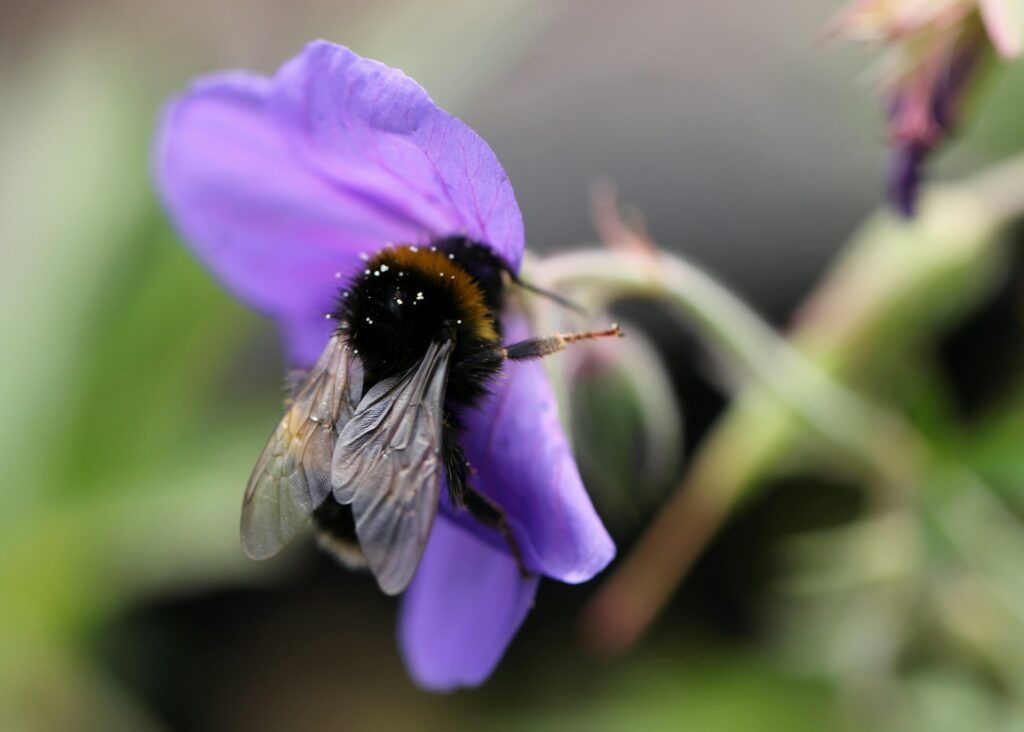
Bifenthrin is a powerful insecticide and acaricide widely used in plant protection products and biocides. A member of the pyrethroid family, it is distinguished by its effectiveness against a broad spectrum of pests. It also plays an important role in the agri-food sector , particularly in protecting crops against infestations, thus ensuring high-quality agricultural production. This article explores in detail its chemical characteristics, applications, environmental and human impact, and the methods used for its laboratory analysis.
1. Introduction to bifenthrin
Definition and origin of bifenthrin
Bifenthrin is a synthetic chemical belonging to the pyrethroid family, compounds derived from natural substances found in chrysanthemum flowers. It is designed to mimic the insecticidal properties of natural pyrethrins while offering increased stability and prolonged action.
Used primarily as an insecticide and acaricide, bifenthrin is present in a variety of commercial formulations intended to protect crops, treat wood, or eliminate pests in domestic and industrial environments.
Importance in industry and agriculture
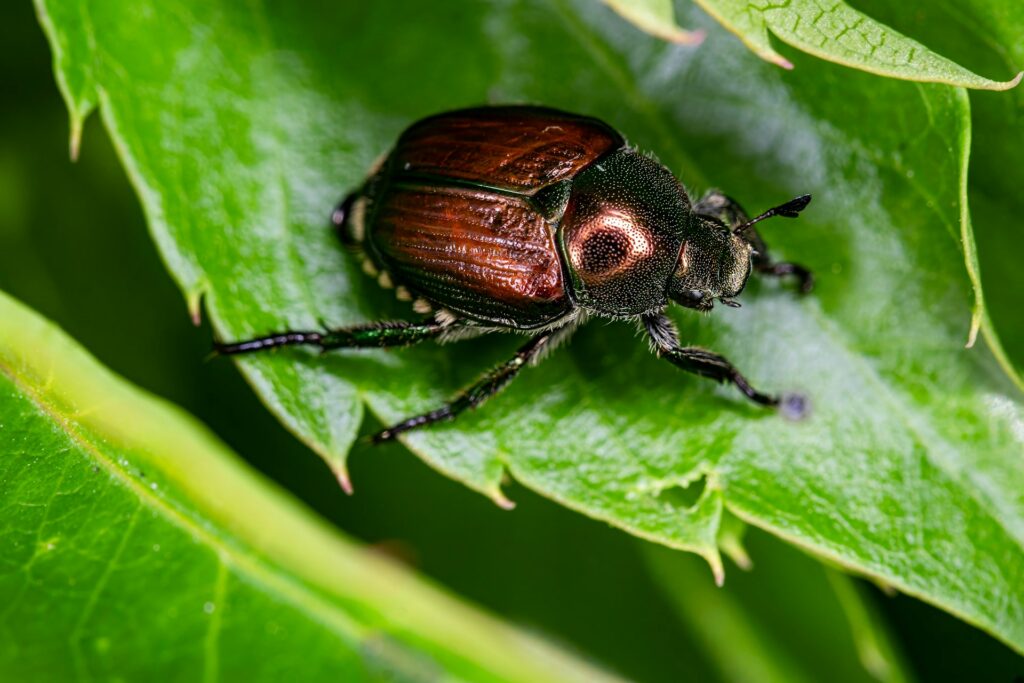
In the agri-food sector, bifenthrin is widely used to protect crops against pests such as mites, beetles, caterpillars, and other insects. It works primarily by affecting the nervous system of the pests, causing rapid paralysis and effective death.
Besides its agricultural use, bifenthrin is also incorporated into biocidal products for non-agricultural applications, such as wood treatments or household insecticides. This versatility makes it a valuable tool in many industrial sectors.
Objectives of this article
This article aims to provide a comprehensive understanding of bifenthrin, from its chemical properties and applications to its environmental impacts and risks to human health. Particular attention will be paid to the analytical methods used to detect this substance in various matrices, including food and environmental sources.
2. Identification and chemical characteristics
Chemical formula and molecular structure
Bifenthrin, identified by CAS number 82657-04-3, has the chemical formula C23H22ClF3O2 . Its molecular structure consists of a phenyl ring associated with halogenated substituents (chlorine and fluorine), which gives it high chemical stability and increased lipophilicity. This molecular configuration plays a crucial role in its persistence in the environment and its ability to interact with target organisms.
Molar mass and physicochemical properties
The molar mass of bifenthrin is 422.87 g/mol, which classifies it among the relatively heavy compounds. It is a whitish, waxy solid with a melting point between 68 and 71 °C.
Its solubility in water is very low (approximately 0.1 mg/L), but it is notably soluble in non-flammable organic solvents. This low aqueous solubility reduces its risk of migration into groundwater, but promotes its accumulation in soils and biological tissues.
Scientific concepts: log Kow, adsorption and stability
The log Kow (octanol-water partition coefficient) of bifenthrin is greater than 6, indicating a strong affinity for lipid environments. This property explains its ability to accumulate in living organisms, a characteristic common to lipophilic substances.
Bifenthrin also exhibits an organic carbon-water partition coefficient (Koc) of approximately 50,000 cm³/g, indicating its strong adsorption onto soil organic matter. This limits its mobility in the environment but increases its persistence in areas where it is applied.
In terms of stability, it is particularly resistant to hydrolysis under neutral conditions (pH 7), which contributes to its long lifespan in agricultural and industrial environments.
Are you looking for an analysis?
3. Main uses of bifenthrin
Use as an insecticide and acaricide
Bifenthrin is primarily used as an insecticide and acaricide to control a wide range of pests, including beetles, moths, and mites. It works by disrupting the nervous system of target organisms, causing rapid paralysis followed by death. This targeted action is valued in environments where a quick and sustained intervention is required.
Applications in agriculture
In agriculture, bifenthrin is used to protect essential crops such as cereals, vegetables, and fruits. It is particularly effective in areas where pests are resistant to other treatments. Its persistence in soils and on plant leaves provides prolonged protection, thus reducing the frequency of necessary treatments.
Formulations commonly used in agriculture include aqueous suspensions, emulsifiable concentrates, and granules. These formats allow for easy application tailored to the specific needs of crops.
Use in biocidal products
Outside of the agricultural sector, bifenthrin is used in biocidal products for a variety of applications. It is incorporated into wood treatment products to protect materials against infestations of wood-boring insects such as termites. It is also present in formulations intended for domestic or industrial use, such as insecticidal sprays and pest traps.
Commercial products containing bifenthrin
Products containing bifenthrin can be combined with other active ingredients to provide a broad-spectrum solution or to improve overall treatment efficacy. Commercial formulations are available in various formats suited to specific uses, ensuring versatility in application.

4. Toxicity and risks to human and environmental health
Toxicity to human health
Bifenthrine is classified as toxic to humans, particularly when handled without proper precautions. In cases of acute exposure, it can cause skin irritation, neurological disorders such as tremors, and, in extreme cases, convulsions.
Its acceptable daily intake (ADI) has been set at 0.015 mg/kg/day, reflecting the low amount acceptable to limit risks to human health. Furthermore, bifenthrin is classified as a probable carcinogen, although further research is needed to definitively confirm this link.
Environmental impact
Bifenthrin is extremely toxic to aquatic organisms, with a lethal concentration 50 (LC50) of 0.0002 mg/L for fish and daphnia. This toxicity, combined with its low water solubility and affinity for organic matter, makes it a substance likely to contaminate sediments and persist in aquatic environments.
In soils, its strong adsorption limits its mobility, but it can harm non-target fauna, such as earthworms. Its relatively slow degradation, with a half-life (DT50) of 26 days, contributes to its accumulation in the environments where it is applied.
Current regulations
The use of bifenthrin is strictly regulated to protect human health and the environment. In the European Union, its inclusion in Annex I of Directive 91/414/EEC is pending, although it is already prohibited in many products due to its hazardous nature. In France, it has been removed from the list of biocidal preparations TP18 since November 2013.
These regulations limit its use to specific contexts, particularly in the agricultural and industrial sectors, while encouraging the development of less harmful alternatives.
Risk management measures
To minimize risks, strict management measures are recommended. Users must wear personal protective equipment (PPE) during application and adhere to prescribed dosages to avoid excessive contamination.
In sensitive aquatic environments, the use of bifenthrin must be strictly limited, with buffer zones to prevent runoff into waterways. Producers and users are also encouraged to opt for combination formulations that reduce the doses required to achieve the desired efficacy.
5. Laboratory analysis of bifenthrin
Importance of laboratory analysis
The detection of bifenthrin in environmental and food matrices is crucial for assessing its impact and ensuring its use at safe concentrations. Laboratories play a key role in providing reliable data on the presence of bifenthrin residues, thereby contributing to food safety and environmental protection.
Analytical techniques used
Among the most commonly used techniques for analyzing bifenthrin are:
- GC-ECD (gas chromatography with electron capture detection) : An accurate method for detecting traces of bifenthrin in environmental samples such as air and soil.
- GC-MS/MS (gas chromatography coupled with tandem mass spectrometry) : This method is particularly effective for analyzing bifenthrin residues in food. Its high sensitivity allows for the detection of extremely low concentrations, ensuring strict compliance with regulatory limits.
Analyzed matrices
Frequently analyzed matrices include:
- Air : To assess worker exposure or dispersion in the environment.
- Soils and sediments : To measure the persistence and adsorption of bifenthrin in agricultural environments.
- Food products : In order to monitor residues in fruits, vegetables and other foodstuffs.
Limits of quantification and precision
The limits of quantification (LOQ) for analyses depend on the techniques used and the matrices studied. For example, for GC-MS/MS, the LOQ is often less than 0.01 mg/kg, allowing for accurate detection even at very low concentrations.
The use of these advanced techniques ensures a rigorous evaluation of bifenthrin, contributing to responsible management of its use and the reduction of its negative impacts.
6. Regulations and restrictions
Evolution of regulations in the European Union and in France
The evaluation of bifenthrin began under European Directive 91/414/EEC, which governs the approval of active substances for use in plant protection products. France, as the rapporteur Member State, produced an initial assessment report (Draft Assessment Report) in 2006, followed by a revision in 2010.
However, the inclusion of bifenthrin in Annex I of this directive was not finalized due to concerns about its toxicity and environmental impacts. Consequently, its use in plant protection products has been restricted or even prohibited in several contexts within the European Union.
In France, the use of bifenthrin in TP18 biocidal preparations has been banned since November 2013. This decision reflects a desire to reduce the risks associated with this substance for the environment and public health.
Reasons for the ban and concerns
The main concerns that prompted the restrictions include:
- Its toxicity to aquatic organisms : With extremely low LC50 values, bifenthrin presents a high risk to aquatic ecosystems.
- Its persistence in the environment : Bifenthrin degrades slowly in soils, increasing the risk of bioaccumulation.
- Its carcinogenic potential : Although definitive evidence is still awaited, its classification as a probable carcinogen justifies strict precautions.
Alternatives and potential solutions
Faced with these restrictions, less toxic and more environmentally friendly alternatives have been developed. These include:
- Biopesticides : Products derived from natural substances, such as plant-derived pyrethrins, which offer lower toxicity and increased biodegradability.
- Biological control techniques : Use of natural predators or parasites to control pest populations.
- Improved formulations : Combinations of active substances reducing the dose needed to achieve the desired efficacy.
Monitoring and compliance
Products containing bifenthrin that are still authorized are subject to strict monitoring to ensure their compliance with regulatory limits. Regular analyses of crops and food products detect residues and ensure they remain within the established thresholds.
7. Environmental impacts and risk management
Persistence and degradation in the environment
Bifenthrin is known for its persistence in soils due to its high adsorption coefficient (Koc) and low water solubility. Its average half-life (DT50) of 26 days makes it a relatively stable substance, although its degradation can vary depending on environmental conditions such as temperature, pH, and soil composition.
Bifenthrin can accumulate in sediments and pose a threat to aquatic ecosystems. Once adsorbed onto organic particles, it can be difficult to remove and act as a long-term source of contamination.
Toxicity to fauna and flora
The ecological effects of bifenthrin are particularly concerning for aquatic organisms. Fish and crustaceans, such as daphnia, are extremely sensitive to this substance, with lethal concentrations 50 (LC50) on the order of 0.0002 mg/L.
Furthermore, although its low mobility limits its dispersal in surface waters, any accidental contamination can cause imbalances in aquatic ecosystems. Non-target terrestrial species, such as bees and earthworms, can also be affected by direct or indirect exposure.
Measures to limit soil and water pollution
To minimize the environmental impacts of bifenthrin, several measures can be implemented:
- Creation of buffer zones : Reduction of the use of bifenthrin near watercourses or sensitive areas to avoid runoff.
- Responsible agricultural practices : Use of targeted application techniques to limit the quantities used and avoid overdosing.
- Waste management : Implementation of specific processes to collect and treat bifenthrin residues in order to limit their dispersion in the environment.
Risk assessment and control methods
Risk assessment for bifenthrin relies on regular environmental analyses and ecotoxicological studies. Specialized laboratories use advanced methods, such as gas chromatography, to detect traces of bifenthrin in soil, water, and air samples. These assessments help identify the most exposed areas and allow practices to be adjusted accordingly.
Modeling tools are also used to predict the dispersion of bifenthrin and assess potential risks before application. These models incorporate parameters such as weather conditions, soil characteristics, and applied volumes.