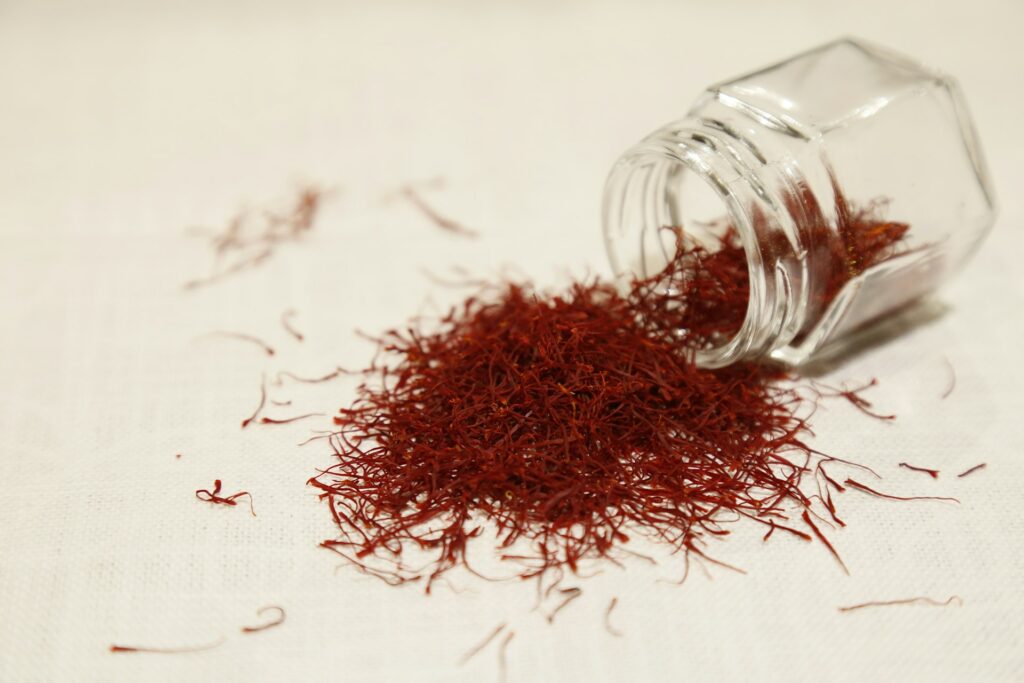
Saffron is a rare and precious spice, prized for its unique coloring, aromatic, and flavoring properties. However, due to its high commercial value, it is frequently the subject of fraud and adulteration.
Laboratory analysis of saffron is therefore essential to guarantee its authenticity, quality, and compliance with international standards. This first part explores the fundamental reasons that justify these analyses and explains why they are indispensable for producers, distributors, and consumers. YesWeLab offers comprehensive support for carrying out these analyses and ensuring saffron's compliance with the strictest standards.
Why analyze saffron in a laboratory?
Combating fraud and falsification
Saffron is one of the most counterfeited spices in the world. The most common frauds involve the addition of foreign substances, such as dyed fibers, lower-quality spices, or extracts of similar flowers (marigold, safflower). Some practices even go so far as to use synthetic dyes to mimic the natural intensity of saffron.
Laboratory analysis of saffron allows for the identification of fraudulent products by verifying their chemical composition and detecting abnormal substances. Methods such as high-performance liquid chromatography (HPLC) and UV-Visible spectroscopy are used to precisely measure the active compounds in saffron and guarantee its authenticity.
Verification of purity and authenticity
High-quality saffron must meet strict criteria established by ISO 3632. This standard classifies saffron into several categories based on its concentrations of crocin (coloring power), picrocrocin (flavor intensity), and safranal (aromatic strength). A specialized analytical laboratory can measure these parameters and confirm whether a batch of saffron belongs to category 1, the highest quality category.
The tests also make it possible to check for the presence of any chemical residues , such as pesticides or heavy metals , which can affect the purity of the saffron and pose a danger to consumer health.
Control of organoleptic properties
One of the most important aspects of saffron is its organoleptic profile , that is, its aroma, flavor, and color . For saffron to be considered high quality, it must possess a high color intensity , a powerful and complex aroma , and a characteristic bitterness .
Laboratories use scientific methods to quantify these properties. For example, measuring safranal content using UV-Visible spectrophotometry allows for the evaluation of aroma intensity. Sensory tests conducted by experts complement these analyses to confirm the organoleptic quality of the saffron.
Compliance with international regulatory standards
The saffron trade is governed by strict standards designed to protect consumers and ensure market transparency. The ISO 3632 , already mentioned, is the primary reference for classifying and certifying saffron. It sets precise thresholds for crocin, picrocrocin, and safranal content, as well as limits for moisture and impurities.
Other regulations, such as the Codex Alimentarius , also establish criteria to ensure saffron meets health and trade requirements. For producers and exporters, complying with these standards is essential to access international markets and maintain the credibility of their product.
ISO 17025 and COFRAC accredited laboratories are authorized to perform these analyses reliably. By choosing a qualified laboratory, producers and distributors can guarantee the conformity of their saffron and strengthen their customers' confidence.

2. The main criteria for saffron analysis
Laboratory analysis of saffron relies on well-defined criteria to guarantee its authenticity and quality. Among these criteria, the levels of crocin, picrocrocin, and safranal , as well as the moisture content and the presence of foreign matter , are the most crucial for classifying saffron and ensuring its compliance with current standards.
Crocin content (coloring power)
Crocin is the main compound responsible for saffron's intense color. The higher the concentration of crocin, the stronger the coloring power of the saffron, which is a key indicator of its quality .
Crocin analysis is performed using UV-Visible spectrophotometry , which measures the absorbance of saffron extracts at 440 nm , the wavelength corresponding to the yellow-orange color of the spice. According to ISO 3632 Category I saffron must contain more than 190 units of crocin.
A low crocin level may be a sign of:
- From inferior or aged saffron,
- From adulteration (mixing with other coloring substances),
- From an improper drying or storage method.
Picrocrocin content (taste intensity)
Picrocrocin glycosidic compound that gives saffron its characteristic bitter taste . It is a reliable indicator of the freshness and authenticity of the product.
Picrocrocin analysis is also performed by UV-Visible spectrophotometry , measuring absorbance at 257 nm category I saffron must contain at least 70 picrocrocin units.
A low picrocrocin level may indicate:
- Saffron spoilage due to improper storage,
- Fraud, involving a product that is diluted or mixed with other substances.
Safranal content (aromatic strength)
Safranal is the main volatile compound responsible for saffron's aroma. It is what gives the spice its characteristic scent safranal under the influence of heat and humidity.
Safranal is determined by UV-Visible spectrophotometry , by measuring absorbance at 330 nm category I saffron , the safranal content must be between 20 and 50 units .
An excess of safranal may indicate:
- Damage due to improper storage,
- Advanced aging of the saffron reduces its organoleptic quality.
Humidity and foreign matter levels
Another essential factor in guaranteeing the quality of saffron is the moisture content . A high moisture content promotes the growth of mold and bacteria , which can compromise the preservation and food safety of the product.
ISO 3632 specifies a maximum moisture content of 12% to prevent any deterioration. Laboratories analyze this parameter by weighing the product before and after oven drying .
Furthermore, laboratories check for the presence of foreign matter (flower fragments, dust, non-compliant parts of the saffron) that could affect the purity of the product. High-quality saffron should contain no visible impurities .
Detection of chemical contaminants
In addition to the criteria specific to saffron, laboratory analysis includes tests for chemical contaminants such as:
- Pesticides : some producers use chemical treatments to protect crops, but excessive residues can be dangerous to health.
- Heavy metals (lead, mercury, cadmium, arsenic) : their presence can come from the soil where saffron is grown and poses toxicological risks.
These analyses are generally performed using advanced techniques such as gas chromatography coupled with mass spectrometry (GC-MS) and atomic absorption spectrometry (AAS).
Are you looking for an analysis?
3. Laboratory analysis methods for saffron
To guarantee the authenticity and quality of saffron, laboratories use advanced analytical techniques. These methods allow for the precise measurement of saffron's characteristic compounds, the detection of potential fraud, and the assurance that the product meets international standards.
UV-Visible spectrophotometry
UV-Visible spectrophotometry is the most commonly used method for analyzing the composition of saffron. It allows for the quantification of the spice's main active compounds by measuring their absorbance at specific wavelengths:
- Crocin (staining power): 440 nm
- Picrocrocin (taste intensity): 257 nm
- Safranal (aromatic strength): 330 nm
This technique is fast, reliable and complies with ISO 3632 , which defines the thresholds for classifying saffron into different quality categories.
High-performance liquid chromatography (HPLC)
chromatography (HPLC) is a more advanced method that allows for the precise separation and quantification of saffron compounds. Unlike UV-Visible spectrophotometry, HPLC offers finer resolution and allows for the identification of potential impurities or adulteration of the product.
This technique is particularly used for:
- Accurately determine the concentration of crocin, picrocrocin and safranal,
- Detecting the presence of synthetic dyes , sometimes fraudulently added to enhance the color of saffron,
- Identify residues of solvents or other chemical contaminants.
HPLC is often coupled with a UV detector or mass spectrometry (HPLC-MS) for even more in-depth analysis.
Sensory analysis and organoleptic testing
Sensory analysis remains an essential complement to instrumental methods. It relies on evaluation by experts who judge the visual, olfactory, and gustatory qualities of saffron.
The criteria evaluated include:
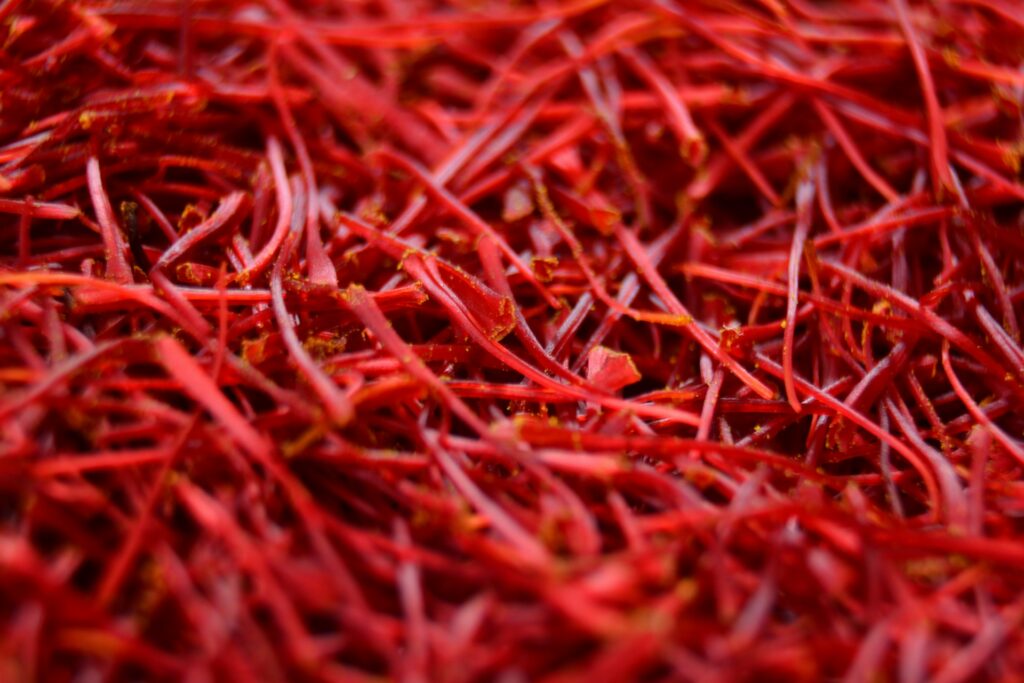
- The color of the filaments , which should be a deep and uniform red,
- The aroma , which should be powerful and distinctive, with a slightly metallic note,
- The taste , which should have a characteristic bitterness, indicative of a good level of picrocrocin.
These tests confirm the results of instrumental analyses and assess the conformity of saffron to high quality standards.
Moisture and foreign matter dosage
Moisture content analysis is essential to ensure that saffron is properly dried and stored under optimal conditions. Excessive moisture can lead to:
- Premature deterioration of the product,
- The proliferation of microorganisms ,
- A modification of the organoleptic properties of saffron.
The moisture content is measured using the gravimetric method , which involves weighing a sample before and after drying in an oven at 103 ± 2 °C . According to ISO 3632 , the moisture content of saffron must not exceed 12% .
In addition, a microscopic examination makes it possible to check for the presence of foreign matter , such as plant debris or impurities, which could affect the purity of the product.
Detection of chemical contaminants
In addition to the purity and quality of the saffron, laboratories conduct tests to look for chemical contaminants that could be harmful to consumers' health:
- Pesticides : Some saffron crops may be treated with plant protection products, the excessive use of which is prohibited. The analysis is carried out by gas chromatography coupled with mass spectrometry (GC-MS) .
- Heavy metals (lead, cadmium, mercury, arsenic) : these toxic elements can contaminate saffron via soil or water. Their concentration is measured by atomic absorption spectrometry (AAS) or inductively coupled plasma mass spectrometry (ICP-MS) .
- Mycotoxins : In case of improper storage, microscopic fungi can develop on saffron and produce dangerous toxins.
Identification of adulterations and food fraud
The high price of saffron makes it a prime target for food fraud. Some forms of adulteration include:
- Adding artificial colorings to enhance the color of the saffron,
- Mix saffron with dyed plant fibers ,
- Add residues from other plants, such as marigold or safflower, to increase the volume of the product.
To identify these practices, laboratories use advanced spectroscopic techniques , such as Fourier transform infrared (FTIR) spectroscopy and nuclear magnetic resonance (NMR) , which allow them to analyze the molecular structure of saffron and detect any foreign substances.

4. How to get your saffron analyzed with YesWeLab?
Saffron analysis is essential to guarantee its quality and compliance with current standards. YesWeLab , through its network of specialized partner laboratories, offers a comprehensive saffron analysis service, enabling producers, distributors, and importers to ensure the purity and authenticity of their products.
YesWeLab's specialized analysis services
YesWeLab offers a range of analyses tailored to the requirements of the saffron industry. The tests performed allow us to:
- Verify the authenticity of the saffron by measuring the concentrations of crocin, picrocrocin and safranal , in accordance with ISO 3632 .
- To detect potential fraud and falsification by identifying foreign substances or synthetic dyes.
- Analyze the moisture and foreign matter content to ensure proper product preservation.
- Checking for the presence of chemical contaminants , including pesticides and heavy metals, to ensure that the saffron complies with European and international health regulations.
ISO 17025 accredited laboratories , guaranteeing reliable and usable results within a strict regulatory framework.
Sample submission and tracking process
YesWeLab simplifies the analysis process with its intuitive digital platform . In just a few steps, professionals can have their saffron analyzed and receive a detailed report of the results.
- Select the desired analyses : Thanks to the YesWeLab platform, customers can choose the tests adapted to their needs according to the regulations and the target market.
- Sending samples to the laboratory : Saffron samples are sent under optimal conditions to prevent any alteration before analysis. YesWeLab provides precise instructions on packaging and shipping.
- Follow the progress of analyses online : The YesWeLab platform allows you to follow the progress of analyses in real time.
- Receive a detailed report : Once the tests have been carried out, a full report is made available, including the results of the analyses and the conclusions on the conformity of the saffron tested.
Concrete examples of analyses carried out
YesWeLab already supports many players in the saffron market. Here are a few examples:
- A producer wishing to certify his saffron for export : by carrying out complete analyses (ISO 3632, contaminant tests), he obtains a quality certification allowing him to access European and Asian markets.
- A distributor suspecting fraud on a batch of imported saffron : thanks to HPLC analysis and tampering tests, he detects the presence of unauthorized colorings and thus avoids non-compliant marketing.
- An importer checking for pesticide residues : mass spectrometry analyses make it possible to identify traces of banned pesticides, thus guaranteeing the health safety of consumers.
Why choose YesWeLab?
YesWeLab stands out due to several major advantages:
- An all-in-one digital platform , facilitating the management of laboratory analyses.
- A network of over 200 partner laboratories , covering a wide range of analytical tests.
- Fast and reliable results , with optimized analysis times.
- Personalized support , with experts available to interpret results and advise clients on regulations and best practices.
By choosing YesWeLab, professionals in the saffron sector benefit from a high-performance and accessible analysis service , guaranteeing the quality and conformity of their products on the international market.
5. Industrial applications and economic implications of saffron analysis
Laboratory analysis of saffron goes far beyond simply verifying its authenticity. It plays a key role in various industrial sectors, enabling stakeholders in the production and distribution chain to ensure the quality, safety, and conformity of their products. Furthermore, given the highly lucrative nature of the saffron market, rigorous controls are essential to guarantee impeccable traceability and combat fraud, which impacts the economy of this sector.
Importance for producers and exporters
Saffron producers must adhere to strict quality and purity standards to access international markets. Saffron that meets the requirements of ISO 3632 and is free of chemical contaminants has a higher commercial value.
Thanks to laboratory analysis, producers can:
- To ensure that their production complies with regulatory standards.
- Optimize cultivation and drying methods to preserve the organoleptic qualities of saffron.
- To enhance the value of their product on the international market by obtaining quality certifications.
Exporters, for their part, must ensure that their shipments comply with the regulations of the destination country. For example, the European Union imposes strict limits on pesticide residues and heavy metals . A compliance analysis helps avoid customs refusals and the associated financial losses.
Quality guarantees for distributors and manufacturers
Distributors and manufacturers who market or incorporate saffron into their products (food, pharmaceutical, cosmetic) must ensure the purity and traceability of this raw material.
The analyses allow us to:
- To identify and prevent falsifications , including mixing with foreign substances or synthetic dyes.
- To ensure batch homogeneity , essential to guarantee consistent characteristics for consumers.
- To prevent costly product recalls related to contamination or non-conformities.
A distributor who offers saffron certified according to ISO 3632 and analyzed for chemical contaminants can strengthen customer confidence and enhance the value of their offering in the market .
Combating fraud and protecting consumers
Saffron is one of the spices most susceptible to fraud, which directly impacts market profitability. According to some studies, up to 50% of the saffron sold worldwide could be counterfeit . These frauds take various forms:
- Mixture with colored plant fibers (marigold, safflower, beetroot).
- unauthorized chemical dyes
- Lengthening with lower quality saffron , from residues or batches already treated.
Laboratory analyses make it possible to expose these fraudulent practices , thus protecting both consumers and industry players who comply with regulations.
Reduction of the risk of financial losses
The economic losses linked to fraud or non-compliant products can be considerable:
- Loss of market share due to quality deemed insufficient by buyers.
- Regulatory sanctions and fines in case of non-compliance.
- Costs of product recalls and destruction of contaminated batches .
Thanks to laboratory analyses, professionals in the saffron sector can secure their transactions and avoid costly commercial disputes .
6. Scientific perspectives: innovations in saffron analysis
Saffron analysis continues to evolve thanks to technological advances in analytical chemistry and quality control. New methods improve the accuracy of analyses , accelerate the turnaround time for results , and optimize fraud detection . These innovations are crucial for guaranteeing authentic saffron that meets standards and is free of contaminants.
New analytical techniques under development
Traditional methods, such as UV-Visible spectrophotometry and high-performance liquid chromatography (HPLC), remain essential reference points. However, more sophisticated techniques are emerging to enhance the reliability of analyses and identify saffron components with greater precision .
- Chromatographic mass spectrometry (LC-MS, GC-MS) : this method allows the detection of minute traces of chemical contaminants (pesticides, heavy metals, unauthorized dyes). It is particularly useful for uncovering fraud that is difficult to identify using traditional methods.
- Nuclear magnetic resonance (NMR) : this advanced technique analyzes the molecular structure of saffron to detect any presence of foreign substances or adulteration.
- Fourier transform infrared (FTIR) spectroscopy : it allows the identification of the spectral fingerprints of saffron and the detection of anomalies in its chemical composition.
These technologies offer an increased level of precision faster and more complete analysis of the saffron, complementing conventional methods.
Automation and artificial intelligence in saffron analysis
The automation of analyses and the use of artificial intelligence (AI) are gradually transforming quality controls for saffron.
- AI-assisted image analysis : some companies are developing algorithms capable of evaluating the color, texture, and shape of saffron filaments in order to identify irregularities or signs of tampering.
- Predictive modeling : thanks to AI and machine learning , laboratories can analyze large amounts of data to anticipate trends and identify unusual deviations in the quality of tested batches.
- Automation of chromatographic tests : the most advanced laboratories use robotic platforms to accelerate HPLC and GC-MS analyses, thereby reducing sample processing time and improving the reproducibility of results.
These innovations allow laboratories to be more responsive and more precise , while ensuring increased standardization of controls .
Impact of these innovations on the saffron industry
Scientific advances in saffron analysis bring tangible benefits to the various stakeholders in the industry:
- Producers : thanks to faster and more precise analyses, they can adjust their cultivation and processing methods to guarantee excellent quality saffron.
- Distributors and exporters : access to advanced control tests strengthens the credibility of their products and facilitates their marketing in international markets.
- Consumers : by benefiting from better controlled saffron, they have the assurance of an authentic product, without risk to their health.
Innovations in saffron analysis therefore play a key role in strengthening market transparency, combating fraud and guaranteeing an exceptional spice .
Conclusion
Laboratory analysis of saffron is key to guaranteeing the quality, authenticity, and conformity of this precious spice. Faced with the numerous frauds and adulterations that threaten the market, analytical tests ensure that saffron meets international standards, particularly ISO 3632 , while also providing consumers with a guarantee of safety.
Thanks to modern techniques such as UV-Visible spectrophotometry, high-performance liquid chromatography (HPLC), and mass spectrometry , laboratories are now able to precisely identify the composition of saffron and detect any anomalies. Automation and artificial intelligence further enhance these controls, accelerating analyses and improving their reliability.
Saffron analysis concerns not only producers and distributors , but also importers, manufacturers and consumers , who must be able to rely on rigorous controls to avoid fraud and ensure product traceability.
Get your saffron analyzed with YesWeLab
To guarantee saffron that meets standards and is free of contaminants, YesWeLab offers a comprehensive laboratory analysis service. Thanks to its network of over 200 partner laboratories and an intuitive digital platform , YesWeLab enables saffron professionals to:
- Verify the authenticity of saffron by analyzing its crocin, picrocrocin and safranal content.
- Detecting fraud and falsification through advanced chromatographic analysis.
- Check for the presence of pesticides and heavy metals to ensure product safety.
- Access fast and reliable results via an online tracking platform.
With YesWeLab , benefit from expert support and cutting-edge analytical solutions to guarantee the quality of your saffron and strengthen the confidence of your customers.
Need a saffron analysis? Contact YesWeLab today for comprehensive expertise and a service tailored to your requirements!